

Naturgefahren wie Lawinen, Rutschungen, Steinschlag, Murgänge, Überschwemmungen und Waldbrände können in der Schweiz grosse Schäden anrichten. Mit unserer Forschung und unseren Dienstleistungen tragen wir dazu bei, die Bevölkerung vor solchen Gefahren zu schützen.
Allein in Lawinen kommen in der Schweiz jährlich im Schnitt 23 Menschen ums Leben; Hochwasser und Massenbewegungen verursachen hierzulande durchschnittlich 300 Millionen Franken Schäden pro Jahr. Weil die Bevölkerung wächst, befinden sich immer mehr Bauten in gefährdeten Gebieten. Der Klimawandel lässt Gletscher und Permafrost schmelzen und droht, enorme Mengen an Fels, Erde und Geröll in Bewegung zu setzen.
Wir erforschen, wie die verschiedenen Naturgefahren entstehen; wie weit, wie schnell und mit welcher Kraft sie sich ausbreiten und wie der Mensch sich vor ihnen schützen kann - beispielsweise durch gute Raumplanung, zuverlässige Vorhersagen oder technische Schutzmassnahmen. Dadurch schaffen wir die wissenschaftlichen Grundlagen für Risikoanalysen und die Beurteilung, ob Schutzmassnahmen und Warnsysteme wirksam und wirtschaftlich sind.
Dies erfordert natur- und ingenieurwissenschaftliche genauso wie wirtschafts- und sozialwissenschaftliche Forschung und eine enge Zusammenarbeit zwischen den verschiedenen Akteuren. Denn der Umgang mit Naturgefahren stellt Politik, Verwaltung und Gesellschaft vor die Herausforderung, sich für breit akzeptierte und ökonomisch tragbare Strategien zur Risikoverminderung zu entscheiden.
Beobachten und simulieren 
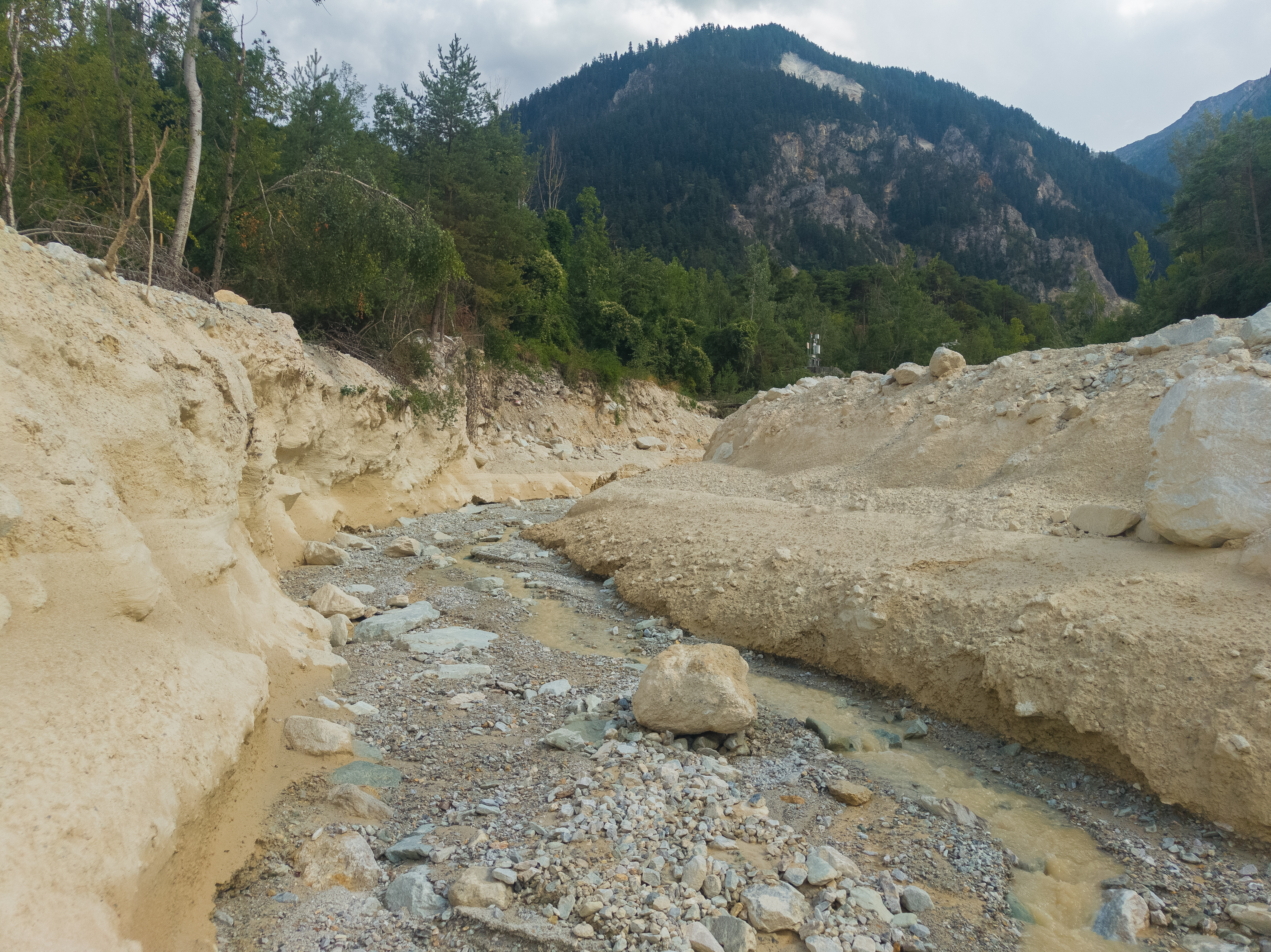
Um die Prozesse bei Naturgefahren im Detail zu verstehen, betreiben wir weltweit einzigartige Anlagen. Im Illgraben (VS) etwa beobachten wir mit Hilfe verschiedenster Messgeräte dort natürlich entstehende Murgänge. In Feldversuchen untersuchen wir die Dynamik von Lawinen, Murgängen, Steinschlag und Hangrutschungen unter realitätsnahen Bedingungen. An unserem Standort in Cadenazzo (TI) erfassen und analysieren wir Waldbrände, entwickeln Methoden und Konzepte, um das Waldbrandrisiko abzuschätzen, und erkunden die Folgen für Ökosysteme wie Schutzwälder.
Dank diesen Messdaten verstehen wir heute so gut wie noch nie, wie diese Naturgefahren entstehen, und wir können die Prozesse dabei in immer präziseren Rechenmodellen simulieren. Dies hilft, Gefahrenkarten und Schutzmassnahmen zu erstellen.
Rechtzeitig warnen, umfassend informieren 
Bei Warn- und Präventionssystemen spielen wir eine national wie international bedeutsame Rolle: Im Winter gibt der Lawinenwarndienst am Schnee- und Lawinenforschungsinstitut der WSL zweimal täglich das bekannte Lawinenbulletin heraus, unsere Hydrologen sind bei der Warnung vor Hochwassern oder Trockenheit involviert.
Unsere Daten und Erkenntnisse stellen wir der Öffentlichkeit auf Internetplattformen oder als Apps zur Verfügung, damit Krisenmanager in Notfällen schnell darauf zugreifen können. Zudem geben wir Merkblätter und Broschüren dazu heraus.
Schwerpunkte 


Aktuell 

09.06.2026
04.06.2026

26.05.2026