WSL publications 
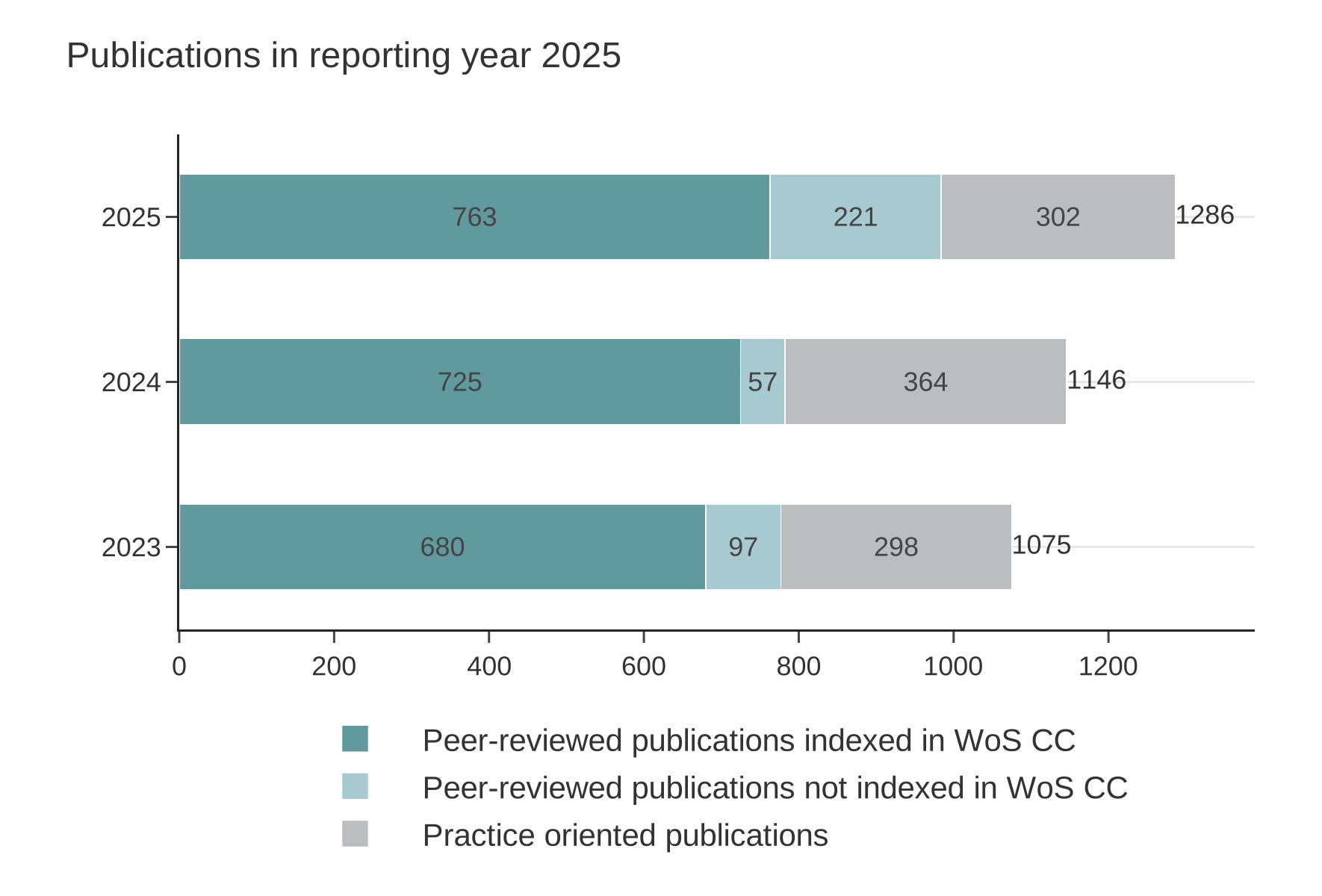
The WSL’s research output is reflected not only in the number of articles published each year, but above all in the diversity of content in its publications. In 2025, 984 peer-reviewed articles were published (26% more than in 2024). These provide a comprehensive picture of global changes and their impacts on terrestrial ecosystems—from forests, grasslands, and wetlands to alpine, Arctic, and freshwater environments. The publications also document changes in species distribution and interactions while demonstrating the use of state-of-the-art methods. These combine advanced observation methods (remote sensing, drones, LiDAR, eDNA, genomics) with process-based and machine-learning models as well as data analysis.
Many studies deepen our understanding of how biodiversity responds to land use, climate change, and invasive species, and how these responses influence ecosystem services and opportunities for their restoration. Forests and the forestry sector play an important role in WSL research, as demonstrated by work on resilience, multifunctional landscapes, productivity, and biodiversity-friendly management.
In 2025, 302 WSL publications were practice-oriented, reflecting the importance of applied research and knowledge transfer. The practice-oriented publications cover a broad spectrum of different topics. Some articles emphasize the management of climate-induced natural hazards and risks, including landslides, avalanches, changes in snow cover, forest fires, and hydrological extremes, using state-of-the-art remote sensing, fieldwork, and modeling. Other publications address the impacts of global change on various ecosystems and highlight the importance of green spaces and biodiversity for resilience and quality of life in urban and peri-urban areas.
Teaching and student supervision 
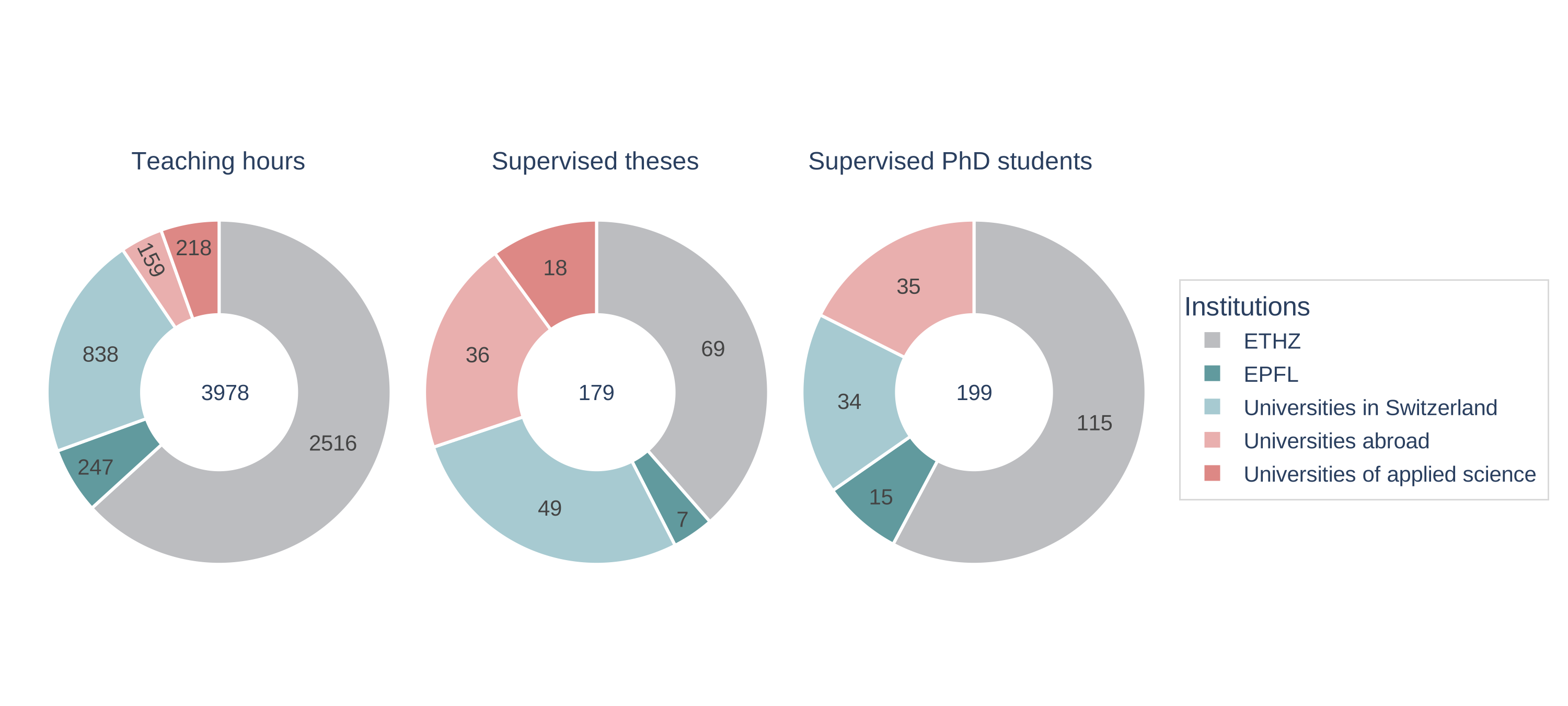
WSL lectures and courses complement the offerings of universities and colleges with topics in which WSL possesses particular expertise. In 2025, approximately 173 WSL staff members delivered a total of 3,978 hours of lectures at the two federal institutes of technology, cantonal universities, Swiss universities of applied sciences, and universities abroad.
In addition to university lectures, WSL organized or co-organized several continuing education courses for practitioners, summer and winter schools, and various events in 2025. WSL also supervises bachelor’s, master’s, and doctoral theses. In 2025, WSL researchers supervised 199 doctoral theses and 179 bachelor’s or master’s theses.