

27.11.2025 | Beate Kittl | WSL News
Understanding carbon cycles is important because they determine, for example, whether forests absorb or release carbon from the atmosphere. Earth scientist Franziska Lechleitner from the Swiss Federal Institute for Forest, Snow and Landscape Research WSL will investigate these processes in soil, air, and water. She has received a SNSF Starting Grant grant worth 1.8 million Swiss francs for this purpose.
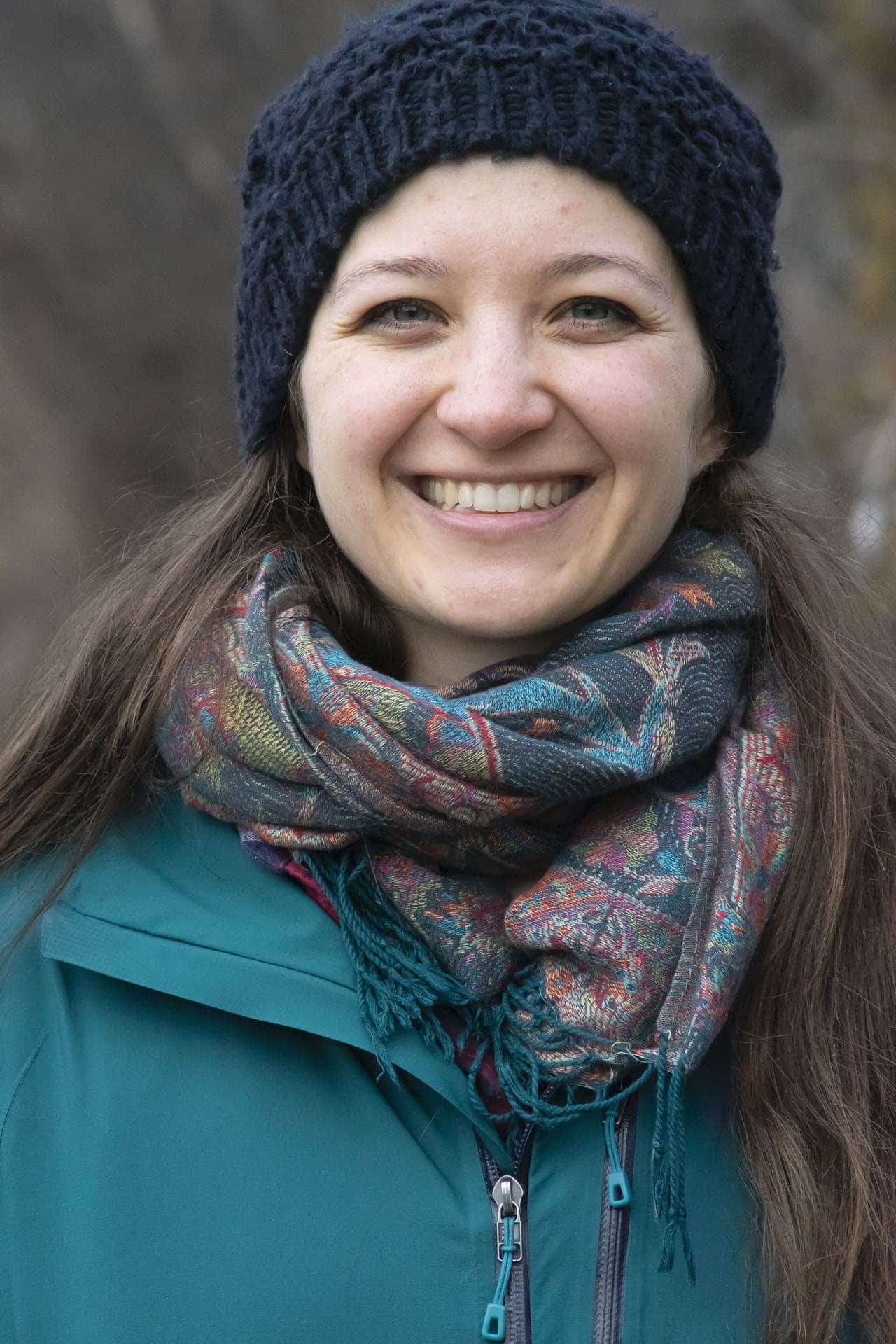
Franziska Lechleitner's field of research has a strange name: “dynamics of the critical zone.” This refers to the relatively thin layer of the Earth's surface that extends from the treetops to the base of the groundwater. Numerous processes take place here that make the Earth's surface habitable for humans, such as the water and carbon cycles on which our food supply, among other things, is based.
The carbon cycle in the Earth's subsurface, for example, has a major influence on whether ecosystems store or release carbon. “Understanding this is important because climate change and associated natural disturbances such as drought, flooding, and fires could significantly alter the terrestrial carbon balance in the future,” she explains.
Drilling into deep soil layers 
In the RESPIRE project, for which she received a Starting Grant from the Swiss National Science Foundation (SNSF), Lechleitner is investigating how carbon and water cycles interact. In this project, she will measure and observe the chemical signatures of important processes in soils, water, and gases. This is mainly done using carbon isotopes—i.e., carbon atoms of different weights—which indicate the origin and residence time of the substance in the environment.
Her team will drill deep into the ground at the WSL's Long-Term Forest Ecosystem Research (LWF) sites and use sensors to continuously monitor environmental conditions. The aim is to understand the relationships between climate, ecosystems, and the geological subsurface that are important for human life and nature. “To date, there have been very few studies that look at these carbon flows in the critical zone—including the deeper layers—as a whole,” she says.
Lechleitner studied earth, atmospheric, and climate sciences at ETH Zurich. For her doctoral thesis, she specialized in caves and their stalactites, which sparked her interest in the underground world. Further stages in her career included a postdoctoral fellowship at Oxford University in the UK and a position as senior assistant at the University of Bern. With the SNSF Starting Grant, Lechleitner will fill a doctoral and a postdoctoral position at WSL.
Contact 
Copyright 
WSL and SLF provide image and sound material free of charge for use in the context of press contributions in connection with this media release. The transfer of this material to image, sound and/or video databases and the sale of the material by third parties are not permitted.