

07.01.2026 | Fabio Valsangiacomo | WSL News
Climate change is causing trees to sprout earlier in spring. Nevertheless, some tree species are growing less. A TreeNet study led by the Swiss Federal Research Institute WSL shows that increasing heat and drought are slowing down the growth of the most common tree species in Switzerland. This has consequences for carbon storage and forestry.
- Due to global warming, stem growth in trees now begins several days earlier than it did ten years ago.
- Despite the earlier start to the season, the most common Swiss tree species are showing a declining growth trend because heat and drought are reducing the number of effective growing days. Spruce, silver fir and beech are particularly affected.
- Slower growth means less carbon storage and new challenges for forest use.
Correction dated 7 January 2026: In the penultimate paragraph, the clause «Forests slow down global warming, [...]» has been deleted.
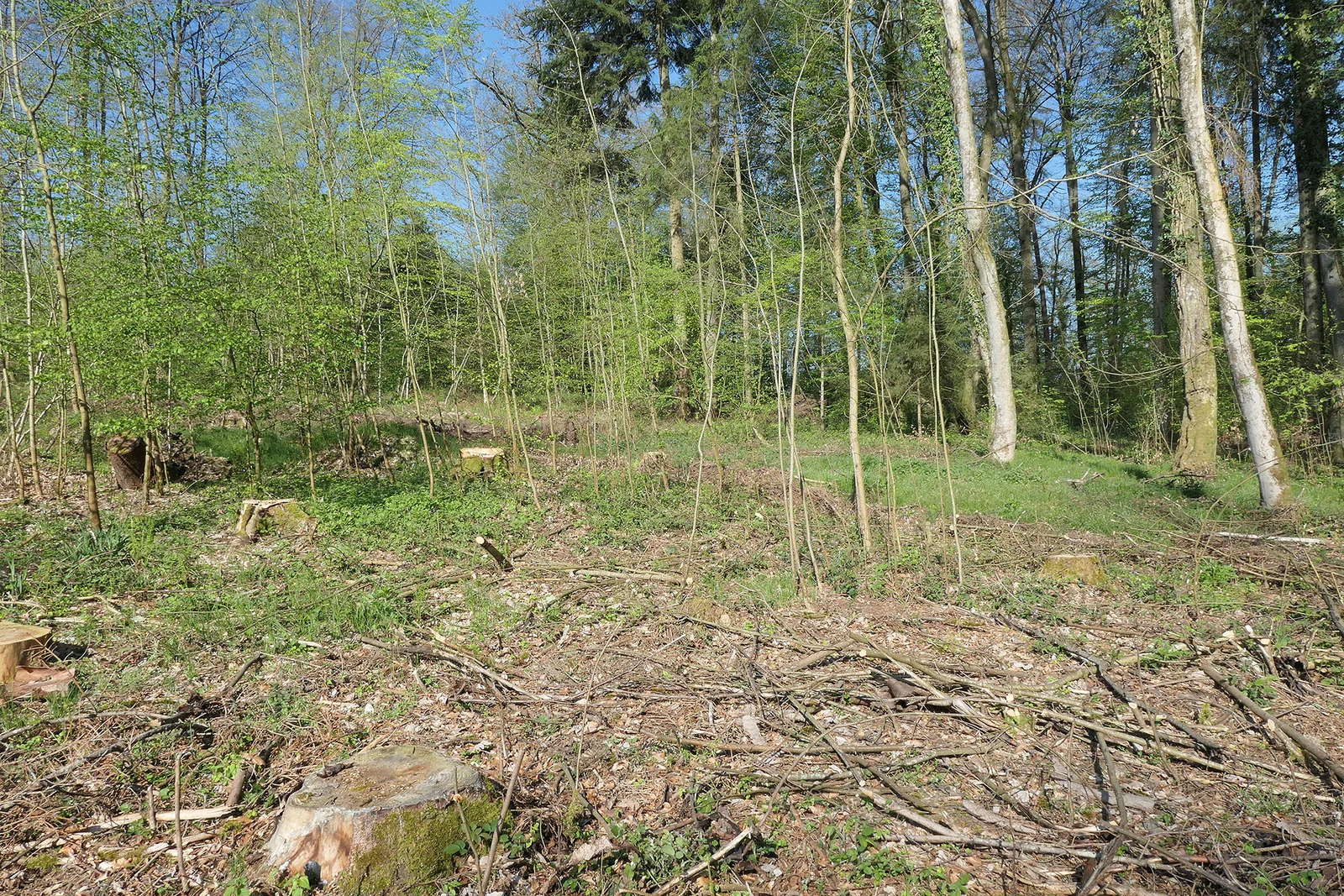
It is getting warmer. While our environment is suffering from the consequences of climate change, there has been a small glimmer of hope: our forests absorb carbon dioxide (CO₂) from the air and store it in wood. In theory, warmer conditions and an extended growing season could have helped forests capture even more CO₂. “But this assumption doesn’t hold up,” says Arun Bose, an ecologist at WSL. “It was believed that a longer warm season might offset some of the negative effects of climate change. Unfortunately, that is not the case.”
In his study, Bose and colleagues evaluated the growth of five of the most common tree species at 48 locations in Switzerland. “Over the last eleven years, the growing season has shifted forward by several days. This is the period of the year when trees can photosynthesise,” explains Bose. However, the earlier start to the season does not automatically lead to more growth – on the contrary. Between 2012 and 2022, annual radial stem growth declined in many stands. Increased heat waves and dry spells put trees under stress and inhibit their growth. The decline is particularly pronounced in silver fir, beech and spruce, while oak and pine trees annual growth rates remain stable. One thing is certain, however: none of the tree species studied benefited from the warmer climate.
Consequences for carbon storage and forestry
Trees grow when sufficient water is available. If it is too hot and too dry, more water evaporates than can be absorbed by the roots – the tree becomes stressed and growth stops. Depending on the tree species and weather conditions, this leaves only 40 to 110 days of growth per year. “In the end, a few days and hours determine how much a tree grows,” explains Bose. “If some of these are lost due to increased heat and dry periods, a large part of the annual stem growth is missing.” An earlier start is therefore of little use if heat and drought shorten the critical growth phases.
This has consequences for the services that forests provide. Trees absorb CO2 and store it in wood. Put simply, the larger the stem diameter, the more carbon is bound in a tree. If the effective growth period of the most important species decreases, their absorption capacity also decreases.
Forestry is also affected. If the summer months become warmer and drier, forestry operations will tend to harvest less wood. In addition, management practices will have to be adapted to climate change. “How trees respond to climate change depends on both their location and species. That is why it is important to assess management strategies locally and species-specifically,” emphasises Bose.
How the measurements were taken
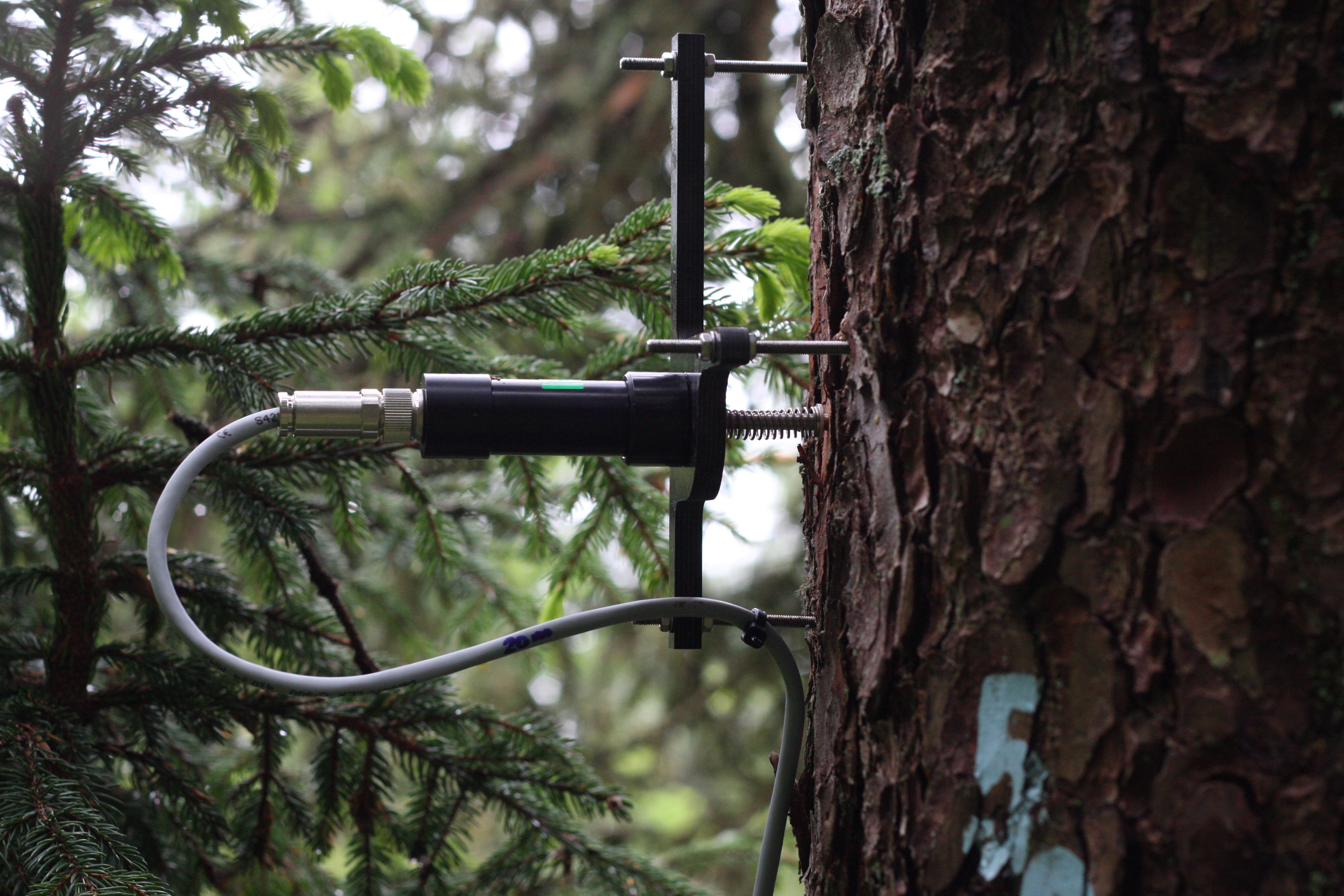
The study examined a total of 228 trees at 48 Swiss forest sites. The data comes from high-resolution measurements taken by the international observation and research network TreeNet. This network uses point dendrometers, measuring instruments attached to the stem that record the smallest changes in the diameter of tree stems. This makes it possible to see when new wood is actually being formed or whether the stem is simply expanding or contracting due to water uptake or loss. The data allows the water balance and radial stem growth to be analysed on an hourly basis and climate effects to be documented in real time. See also the video ‘The thing – point dendrometer’
TreeNet is an environmental monitoring network for measuring tree growth and drought. It is embedded in an international network of environmental monitoring systems (LWF, ICOS, eLTER, ICPForests) and is supported by institutions such as the Swiss Federal Research Institute WSL, ETH Zurich, the University of Basel, the University of Bern, the University of Zurich, IAP Witterswil, and the FOEN.
Contact 
Inquiries in German 
Links and documents 
More details can be found in the article Climate change: less tree growth despite longer growing season by Waldwissen.
Publications 
Copyright 
WSL and SLF provide image and sound material free of charge for use in the context of press contributions in connection with this media release. The transfer of this material to image, sound and/or video databases and the sale of the material by third parties are not permitted.