

08.12.2025 | Beate Kittl | WSL News
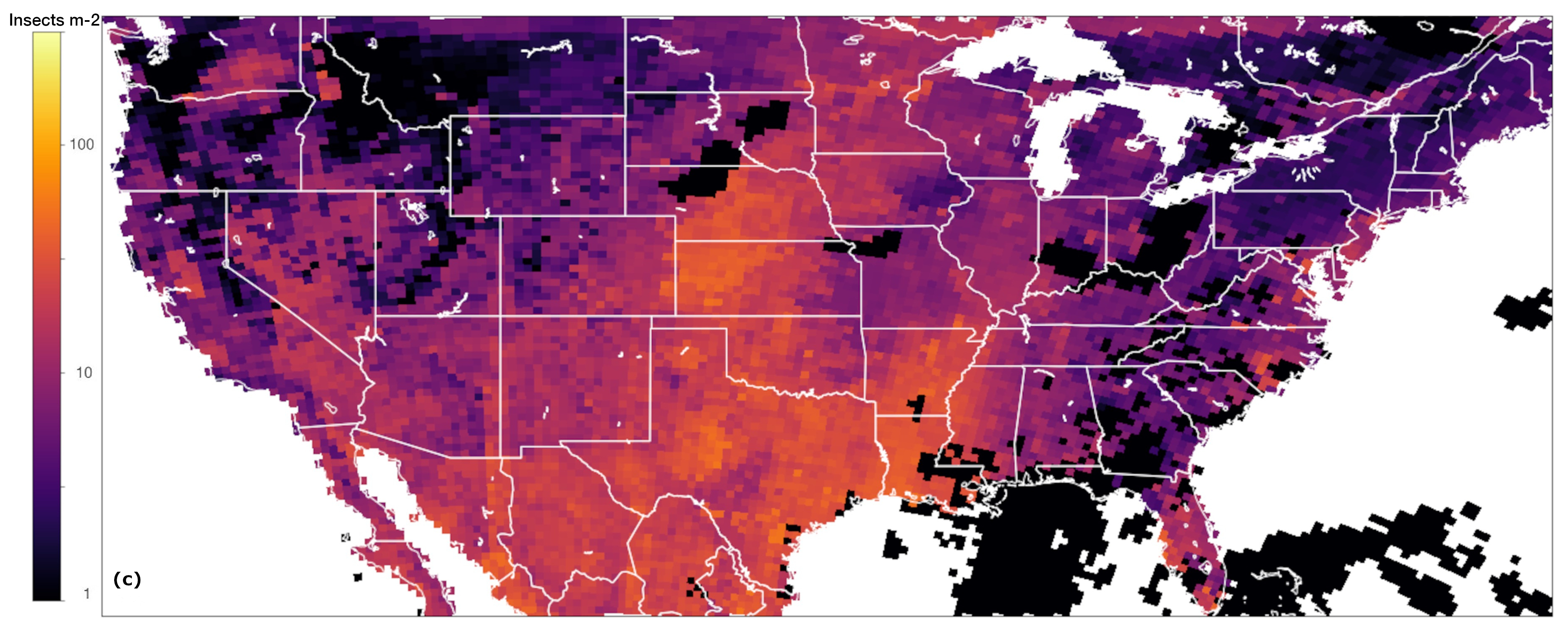
Around 100 trillion insects fly in the skies above the USA on a summer's day, according to estimates by researchers from the Swiss Federal Institute for Forest, Snow and Landscape Research (WSL) and the USA. Using weather radar, they have for the first time estimated the number of flying insects above the continental US.
- Researchers used data from 140 weather radars to estimate the number of insects across the US.
- The number of insects has remained stable there over the last ten years, but there have been large regional increases and decreases.
- The method provides monitoring of insect abundances at unprecedented scale.
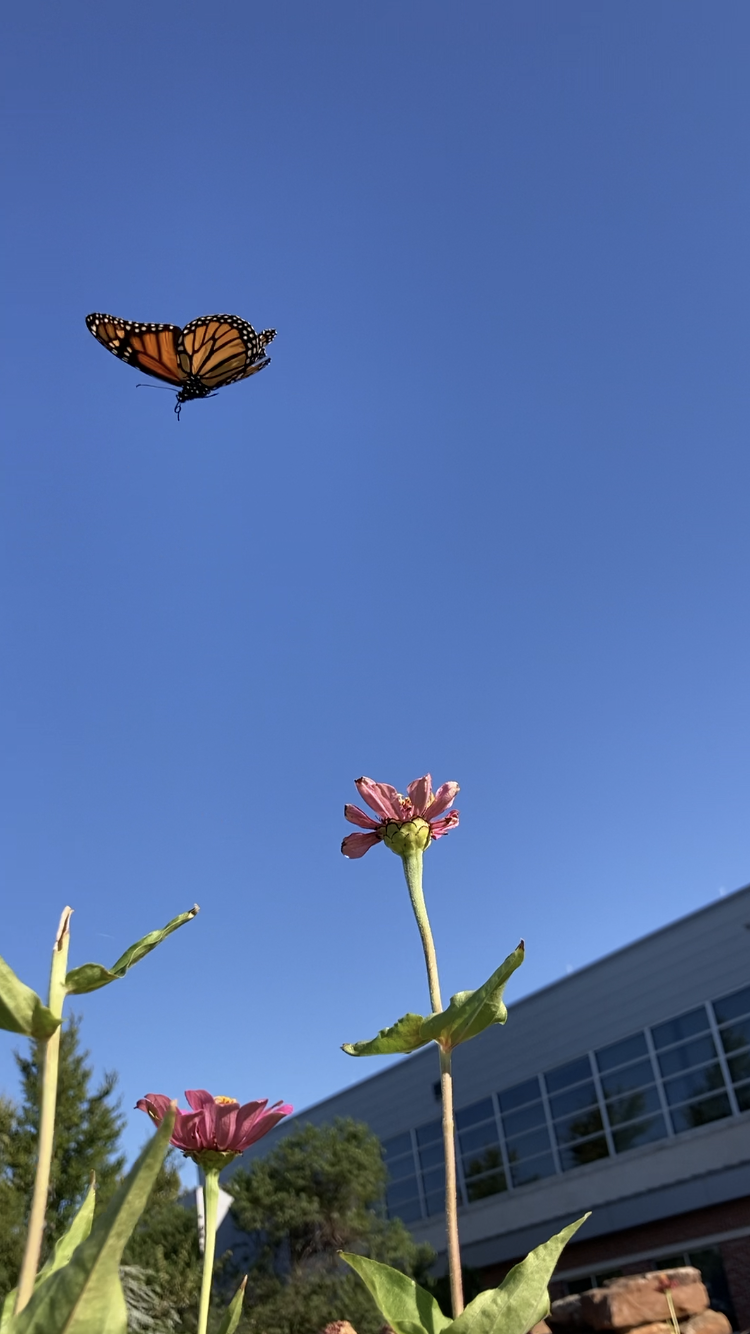
Although millions upon millions of living creatures fly, feed and reproduce in the air, this habitat has hardly been researched. Insects are under increasing pressure worldwide due to global change and human activities. However, until now, evaluating the large scale effects of this pressure has been challenging because insect monitoring focuses mainly on a small number of species and data is collected at local scales.
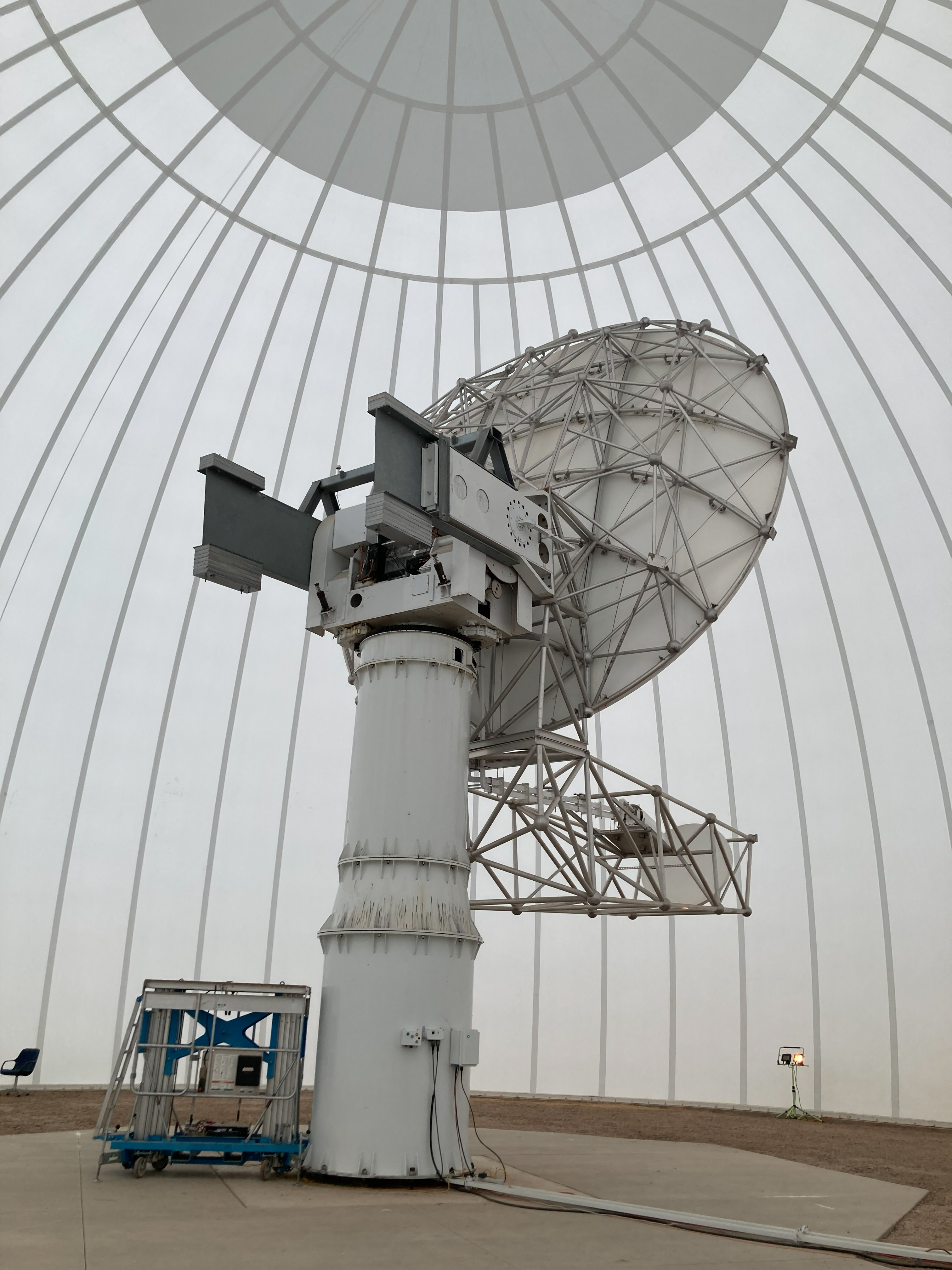
A novel data source can fill this gap: weather radars. Many countries have weather radars in large networks, which can be an automated, inexpensive, and large-scale method of monitoring insects in the airspace. They “look” up to observe clouds and precipitation, and in doing so, they also “see” everything else that is flying there.
Weather radar data is provided open access by NOAA in the US. Elske Tielens from the Swiss Research Institute WSL, Jeff Kelly at the University of Oklahoma (OU), and Phil Stepanian then at OU and now at Lincoln Lab MIT, used this to make the world's first estimate of the number of insects above the US mainland: on an average summer day, a good 100 trillion (1014) insects, comprising millions of tons of biomass, fly over the US, they report in the journal Global Change Biology.
Up and down with winter temperatures
In this first continental time series, insect abundance remained relatively stable over the ten years evaluated (2012 to 2021). However, there were significant regional fluctuations, with around half of the radars observing an increase in insect density and the other half observing a decrease. The fluctuations were most strongly correlated with winter temperatures: insect populations declined most in regions where temperatures became warmer. The life cycle of many insects – be it hatching, development or parasite infestation – is largely regulated by temperature.
Radar monitoring makes continental patterns of flying insects visible for the first time, and provides a unique ten year time series due to NOAA's radar archive. However, it is not a panacea: “It is likely that the most severe decline in insect populations already took place between the 1970s and 1990s, i.e., before our archived data,” says Tielens. Furthermore, radar devices cannot detect individual insect species, and the stable trend across the US may hide that species particularly sensitive to environmental change are disappearing, while common species are increasing. “It is therefore important to combine radar data with other data sources – local surveys, citizen science, and so on,” says Tielens.
Nevertheless, weather radars can provide urgently needed basic data on insect populations, which can be used to build future time series. In the Global South in particular, there are far fewer surveys of insect fauna than in Europe and North America. And if older radar data is combed through using new computational models, historical changes may also be uncovered, the authors write.
Note for reporters: INSECT project
A major study on insect fauna in Switzerland is running until 2026. From 2023 to 2025, scientists set up insect traps on agricultural land, in forests and in unused habitats to understand how land use and climate affect insect populations in Switzerland. The samples are now being analysed and compared with those from 20 years ago in order to identify the greatest future threats and improve nature conservation. The project is a collaboration between WSL, Agroscope, Infofauna, FibL and the Swiss Ornithological Institute.
Contact 
Publikationen 
Projects 
Copyright 
WSL and SLF provide image and sound material free of charge for use in the context of press contributions in connection with this media release. The transfer of this material to image, sound and/or video databases and the sale of the material by third parties are not permitted.