

23.01.2026 | Luis Ever Vega Cabrera | WSL News
With global trade not only products travel around the world, but sometimes also uninvited guests – such as fungi that can cause disease in trees. To detect potential threats to Swiss forests early, a WSL team is searching for such organisms in Azerbaijan. In the WSL logbook, Luis Ever Vega Cabrera and Carolina Cornejo report on their fieldwork between Europe and Asia and on setting up a new laboratory for molecular biology on site. Part 1.
I joined WSL on 1 April 2025 as a postdoc on the TreeFunAZproject. This project explores tree-associated fungi in Azerbaijan and assesses the potential threat they pose to European tree species due to growing trade between the continents. My first task is to plan a field trip to Azerbaijan with Carolina Cornejo in mid-May, during which we will sample tree leaves from four genera (Fagus, Quercus, Carpinus and Castanea), which are widely distributed in Azerbaijan and have close relatives in Western Europe. We want to find out whether the fungal species found in Azerbaijan can cause diseases on European trees.
We are in a rush because the laboratory of our collaborator in Azerbaijan is still just an empty room, only partially furnished with a few tables. There are no instruments or materials yet, and it may take several weeks or even months for everything to be delivered. As a working laboratory is needed to carry out surface disinfection of leaves – we are looking for fungi living “hidden” within the leaves, not on the leaves – we had to improvise and look for alternatives. We decided to purchase most of the necessary materials for fieldwork and disinfection in Switzerland and take them with us as extra luggage. Shipping parcels would have been extremely expensive, and there was a risk of delays due to customs retention and import fees.
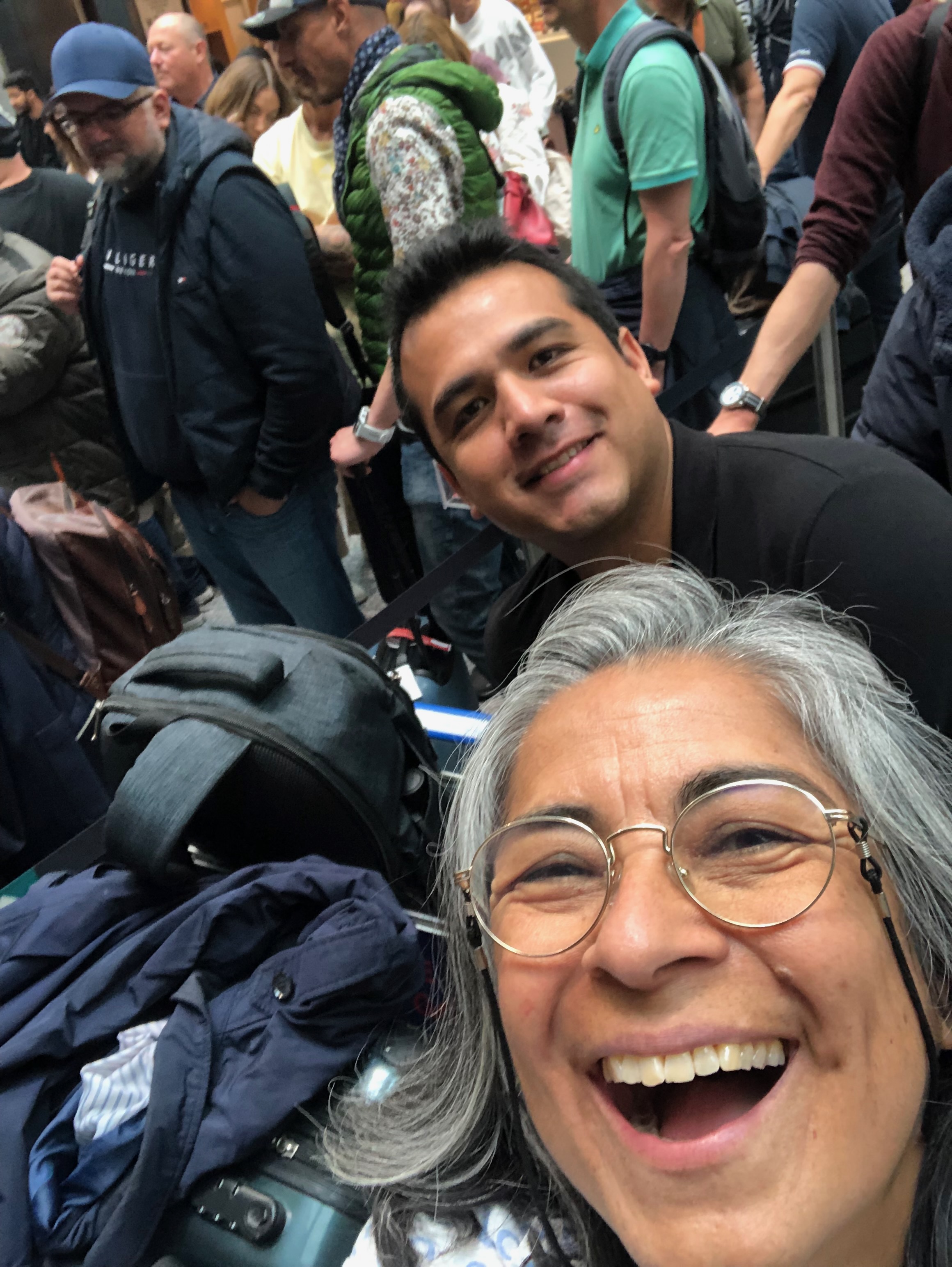
On 7 May, we thought we were ready. We went to the airport, dropped off our numerous overweight suitcases, passed through security and, after a one-hour delay, boarded the aeroplane. Suddenly, we heard an announcement: there was a technical issue and we were asked to leave the aircraft. Shortly afterwards, there was a second announcement: the flight had been cancelled. Amidst the confusion and chaos, with lots of people desperate for information, we spent the whole day at the airport trying to find an alternative way to travel to Baku. Ultimately, our flight was rescheduled for the following day and we had to adjust our original itinerary in Azerbaijan. Once we arrived in Baku, we were in for many more surprises.
Hunting for trees in almost inaccessible forests 
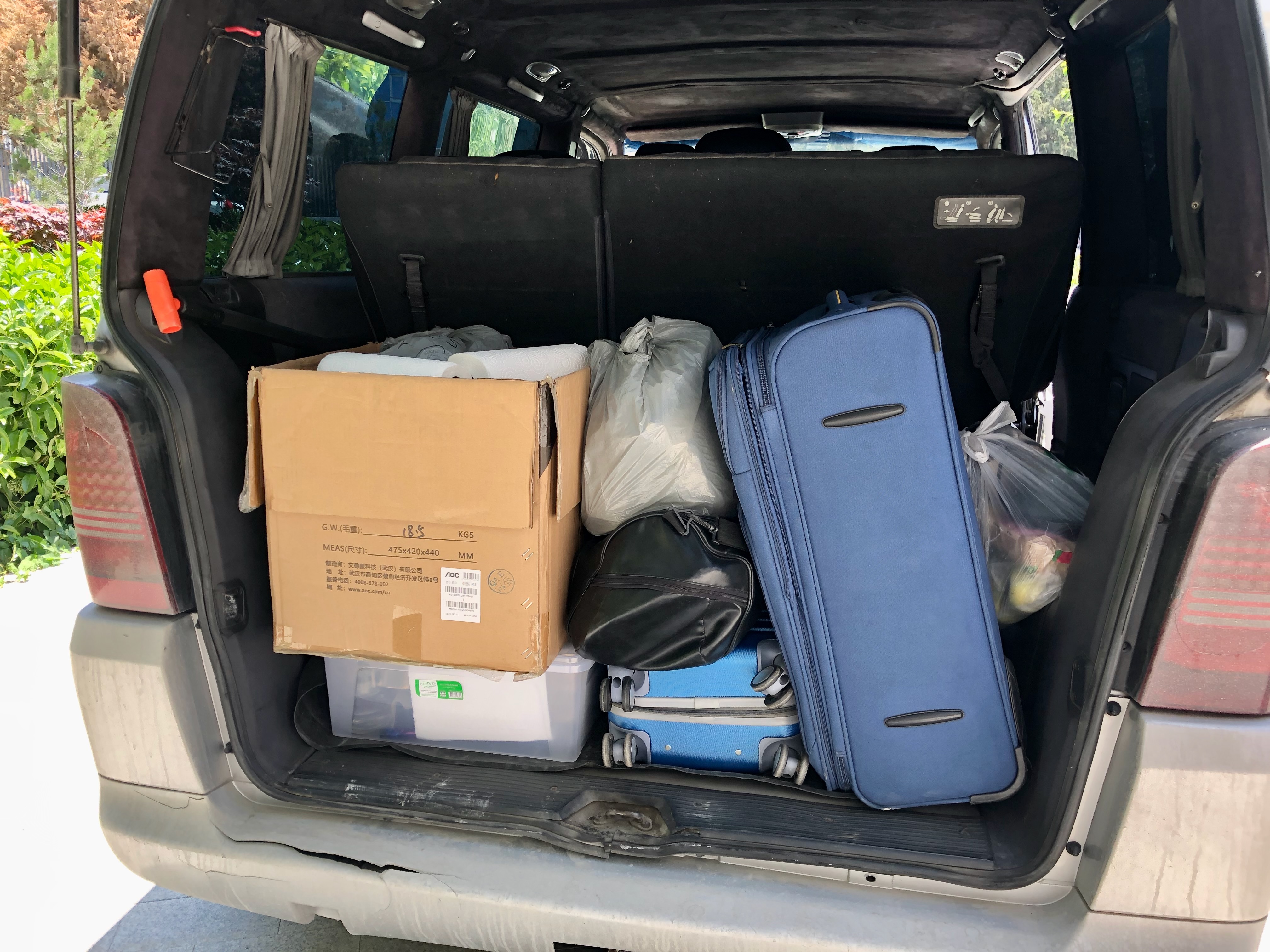
Two days later, our team of four was ready to head south. We set off for the Talysh region, which lies on the border with Iran, with our driver, Azer. His name means “fire” or “flame”, and is also the root of the country's name, Azerbaijan, which etymologically refers to “The Land of Fire”. Our not-so-new van took us to the breathtaking mountains of Hirkan National Park, where the steep terrain and dirt roads forced the engine to take a few breaks along the way. The biggest challenge was still to come: finding the trees of interest .
None of us were botanists, but we had spent a lot of time reading about our trees and researching the morphological traits that characterise them, so that we would be ready to find them in the middle of the woods. Most of the forest was inaccessible by foot or car, but after visiting a few spots and some initial difficulty, we started to find several promising trees. The presence of flowers and developing fruits, as well as the shape of the leaves, were pivotal in confirming that the tree species were the ones we were looking for.
During our two-week field trip, we collected samples in different regions during the day and spent the evenings at hotels setting up improvised laboratories to disinfect the surfaces of almost 400 leaves. We experienced sporadic rain, fog and thunderstorms, and encountered mud, European bison and snakes. However, we also enjoyed delicious food, tea and bread, as well as the astonishing landscapes of the marvellous Azerbaijani forests.

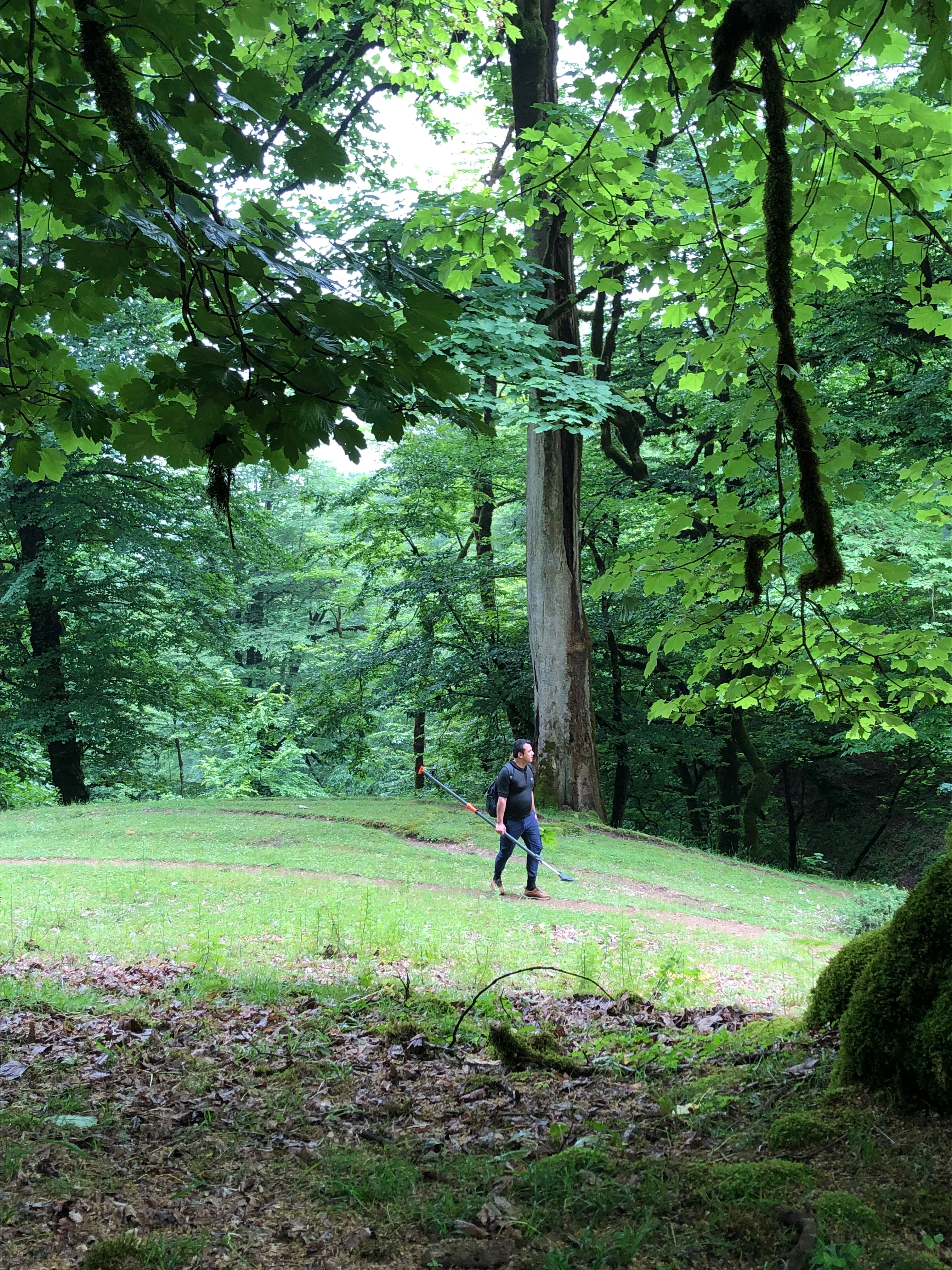
Image 1 of 9
The biggest challenge was still to come: finding the trees of interest. Luis Ever in the Thalysh Mountains. Photo: WSL

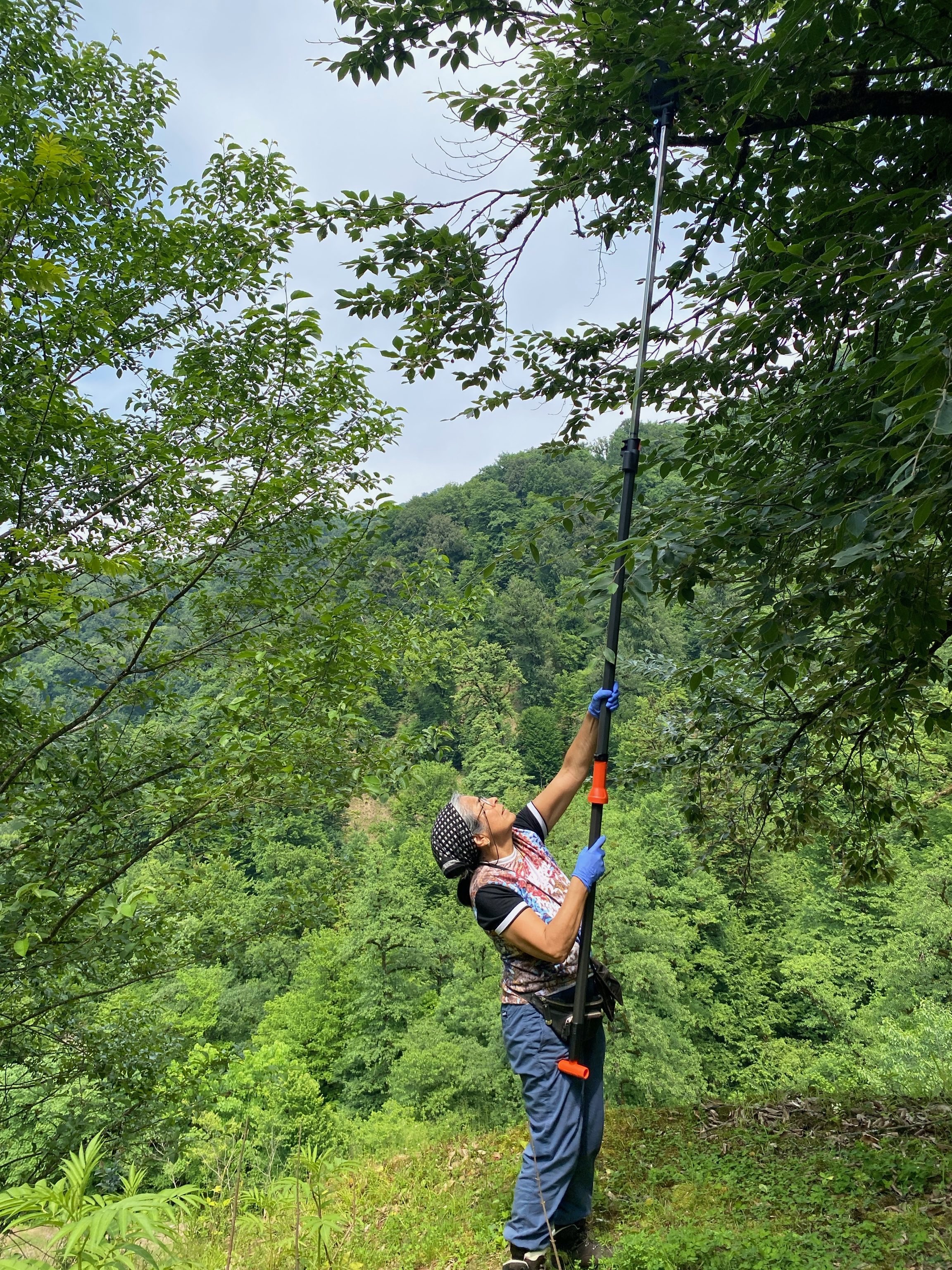
Image 2 of 9
Carolina cuts leaves from an Oriental beech tree with pruning shears. She handles the healthy-looking leaves only with gloves to prevent contamination of the samples with human DNA. Photo: WSL

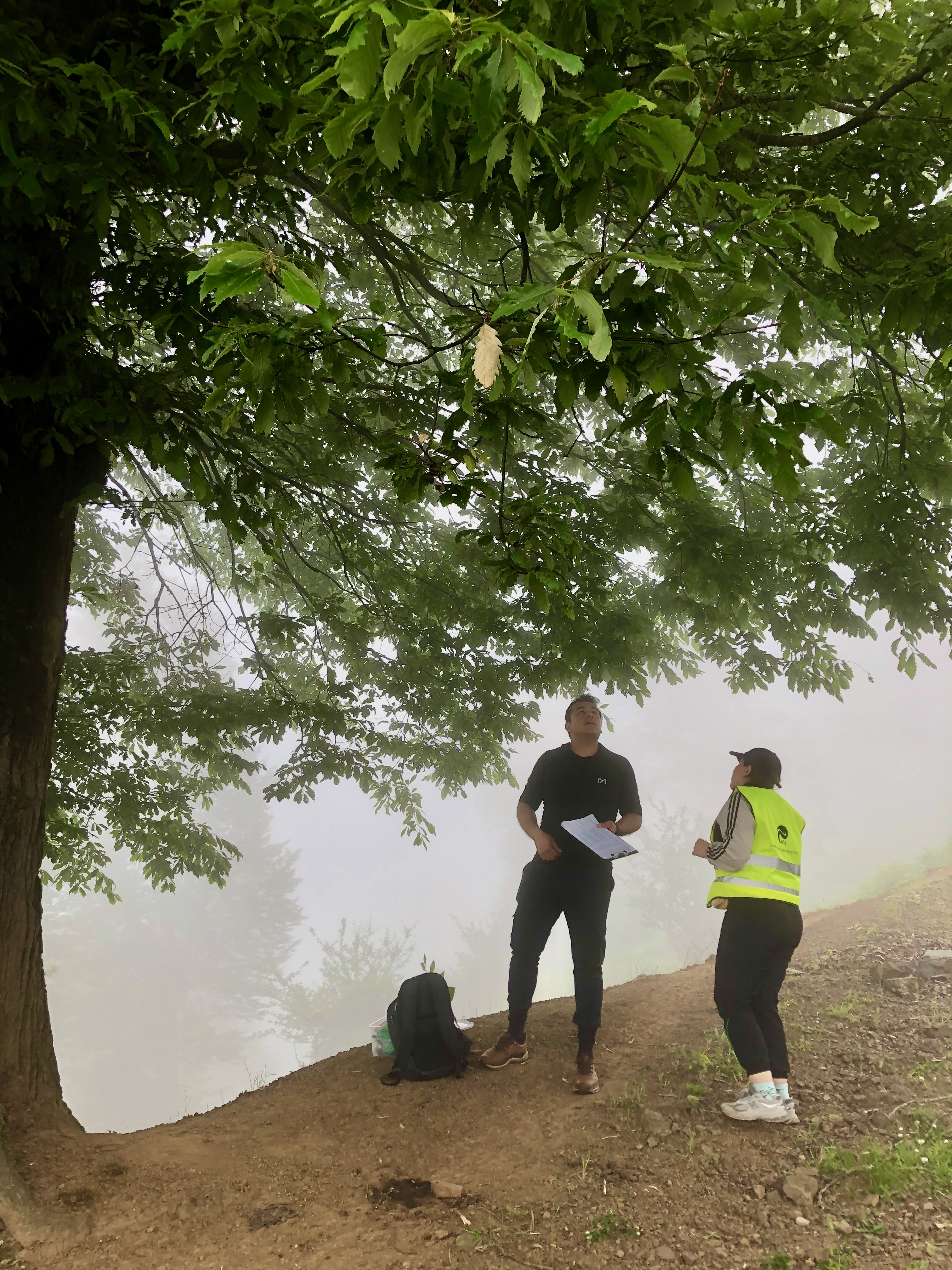
Image 3 of 9
The forests in the Thalysh Mountains are cloud forests. While Luis Ever and Khadija are preparing to sample a chestnut-leaved oak, they are wrapped in fog. Photo: WSL

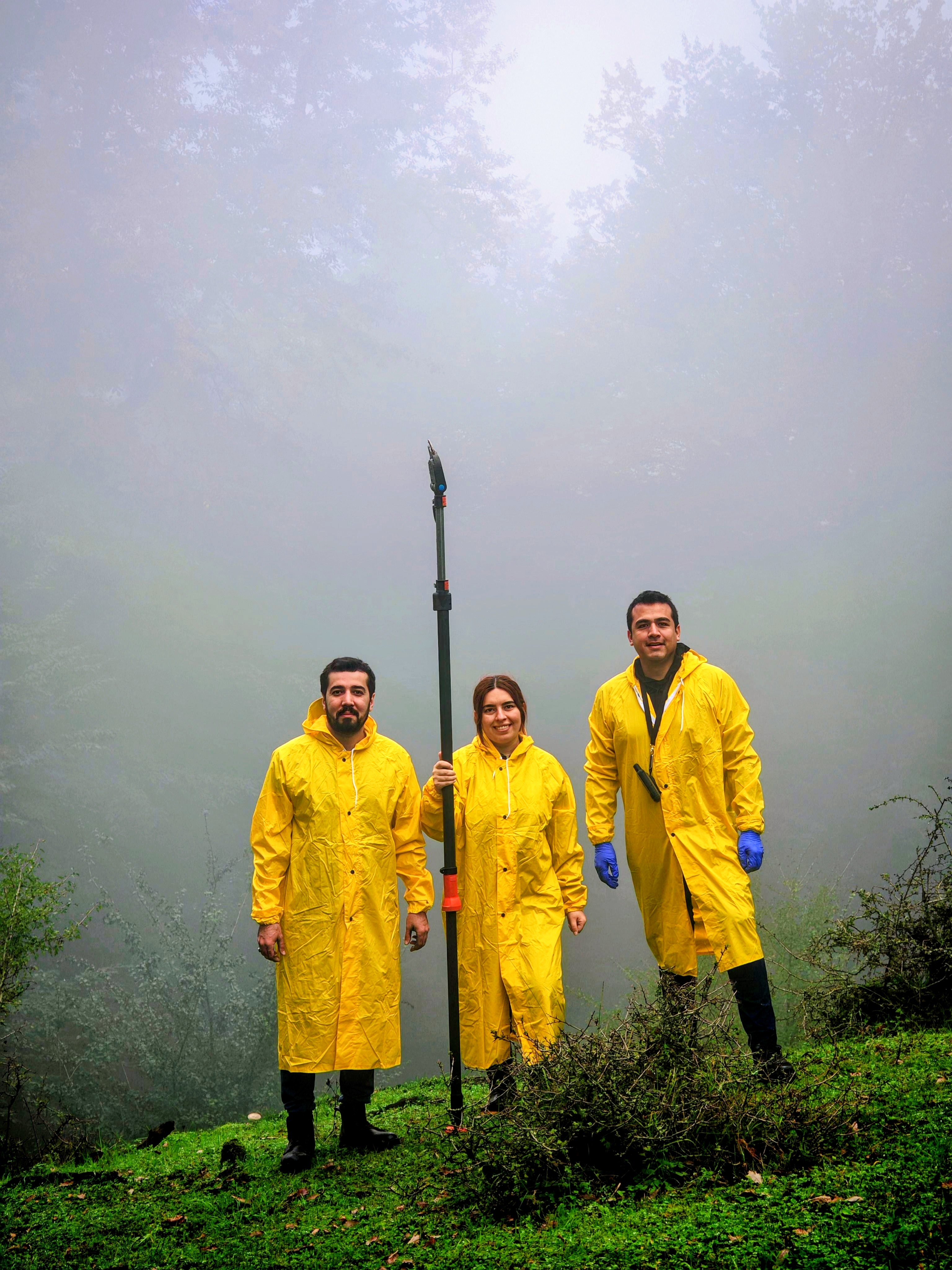
Image 4 of 9
After finishing work in the Thalysh Mountains (from left): field assistant Tural, PhD Khadija, postdoc Luis Ever. Photo: WSL

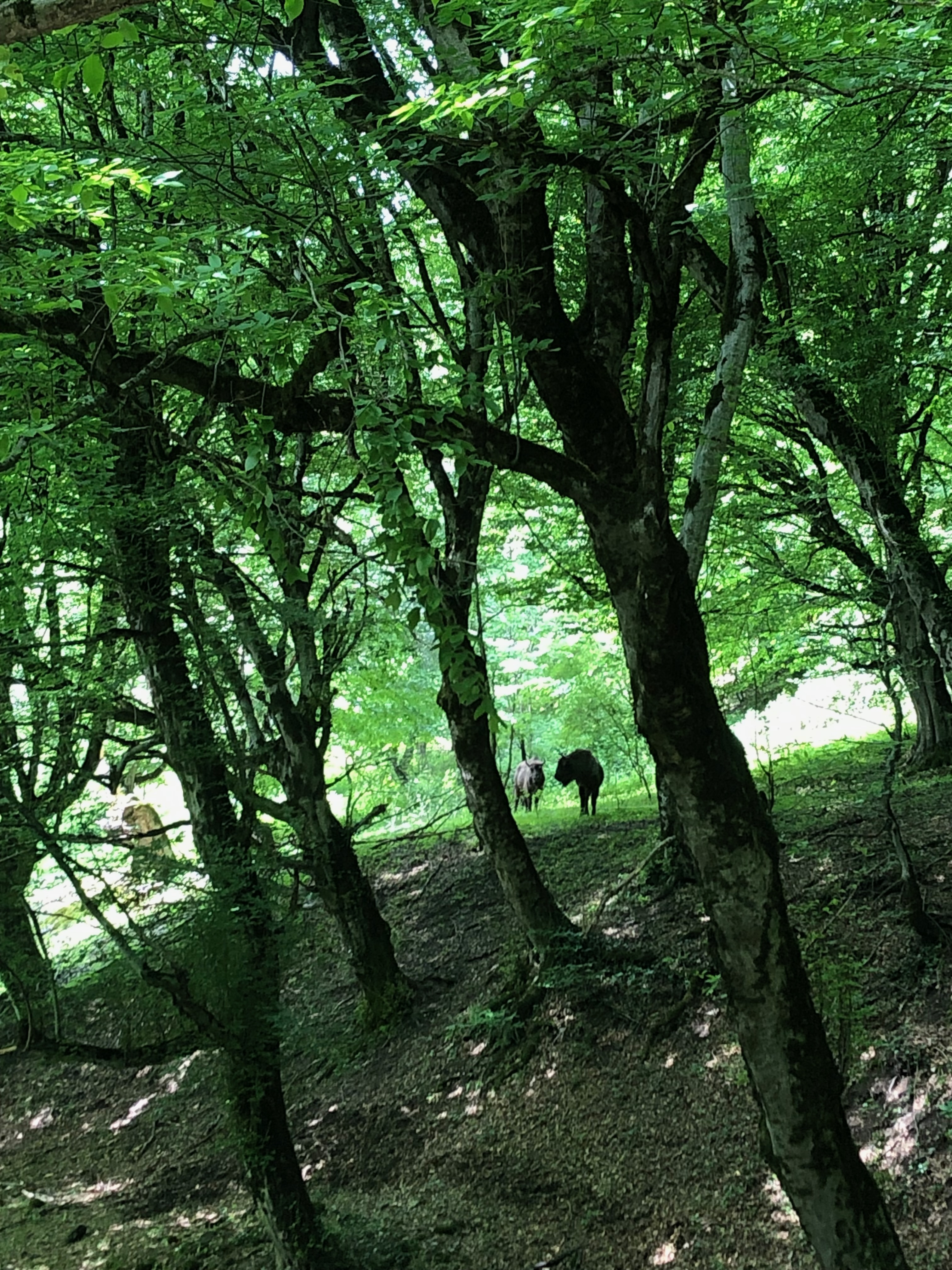
Image 5 of 9
In a forest reserve in the Greater Caucasus, herds of bison roam the woods. This photograph was taken from a distance; a brook flows between the location where it was taken and the animals. Photo: WSL

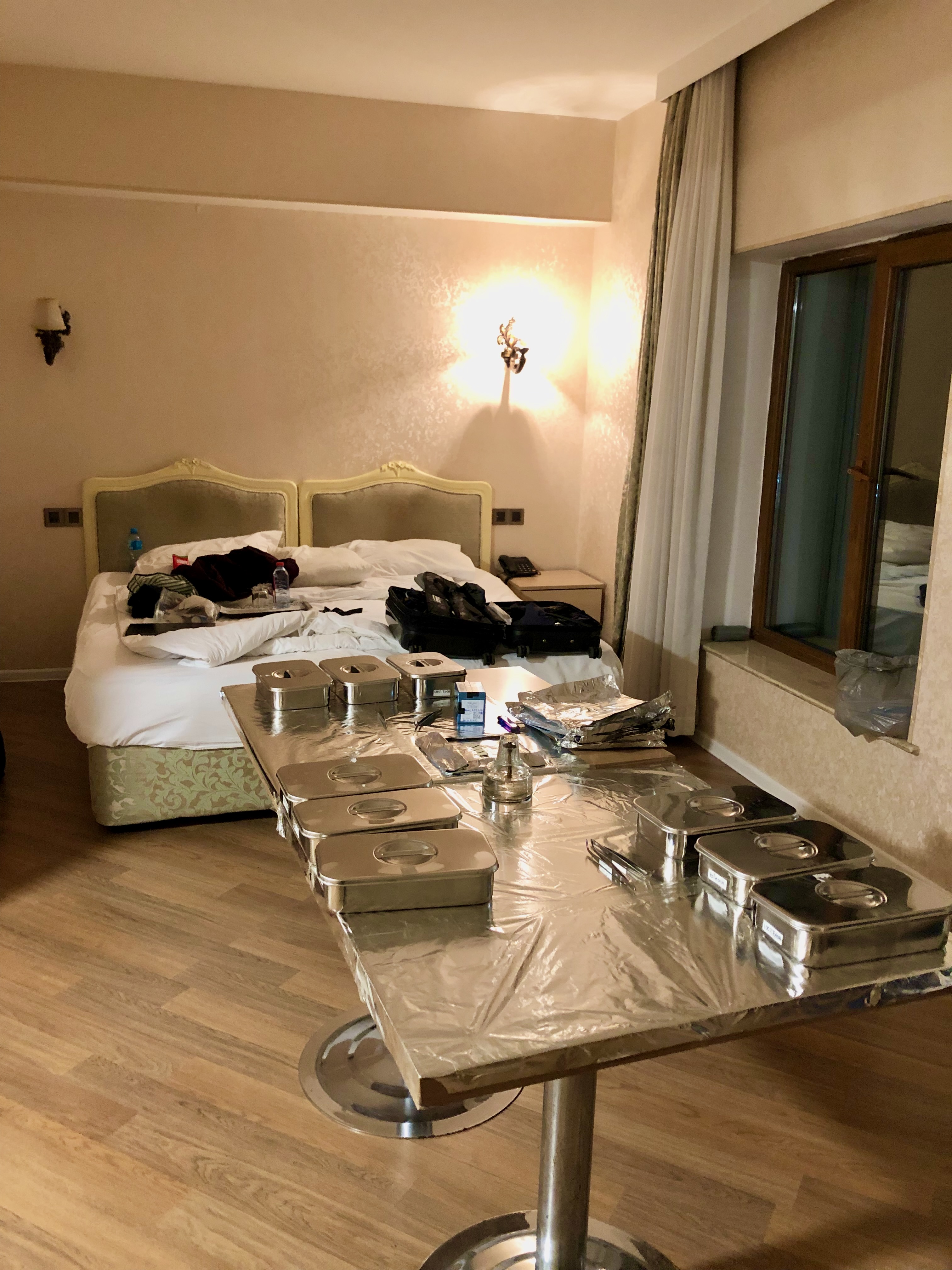
Image 6 of 9
During the day, we collected leaves, which we disinfected in the evenings in improvised laboratories in our hotel rooms. We ordered additional tables for this purpose, which we protected with aluminium foil from the bleach (sodium hypochlorite) we used. We worked in parallel at three separate stations, each with three stages of disinfection in metal tubs. Photo: WSL

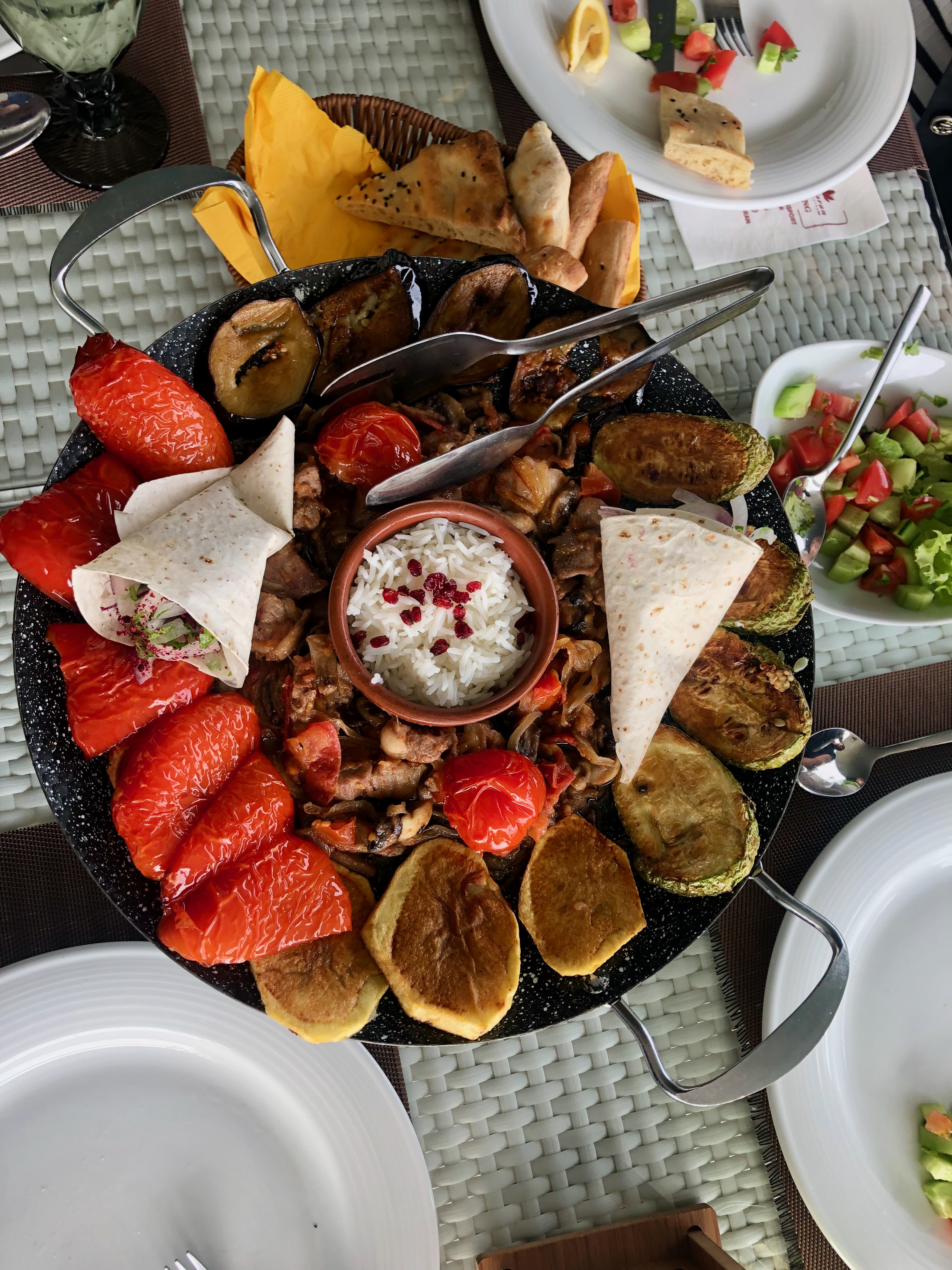
Image 7 of 9
The food in Azerbaijan was very diverse, always freshly prepared and very delicious, like this Sāç stew with vegetables, potatoes, lamb and rice. Photo: WSL

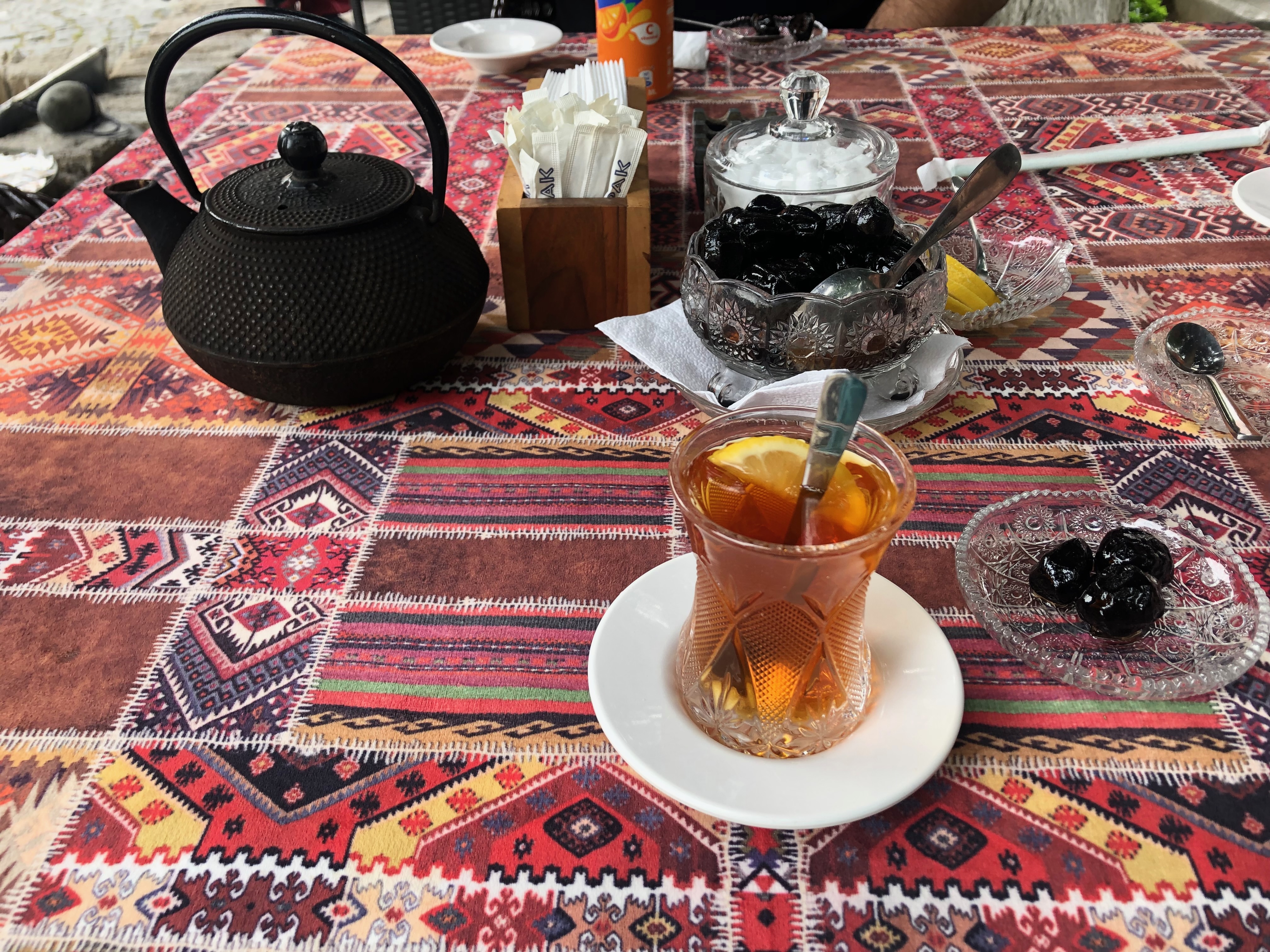
Image 8 of 9
In Azerbaijan, breaks are spent drinking freshly brewed tea, always accompanied by lemon slices and fruit compote. Here we were served a compote made from very young walnuts. Photo: WSL

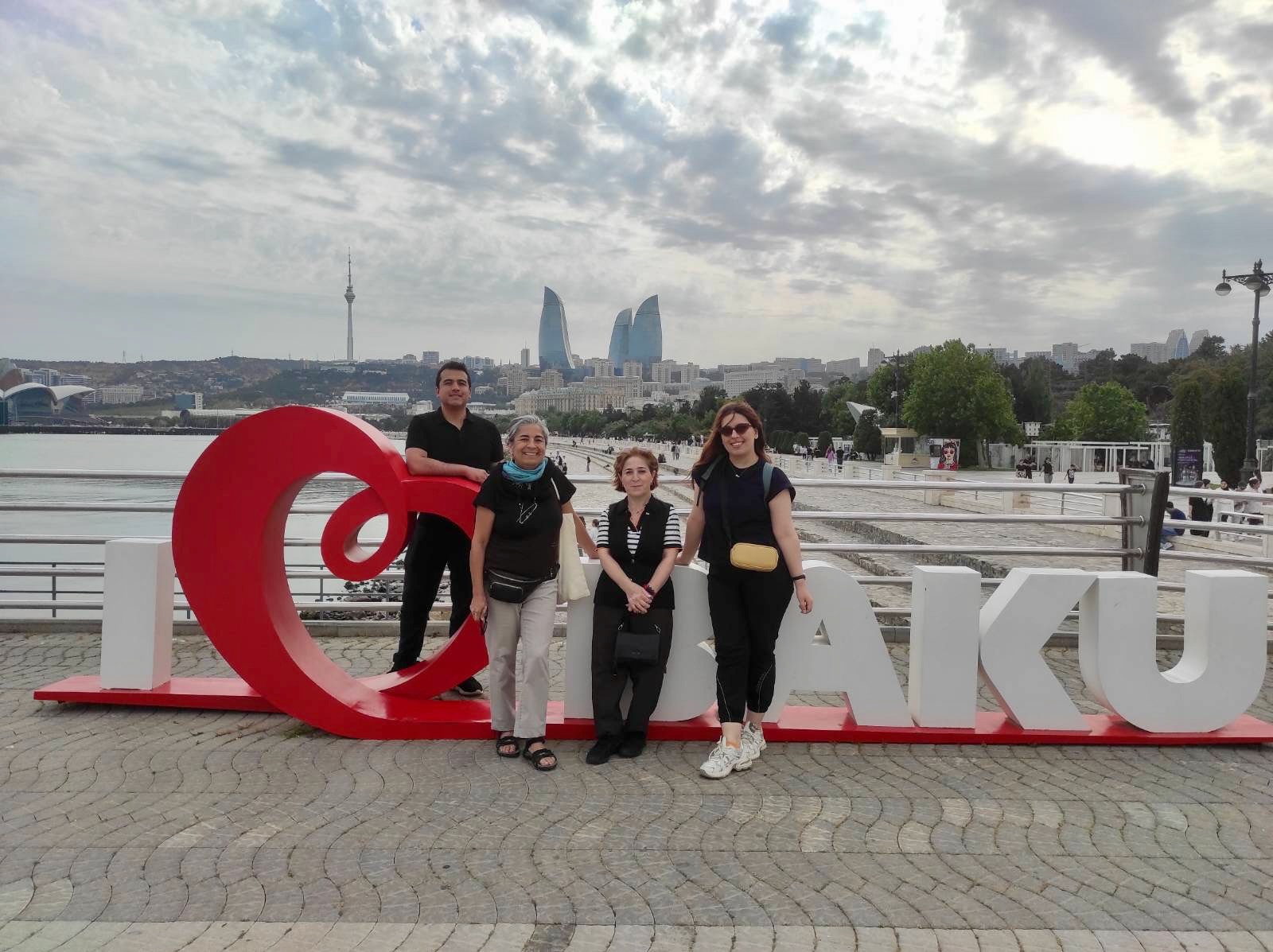
Image 9 of 9
Our small team in Baku on the Caspian Sea in front of the skyscrapers. From left to right: Luis Ever Vega (postdoc), Carolina Cornejo (project manager), Dilzara Aghayeva (project manager in AZ), Khadija Apbayeva (PhD student). (Photo: WSL)
P.S. Returning to Switzerland was not without its difficulties: we were briefly detained at the migration office in Baku for staying in the country for more than 15 days without proper registration, despite no advance information being provided. We also had to pay a costly fine for this offence, run at high speed to catch a flight in Istanbul after a delayed connection and wait for our delayed baggage, which contained all our sampled leaves, to be delivered the next day.
Read part two of the blog here: How a laboratory was established in Baku
Copyright 
WSL and SLF provide image and sound material free of charge for use in the context of press contributions in connection with this media release. The transfer of this material to image, sound and/or video databases and the sale of the material by third parties are not permitted.