

30.07.2026 | Haoyun Liu | WSL News
Forest trees can help contain heavy metals in polluted soils. But which tree species should be selected for this purpose? A study led by the Swiss Federal Research Institute for Forest, Snow and Landscape Research (WSL) investigated how seven different Central European tree species respond to metal-contaminated soils.
- All seven Central European tree species tested showed a similar ability to stabilise heavy metals in contaminated soil.
- Tree species with low nutrient needs keep excess metals out of their stems and foliage, making the production of uncontaminated timber possible.
- Selecting suitable tree species could bring abandoned land back into productive use while also safely confining the soil pollutants.
For centuries, artisanal and industrial activities have left many soils polluted with excessive levels of heavy metals such as zinc, cadmium, copper and lead, posing a threat to the environment and human health. Cleaning up polluted sites is often difficult and expensive, especially when larger areas are affected. As a result, many sites need to be managed in a way that prevents pollutants from washing away into groundwater or neighbouring ecosystems.
One promising solution is phytostabilisation— using plants to reduce the spread of pollutants into the environment. Trees are particularly well suited because of their long lifespans and extensive root systems. To find out which tree species to select for this purpose, researchers from the Swiss Federal Research Institute WSL and ETH Zurich compared the stabilisation potential of seven Central European tree species.
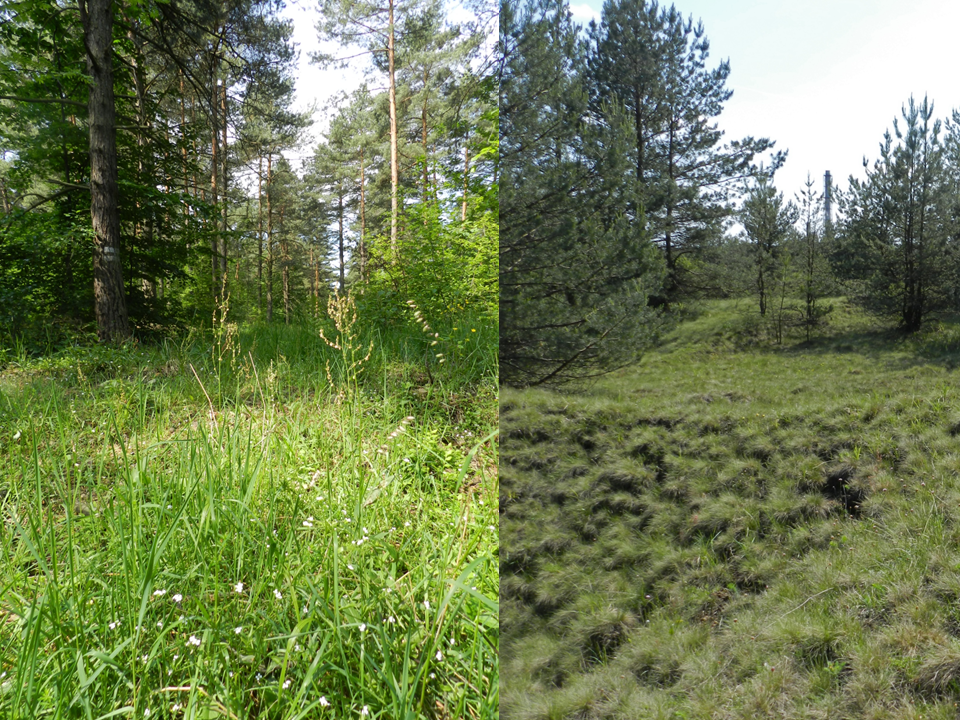
Experiment on contaminated soil 
The researchers grew the trees for five years in soils containing heavy metal-concentrations similar to those found in contaminated sites. They measured metal concentrations in the roots, the stems and the leaves and compared them with trees growing in uncontaminated soil. The results have been published as the cover story of the journal Plants.
The selected tree species represent two contrasting growth strategies (see Box). Four “acquisitive” species, including grey alder (Alnus incana), aspen (Populus tremula), osier willow (Salix viminalis) and silver birch (Betula pendula), require large amounts of nutrients. On the other hand, three “conservative” species, namely Norway spruce (Picea abies), European beech (Fagus sylvatica) and sycamore maple (Acer pseudoplatanus), have lower nutrient requirements.

While all seven species showed similar concentrations of heavy metals in their roots when grown in contaminated soils, the amount of these metals transported aboveground was different. The acquisitive species transported more zinc and cadmium into their stems and especially their foliage, likely because of their higher nutrient needs. In contrast, the conservative species kept excess metals away from their stems and foliage, in some cases storing excess zinc in specialised root structures instead.
As a result, the wood of conservative species contained no more heavy metals than wood from trees grown in uncontaminated soil. “We were surprised by how clear-cut the distinction was between the two growth strategies”, says Madeleine Günthardt-Goerg, first author of the study. "This gives us practical guidance on which tree species to choose for polluted sites".
Forests to the rescue 
Once abandoned, polluted sites are often spontaneously reclaimed by forest trees. Selecting suitable species with conservative growth strategies could help confine contaminants in the soil, prevent metals from recirculating through falling and decomposing leaves, while also yielding uncontaminated wood products.
“Adapted forest management may allow us to bring polluted sites back into the economic cycle in a cost-effective way”, says Pierre Vollenweider, researcher at WSL and last author of the study. “The next step would be to test this approach under real conditions at polluted sites.”
What are growth strategies?
Trees can be broadly categorised into two ecological or growth strategies.
- Acquisitive species need higher amounts of nutrients, tend to grow faster and complete their life cycle more rapidly.
- Conservative species require smaller quantities of nutrients, sequester more carbon and generally have longer life spans.
Contacts 
Original publication 
Günthardt-Goerg, M.S.; Schulin, R.; Schleppi, P.; Vollenweider, P. Belowground and Aboveground Responses to Mixed Metal Contamination in Native Central European Trees in Relation to the Species-Specific Autecology. Plants 2026, 15, 1269. https://doi.org/10.3390/plants15081269
Copyright 
WSL and SLF provide image and sound material free of charge for use in the context of press contributions in connection with this media release. The transfer of this material to image, sound and/or video databases and the sale of the material by third parties are not permitted.