

08.08.2025 | Sofía Morgade | WSL News
Thanks to genetic testing, WSL researchers were able to map the distribution of great crested newts in the Grande Cariçaie. A lesson in how environmental DNA can help with nature conservation.
- A WSL-team searched the Grande Cariçaie for possible occurrences of the great crested newt.
- Just a few days after the researchers had determined the distribution of the great crested newt using DNA in water samples, volunteers sighted great crested newts in the same locations.
- Environmental DNA is more efficient than traditional monitoring (sightings), especially for rare amphibian species, and thus improves species conservation.
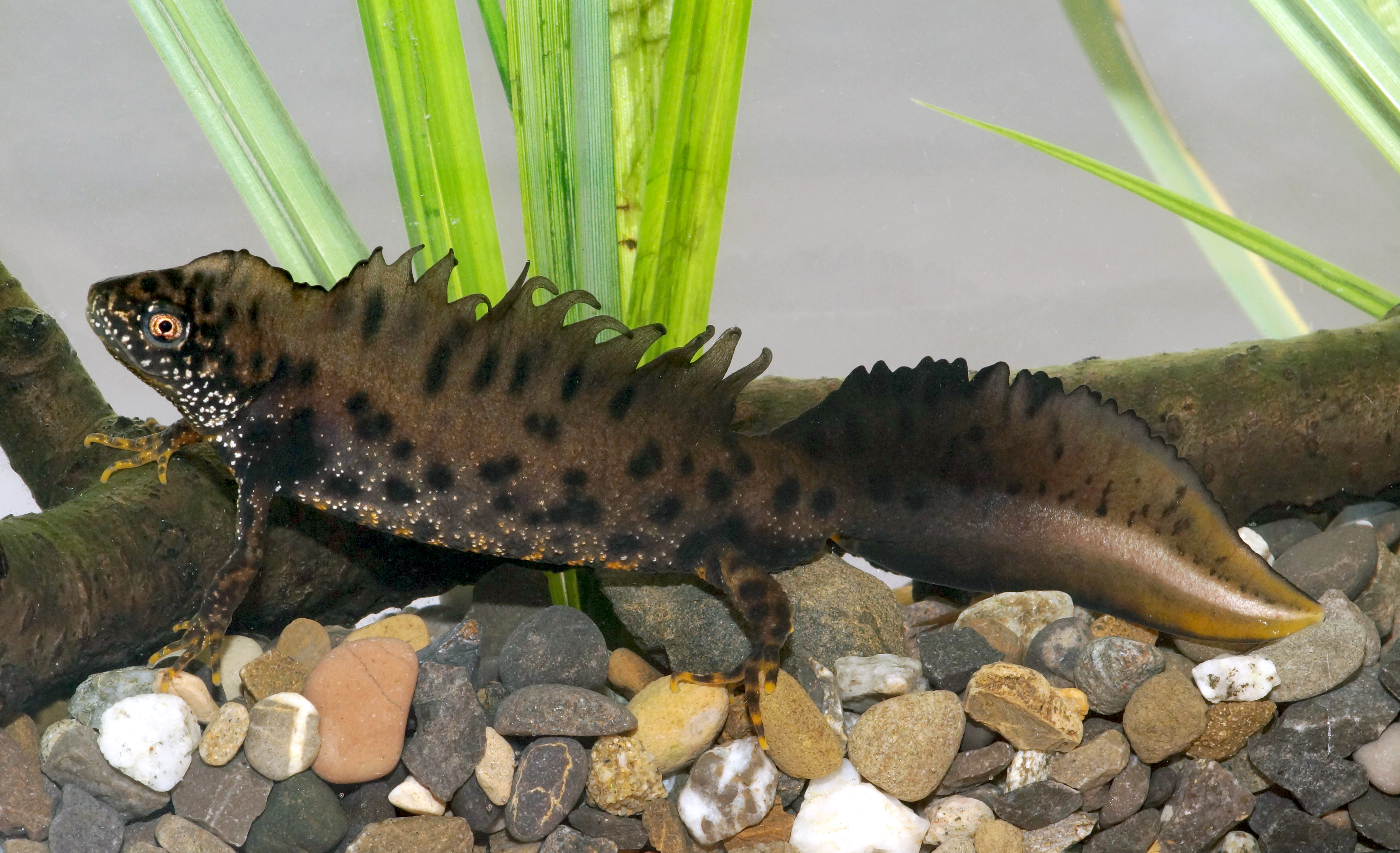
It had been missing for twenty years, but last year members of the Grande Cariçaie Association (VGC) finally rediscovered it: the rare and highly endangered great crested newt apparently still lives in the Grande Cariçaie nature reserve at Lake Neuchâtel. Thanks to this discovery, DNA research by the Swiss Federal Institute for Forest, Snow and Landscape Research (WSL) is now helping in the search for further occurrences.
Last year, the research Group Ecosystems and Landscape Evolution of the WSL and ETH Zurich published a new method for detecting amphibians using environmental DNA (eDNA) (see WSL News). eDNA refers to genetic material that animals release into the environment via their skin or excrement. With this method, researchers take water samples and analyse the genetic material they contain in the laboratory. This enables them to identify the species present in or around a body of water.
After reading about the WSL's research, members of the Grande Cariçaie association asked them to collaborate. The aim was to use the eDNA method to search other areas of the region for the presence of great crested newts.
Finding the newt's DNA in the water 
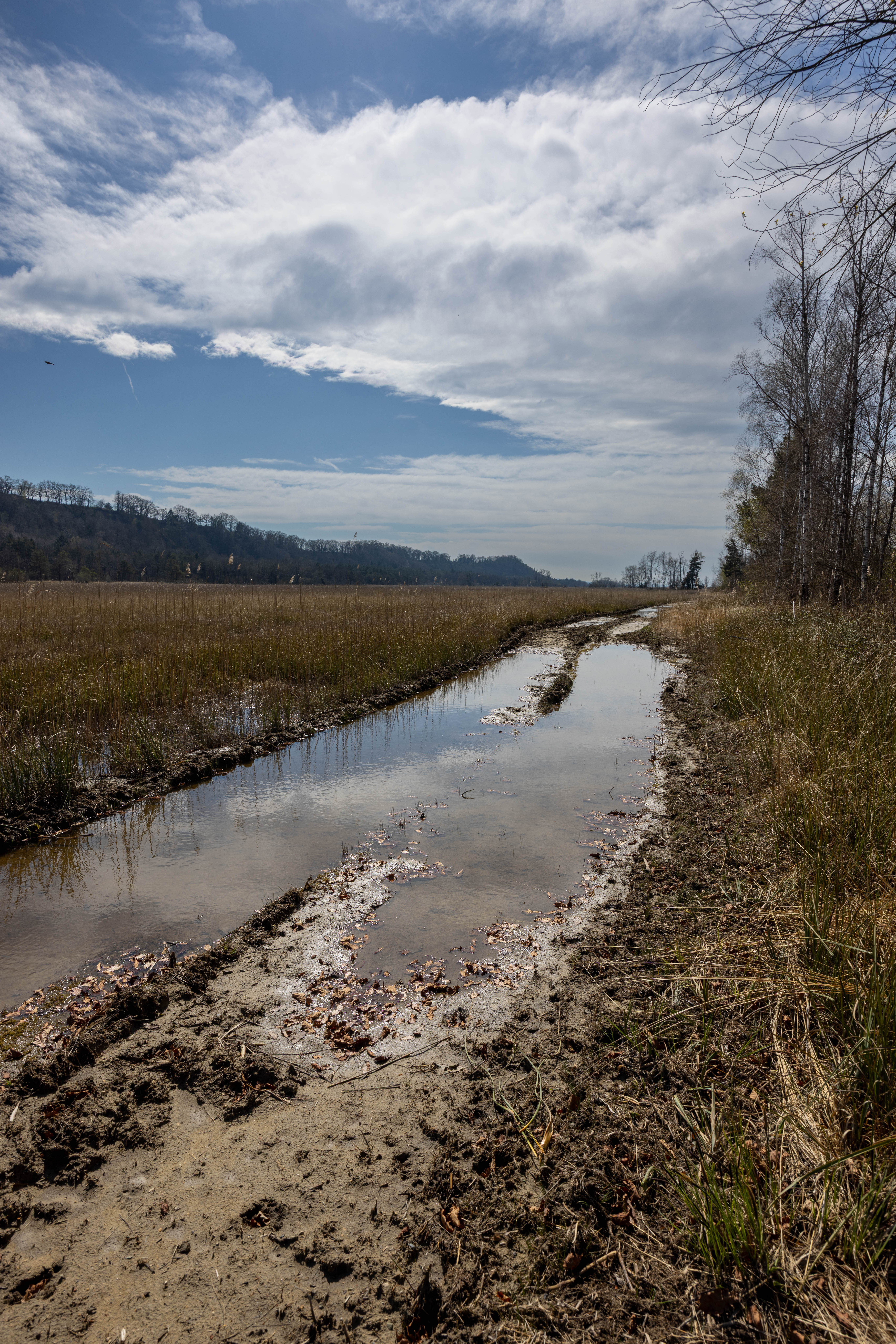
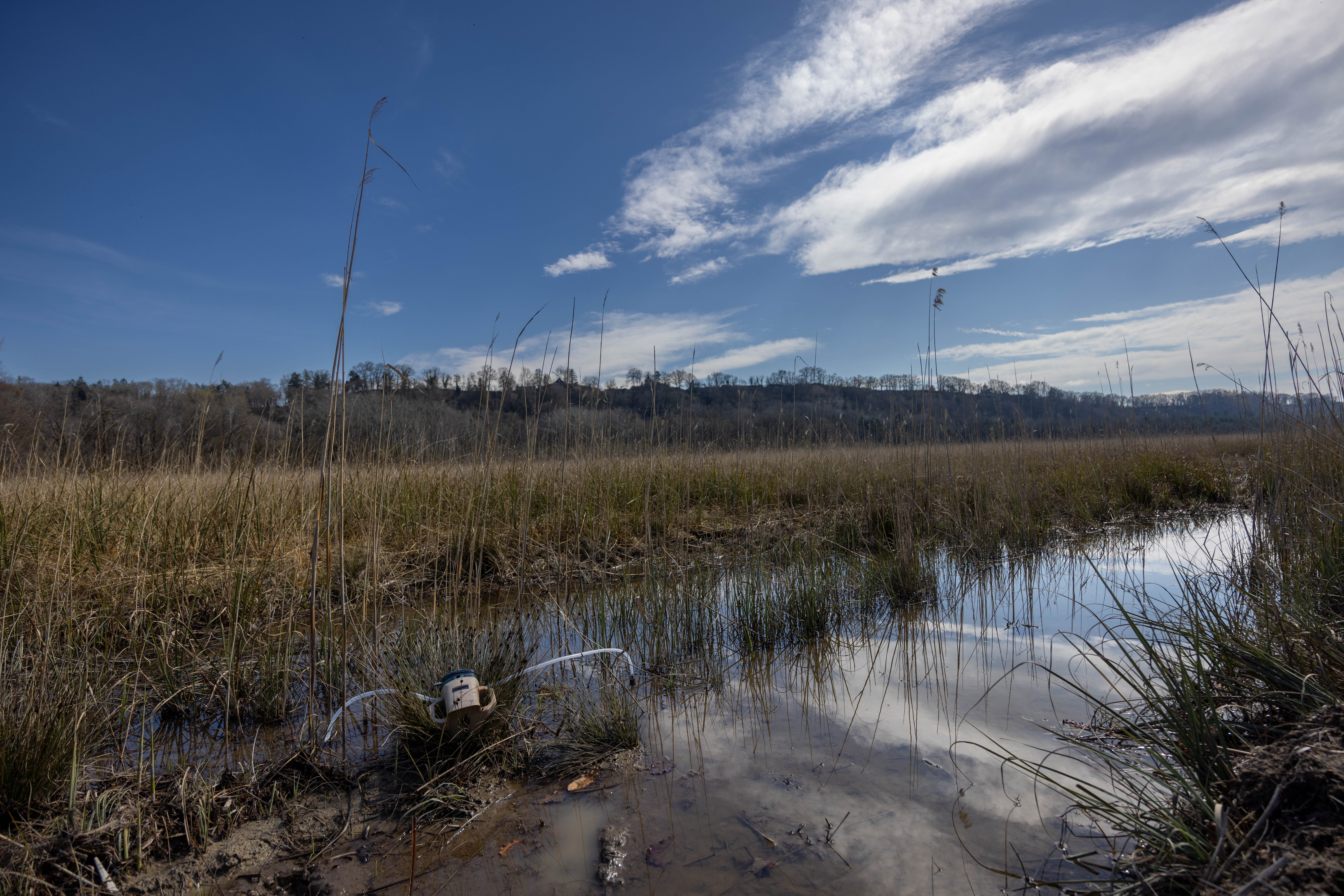
In April this year, the research group collected water samples from various locations in the wetland and then analysed them in the laboratory. To their surprise, the researchers were able to detect DNA from the great crested newt at three locations. "We didn't think we would find it with eDNA. The Grande Cariçaie is a marshland with countless large puddles, ponds and pools stretching over several kilometres. You can't assume that all amphibians are present in all locations. So you need a lot of luck to find a particular species," says Flurin Leugger, a doctoral student in the research group. Another difficulty is that eDNA is very diluted, especially in large bodies of water, so the researchers must filter a lot of water to detect it.
But the next success was not long in coming: Just shortly after the researchers had taken the water samples, members of the association spotted great crested newts at night in the same locations with flashlights, thus confirming their presence as part of their traditional monitoring.
This collaboration is special because the eDNA samples were collected almost simultaneously with the sightings of the great crested newt. In their earlier experiments, the WSL researchers had compared the eDNA findings with traditional observation data, some of which had been collected weeks earlier. The comparison was therefore only indirect. ‘Now we know that the observations match one-to-one,’ says Martina Lüthi, a postdoctoral researcher in the research group. Through the collaboration with the association, the researchers were able to transfer their method from pure science to nature conservation practice for the first time.
Targeted species protection 
Great crested newts like to hide in the rich vegetation of water bodies and are therefore difficult to find using traditional monitoring methods, i.e. visually searching for individual animals. With eDNA, larger areas can be searched. This is a major step forward in the protection of rare animals such as the great crested newt. Only when nature conservation associations know where the animals occur can they protect and enhance their habitats in a targeted manner.
The researchers are currently working on adapting the method so that they can analyse the samples directly in the field, similar to rapid tests for Covid-19. This would give them the answers directly on site without any loss of time.
Contact 
Please send inquiries up to and including August 15 to media(at)wsl.ch, as the contact persons will not be available until August 18.
Publications 
Copyright 
WSL and SLF provide image and sound material free of charge for use in the context of press contributions in connection with this media release. The transfer of this material to image, sound and/or video databases and the sale of the material by third parties are not permitted.