

19.11.2026 | Cédric Angehrn | WSL News
Protected areas safeguard valuable habitats for endangered animals and plants. However, for them to fulfil this role in the long term, suitable policy frameworks, appropriate management and closer collaboration between research and practice are needed. How protected areas in Switzerland can continue to develop despite climate change and diverse land-use demands is the topic of this year’s “Forum für Wissen” hosted by the WSL.
Protected areas are considered the backbone of biodiversity conservation. But how well do they actually fulfil this role? What do we know today about their condition, their effectiveness, and their future? These questions will be discussed at this year’s “Forum für Wissen” hosted by the Swiss Federal Institute for Forest, Snow and Landscape Research WSL on November 19th.
As always at the WSL’s annual “Forum für Wissen”, representatives from the worlds of research and practice come together to discuss how scientific findings can be applied in concrete ways. The speakers present new approaches such as “Wild pastures,” offer suggestions on how to incorporate an uncertain future into planning, or—as in the presentation by the Canton of Aargau—highlight their own work and the challenges they face.
“Protected areas are the best-known and most effective tool for species conservation worldwide, including in Switzerland,” says Ariel Bergamini, head of the Ecosystems Dynamics Group at WSL. “But a protected area alone is no guarantee that species will be protected in the long term. It is crucial that we safeguard and improve the quality of existing areas and discuss new challenges — such as those posed by climate change — at an early stage. This forum offers precisely such an opportunity: Stakeholders from research and practice come together to discuss the effectiveness of existing conservation measures, become aware of new challenges, and explore possible solutions.”
The forum contributions are published in the conference proceedings. Below is a brief overview:
Successes and challenges in Switzerland’s biotopes of national importance
New surveys and analyses of biotopes of national importance show that conservation efforts are effective for dry grasslands and pastures as well as amphibian breeding sites; however, additional efforts are needed for bogs and floodplains to halt negative trends.
The potential of remote sensing for detecting changes in protected areas
Remote sensing complements field surveys in the monitoring of protected areas. Protected areas can be assessed over large areas using remote sensing without the need to enter them. If the data has sufficient temporal resolution, changes can even be identified within the growing season (e.g., mowing or vegetation drying out due to drought).
Forest development in natural forest reserves over the past 50 years
Using four reserves as examples, this study examines the development of a network of approximately 50 natural forest reserves over a period of more than 50 years.
Fungal diversity in protected floodplain forests: A comparison between restored and non-restored sections
Restoration measures in protected floodplain forests also affect fungal communities, which is why fungal monitoring should play a greater role in future studies assessing the effectiveness of such measures.
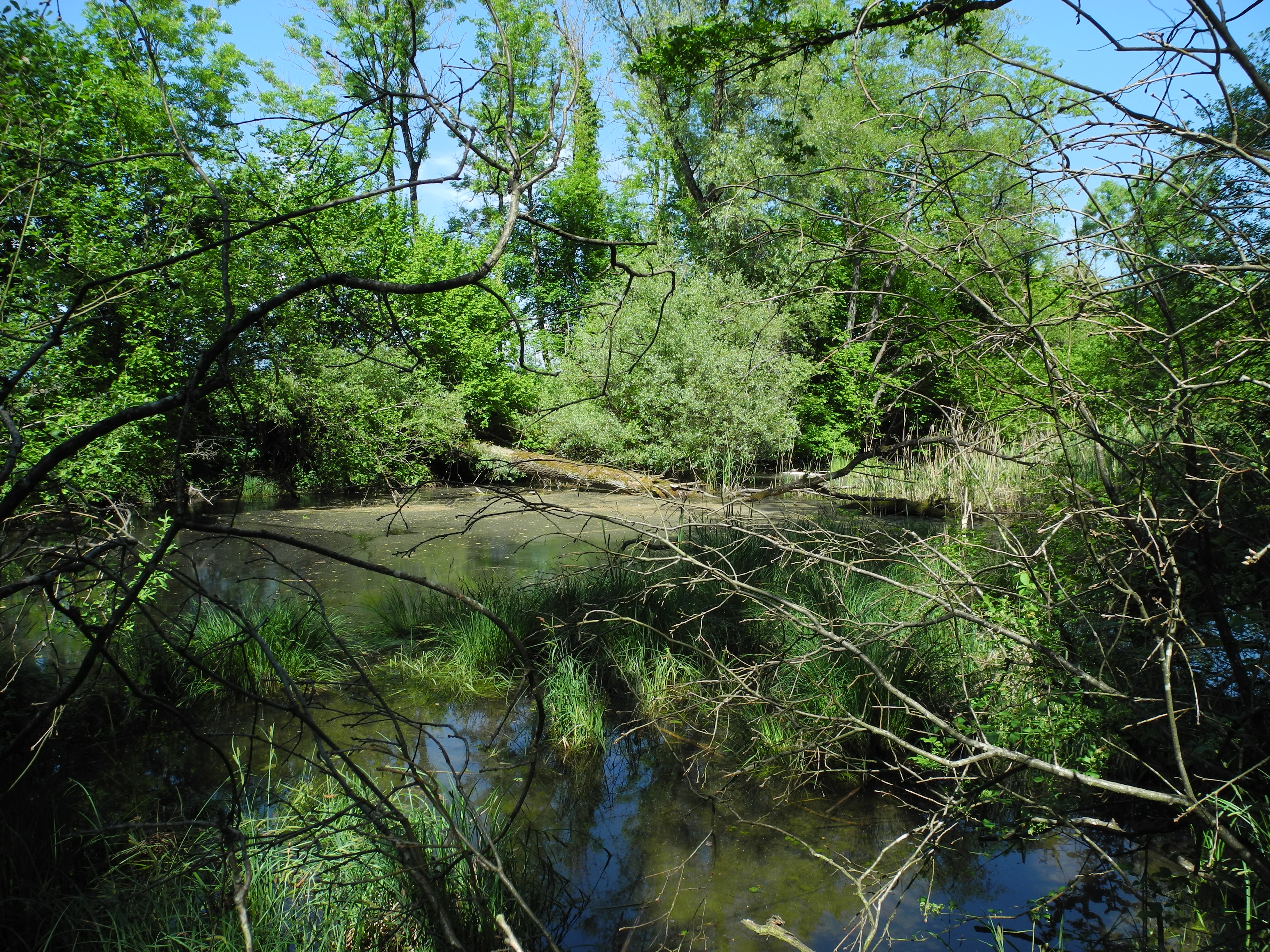
How to build an effective Swiss network of protected areas
To effectively connect the Swiss network of protected areas, more large-scale protected areas, an overview of existing areas, clear responsibilities, continuous management—and, last but not least, greater appreciation are needed.
Protected areas as the cornerstone of nature conservation — Insights from the canton of Aargau
This article explains how protected areas are organized and managed in the Canton of Aargau, highlights the particular importance of amphibian habitats, and discusses the challenges facing nature conservation.
Setting new standards for establishing hydrological buffer zones around bogs in Switzerland
To better safeguard the water balance of bogs, the bog and its surroundings must be understood as a single hydrological unit. Therefore, disturbances within the hydrological watershed must be taken into account to a much greater extent than before.
Nature conservation planning in the face of climate change: Good design is key
Climate change is having a massive impact on ecological conditions and species distribution. Therefore, future nature conservation planning must be well-designed to ensure that conservation efforts remain effective even under changing climatic conditions.
30 x 30: Protected areas with a future
Biodiversity and ecosystem services must be safeguarded not only today but also under future conditions. Using future scenarios, the Bern Landscape Change Explorer can help identify robust protected areas and opportunities for ecological restoration in the canton of Bern for the purpose of biodiversity planning.
Wild pastures — Switzerland’s untapped biodiversity potential
In Germany, “wild pastures” — extensively grazed, year-round mixed pastures covering large areas designed to promote biodiversity — are already well established. In Switzerland, however, they are not yet known. This contribution introduces the concept and highlights the potential of this new tool.
Agriculture and protected areas: Balancing land use and biodiversity conservation in multifunctional landscapes
Agriculture can both strengthen and impair protected areas. It is therefore crucial to determine how both can work together to contribute to the multifunctionality of landscapes in Switzerland.
Contact 
Links und Dokumente 
WSL Publikationen 
Copyright 
WSL and SLF provide image and sound material free of charge for use in the context of press contributions in connection with this media release. The transfer of this material to image, sound and/or video databases and the sale of the material by third parties are not permitted.