

30.04.2025 | Lisa Jourdain | WSL News
In spring 2025, WSL PhD student Lisa Jourdain spent four weeks in Australasia searching for centuries-old wood samples that hold valuable information about past climates. In this logbook, she shares stories from her expedition, which took her to remote forest sites and into an ancient wood archive.
On the Other Side 
"See you on the other side."
A simple sentence, but one that had never felt more accurate. Traveling from Switzerland to Tasmania and New Zealand truly meant going to the other side of the Earth—exchanging winter for summer, night for day, and right-hand traffic for left. A world that felt both unfamiliar and yet was strangely similar.
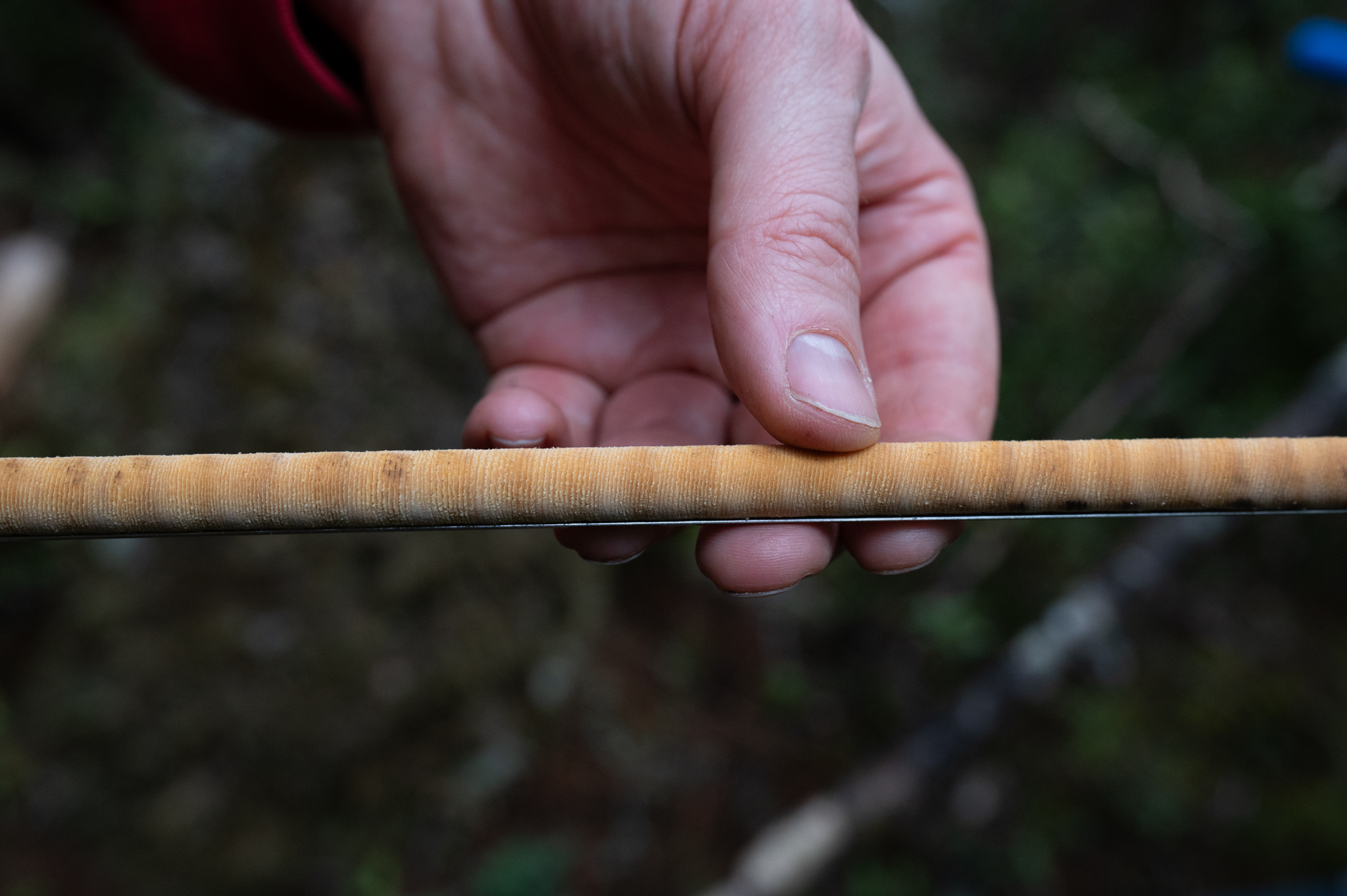
So what brings us to Australasia? We are here to investigate the remarkable potential of this region for climate reconstruction, using advanced methods in dendrochronology, or tree-ring science. By studying the microscopic structure of tree rings, we can extract historical information on the environment that go back several hundred, or even a thousand, years.
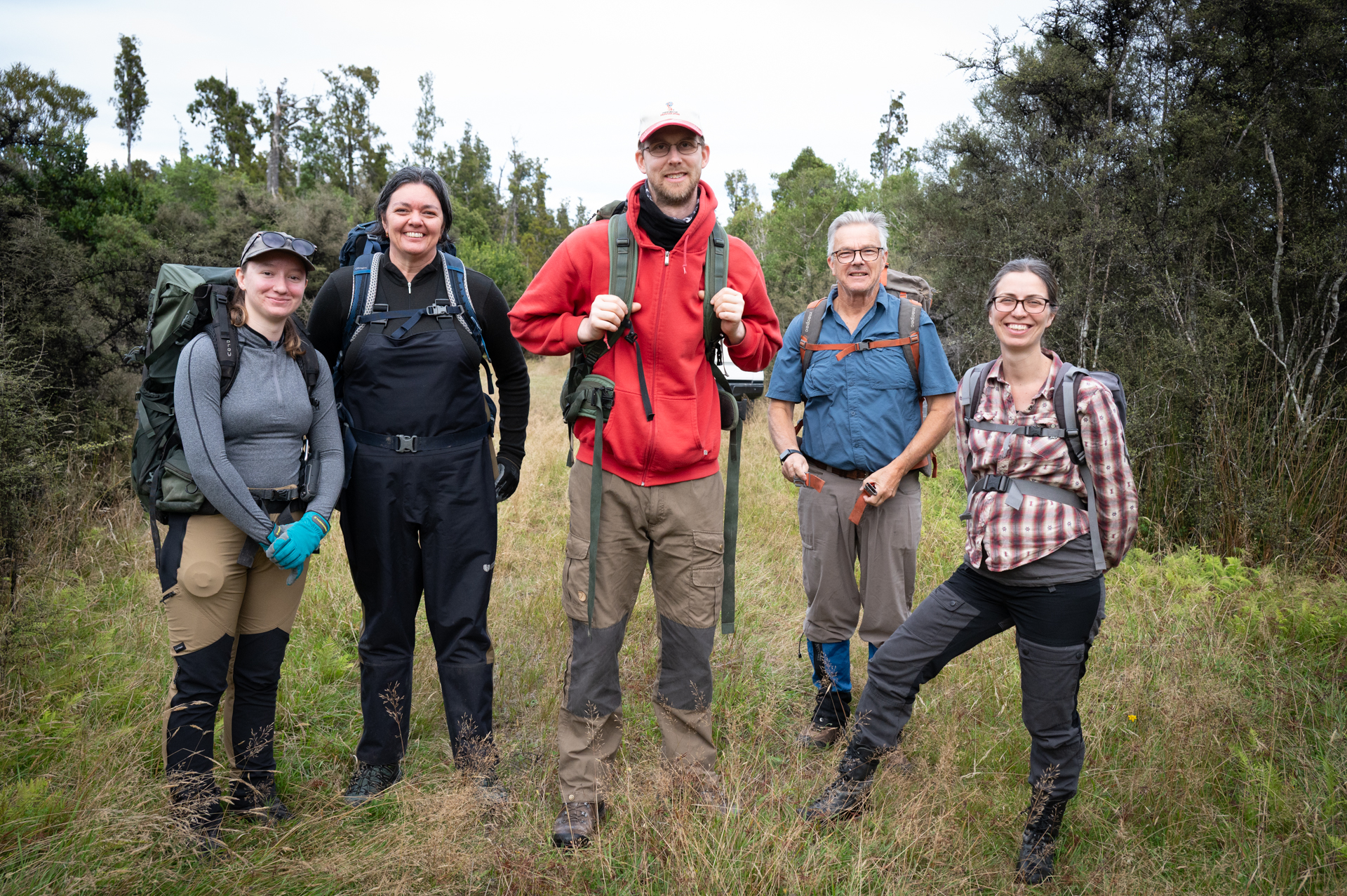
This work is part of the RECONSPHERE project, involving researchers from around the world, which aims to expand this climate data across both hemispheres, including Australasia. That is why our small European team, including Jesper Björklund (University of Gothenburg), Kristina Seftigen (University of Gothenburg) and myself, traveled to the other side of the world to meet Kathy Allen in Tasmania and Jonathan Palmer in New Zealand. Our aim was to bring back wood samples from trees that can help reconstruct the past climate.
A simple plan, difficult in practice 
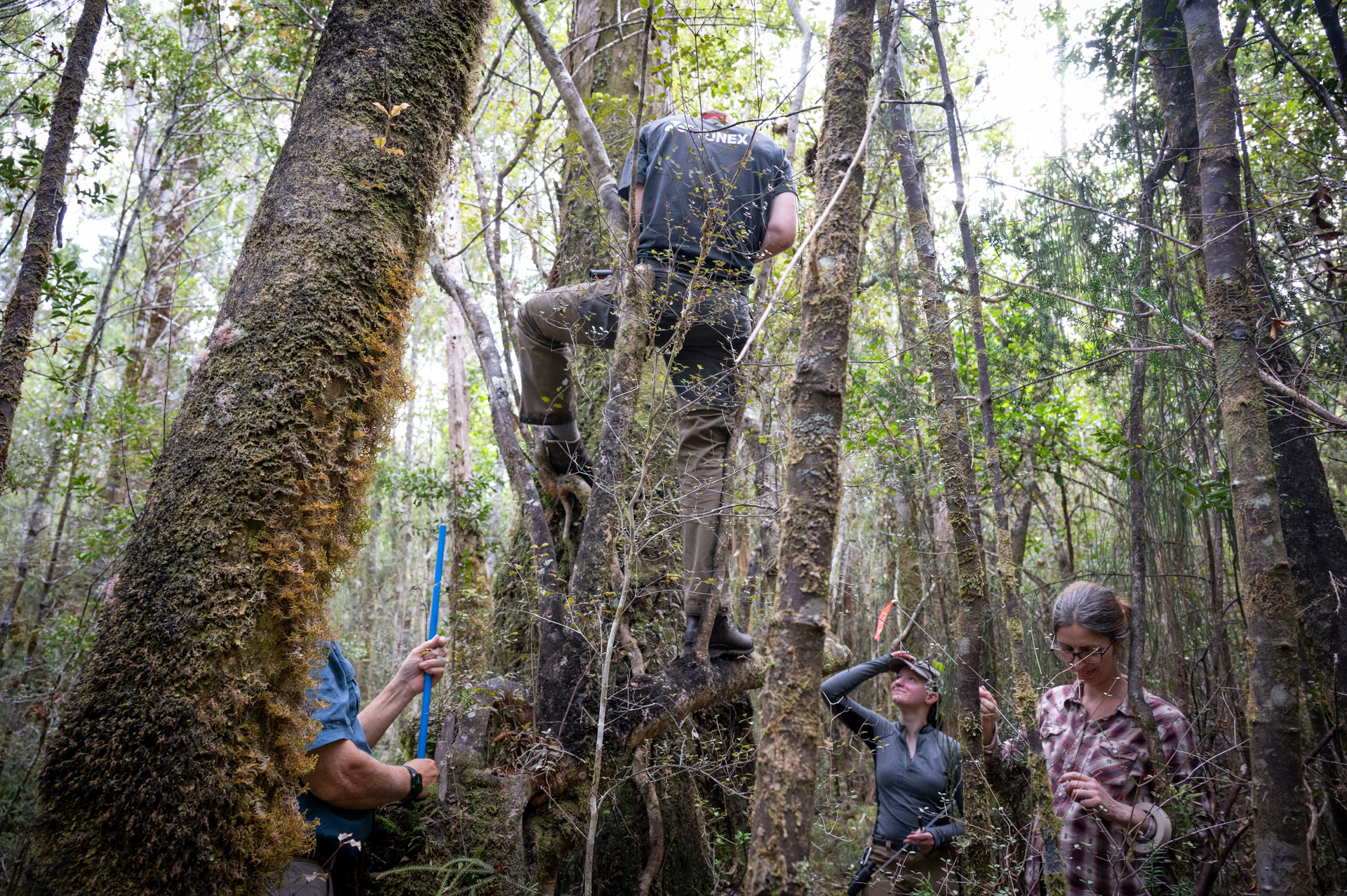
Collecting wood samples from living trees may seem straightforward: reach the site, extract a few cores from each tree, take notes, record coordinates. But in reality, it felt more like an obstacle course, balancing across fields of large boulders and moving in slow-motion through dense vegetation. We found ourselves “scrub bashing” (Australian slang for making your way through dense and difficult vegetation) through tangled undergrowth and prickly bushes like navigating a laser maze. Moving from one tree to the next often took more time than anticipated.
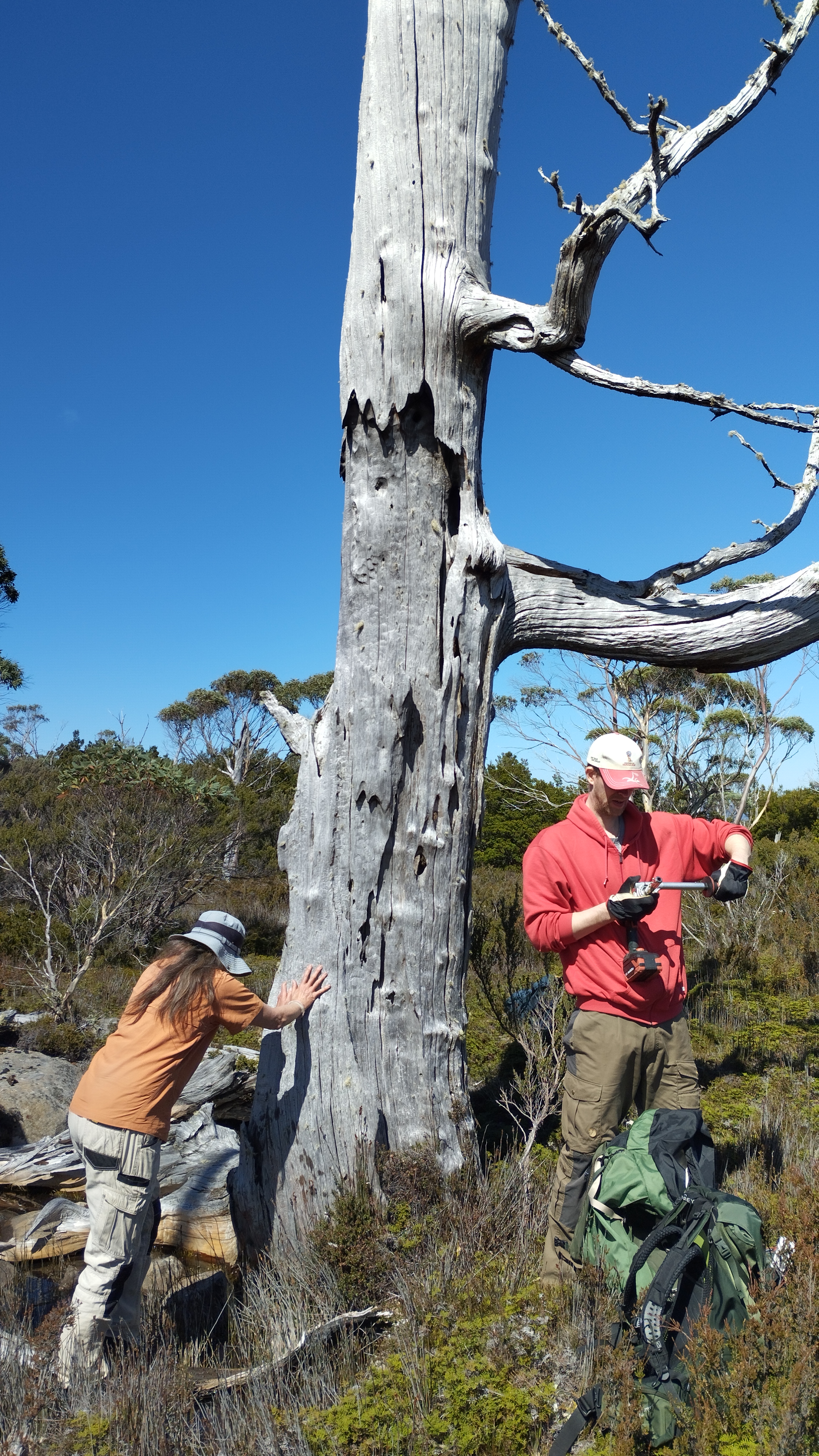
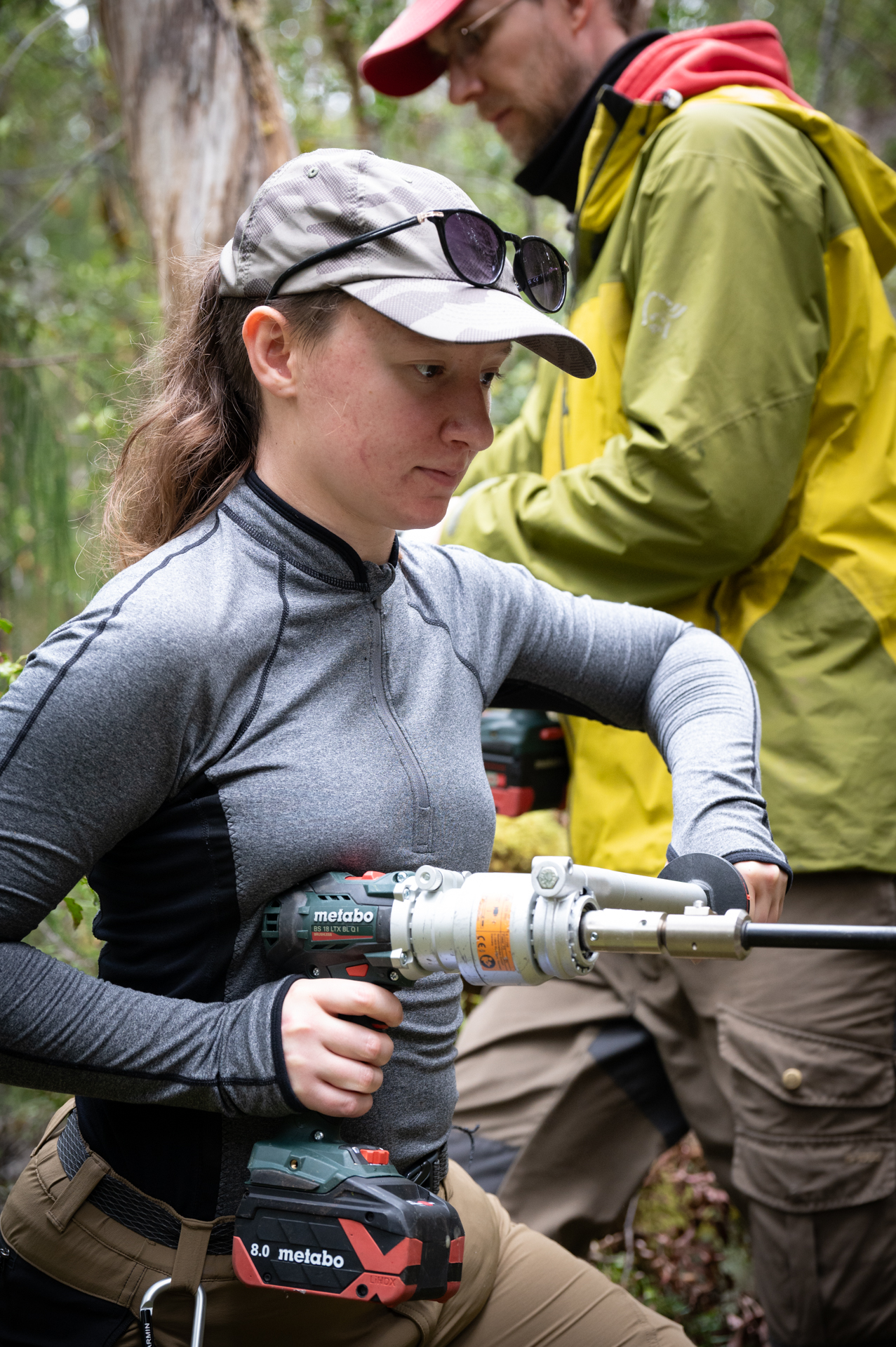
The coring itself also came with its own challenges. Sometimes, the borer would get stuck deep inside the trunk, requiring a rope (and some patience) to retrieve it. Other times, reaching the right part of the tree meant climbing awkwardly or twisting into strange positions.
No matter how well you plan, you can only really understand a forest and select the trees to sample once you are on site. That is what makes fieldwork so valuable: it adds depth and context to the data we bring home.


The Key to Successful Fieldwork 
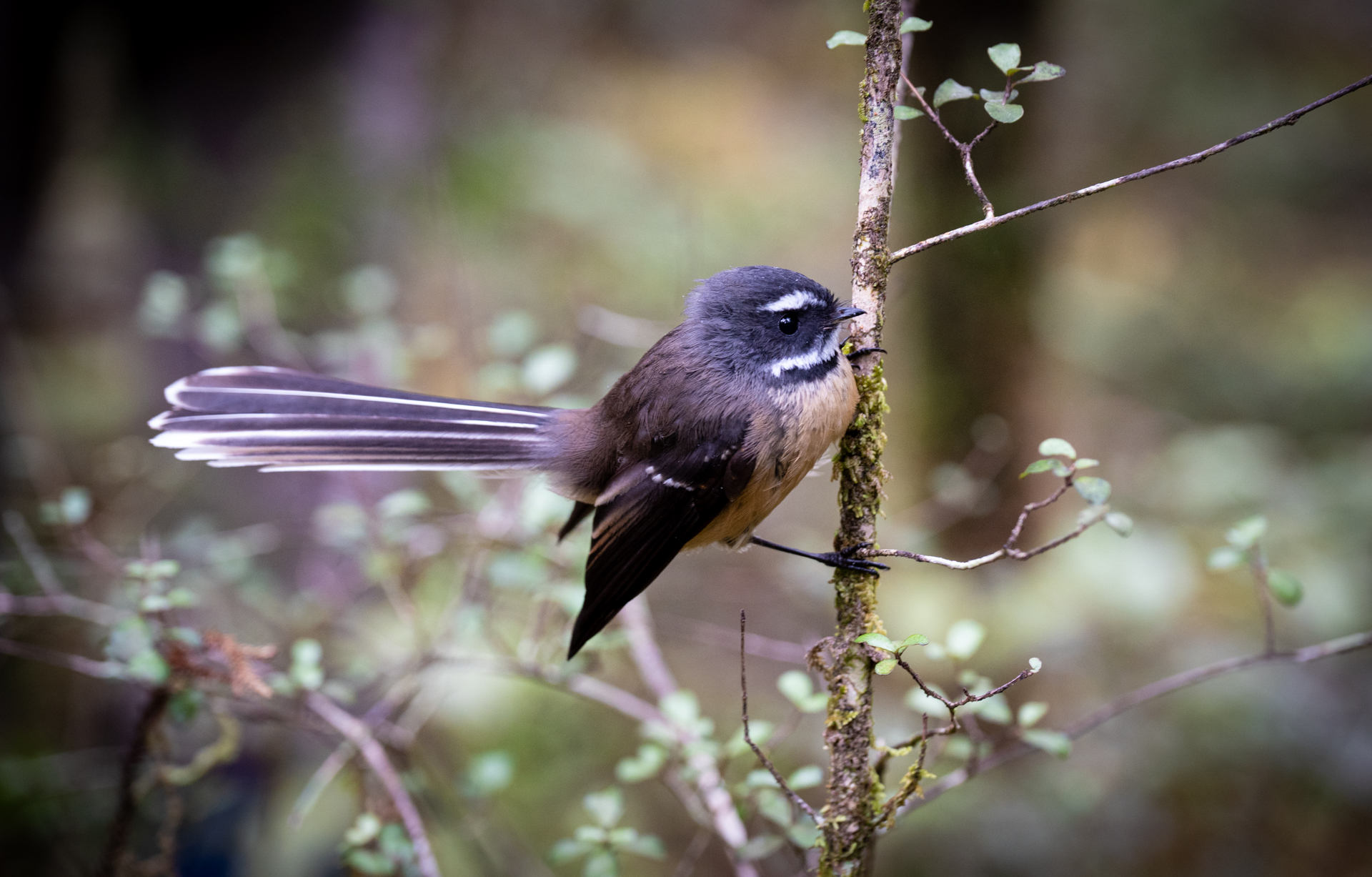
Conditions in the field were sometimes harsh, so working as a team—staying organised and defining clear roles—was key to our success. Luckily, New Zealand’s friendly birds helped by closely supervising our work, while Kathy’s homemade cookies gave us the energy boost that carried us through the dense Tasmanian forest.
I was surprised by the distinct scent of each tree species, amazed by the breathtaking scenery, and stunned by the age of the trees. We often found ourselves guessing the number of rings in a core: could it be 500? Or maybe even 800? We each placed our best bets and now eagerly wait for the laboratory results to tell us the truth.
Diving into the Past 
A 500-year-old living tree is already remarkable—but the RECONSPHERE project aims to extend our chronologies even further, reaching back at least 1,000 years, with strong replication across samples. To support this goal, we had the opportunity to visit Andrew Lorrey at the National Institute of Water and Atmospheric Research (NIWA) in Auckland.
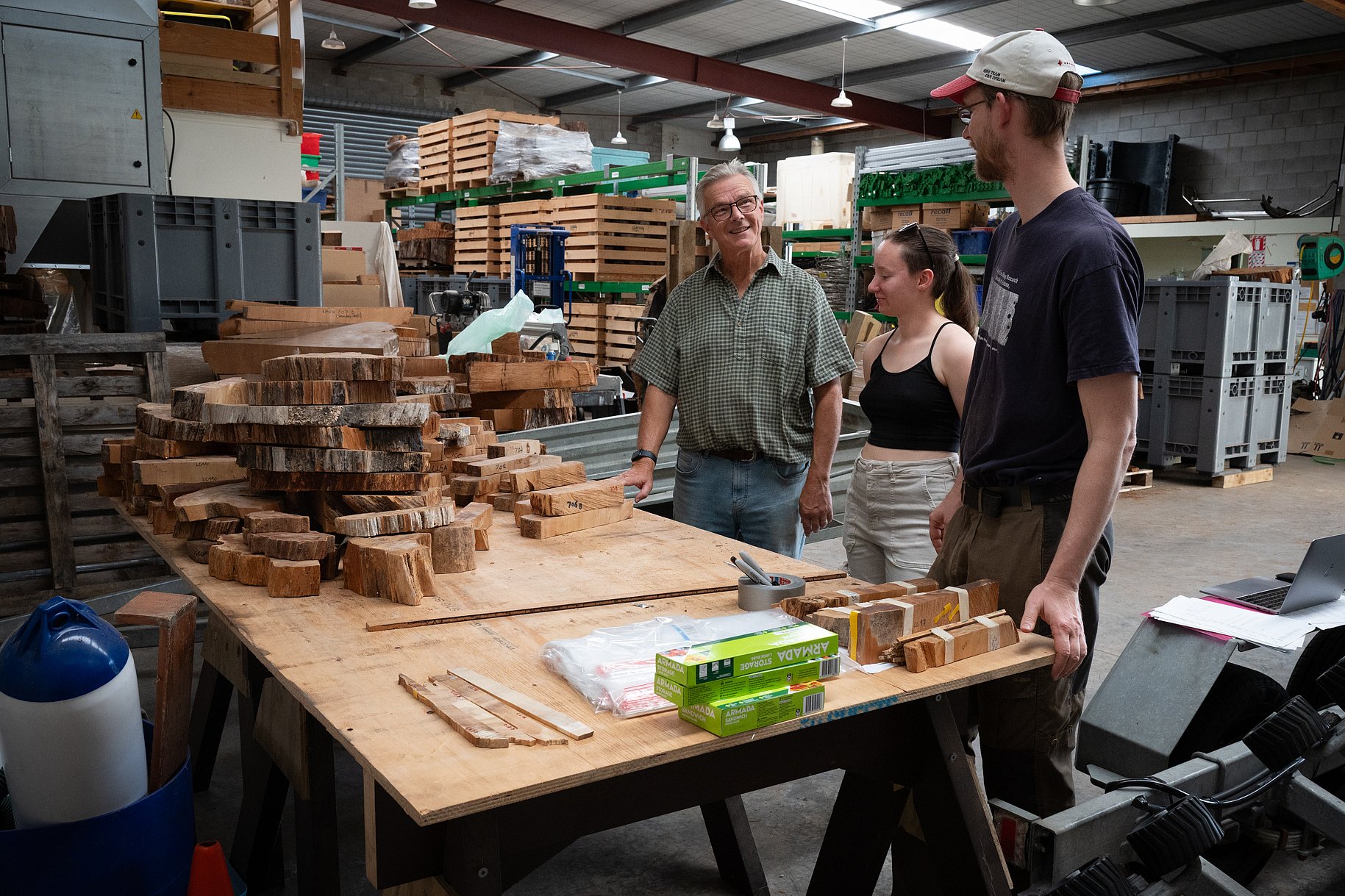
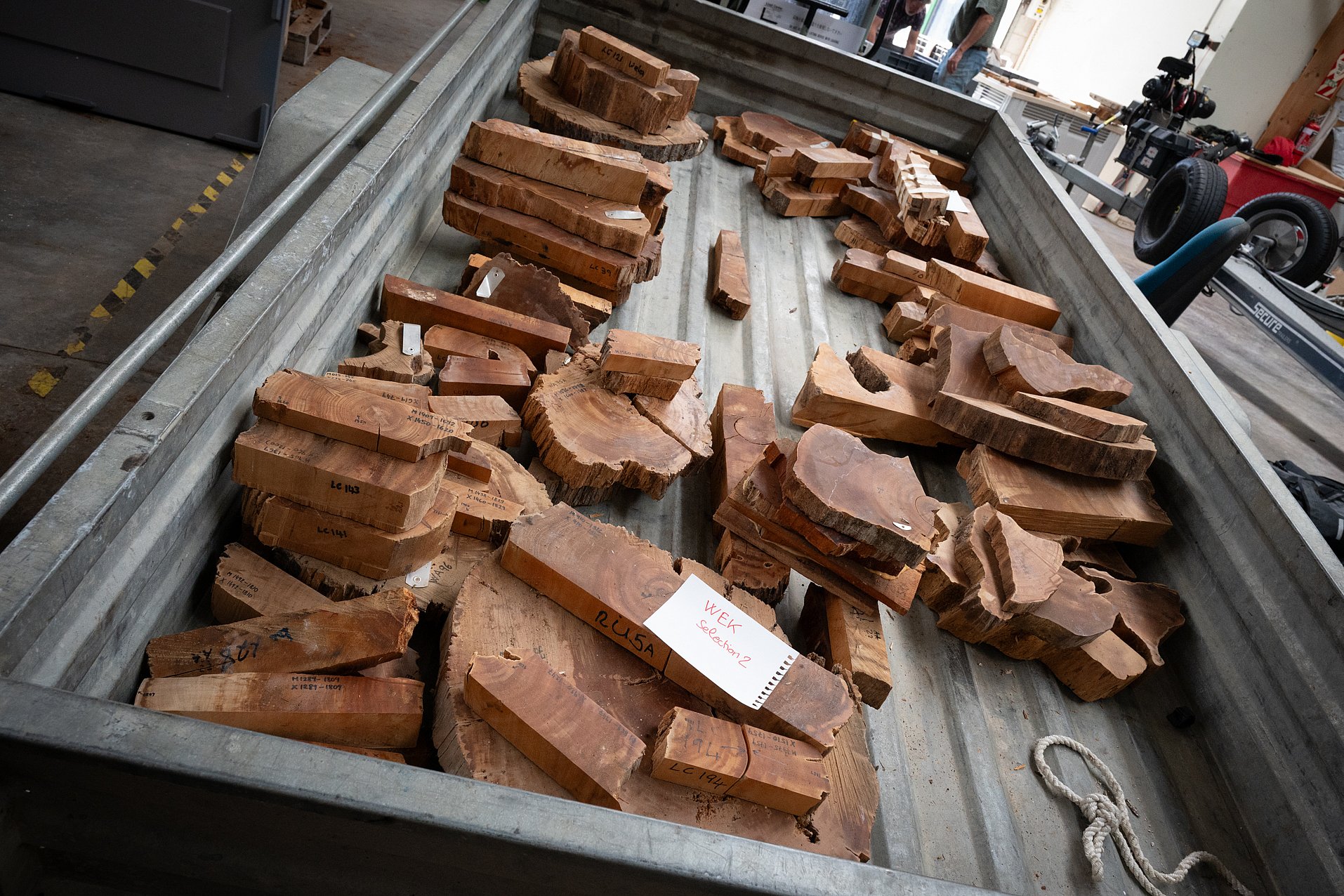
The NIWA archive houses a unique and valuable collection of ancient wood, including Jonathan Palmer’s assemblage of subfossil Silver pine recovered from New Zealand’s swamp forests. These swamps act as natural preservation chambers: the water-saturated, low-oxygen conditions slow down decay, so the wood can be preserved for centuries, even millennia, underneath the surface.
With Andrew’s guidance, we carefully selected and cut samples that could complement and extend our project. Then, with our luggage a little heavier and our minds full of hope and possibilities, we began the journey home.


Image 2 of 9
A fantail bird followed us around for 40 minutes! (Photo: Stefan Klesse)

Image 3 of 9
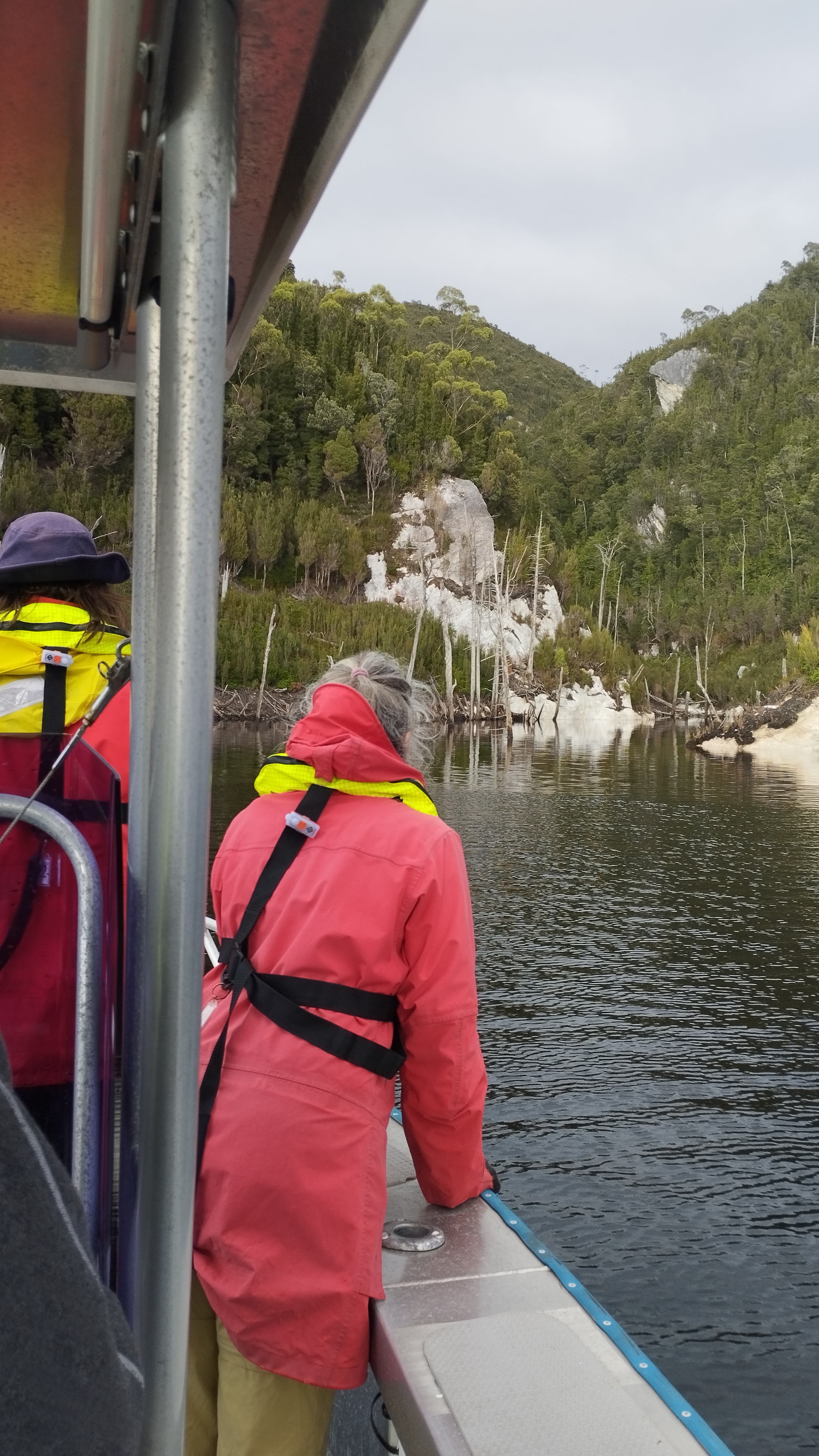
Kathy searching for the target trees, screening the canopy from the boat (Photo: Lisa Jourdain)

Image 4 of 9
Kathy and Jesper preparing to core a dead standing stem (Photo: Lisa Jourdain)


Image 6 of 9
Jonathan, Lisa and Jesper in the NIWA Archive (Photo: Stefan Klesse)

Image 7 of 9
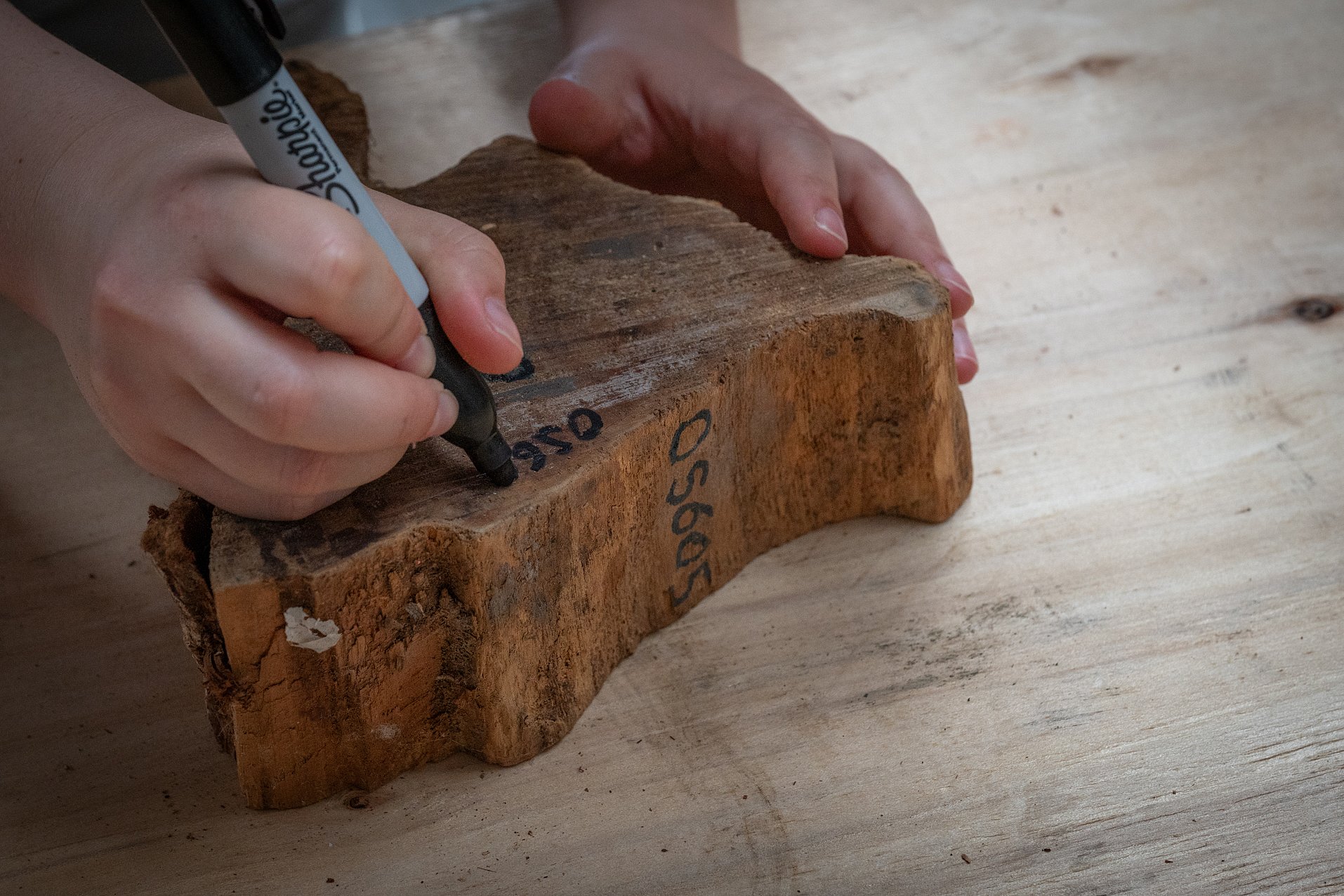
Labelling the ancient wood before cutting a sample (Photo Stefan Klesse)


Special mention to Palva Fenwick for the great help in the New Zealand fieldwork, and Stefan Klesse for being our unofficial photographer here on official vacation.
Always up to date: Subscribe to the WSL Newsletter
Copyright 
WSL and SLF provide image and sound material free of charge for use in the context of press contributions in connection with this media release. The transfer of this material to image, sound and/or video databases and the sale of the material by third parties are not permitted.