

Using data from seismic sensors, an international research team led by the Swiss Federal Research Institute WSL has reconstructed the catastrophic Blatten rock and ice avalanche of 28 May 2025. The researchers hope that their investigations will help communities at risk to better assess the risk of such avalanches.
- Using seismic records, deposit samples and aerial photographs, researchers modelled the Blatten rock and ice avalanche.
- The study depicts the processes that took place before and during the event, in which rock, ice and water intermingled.
- Applied to similar events, this framework could help practitioners better estimate how far rock-ice avalanches may travel and identify areas at risk below glaciers.
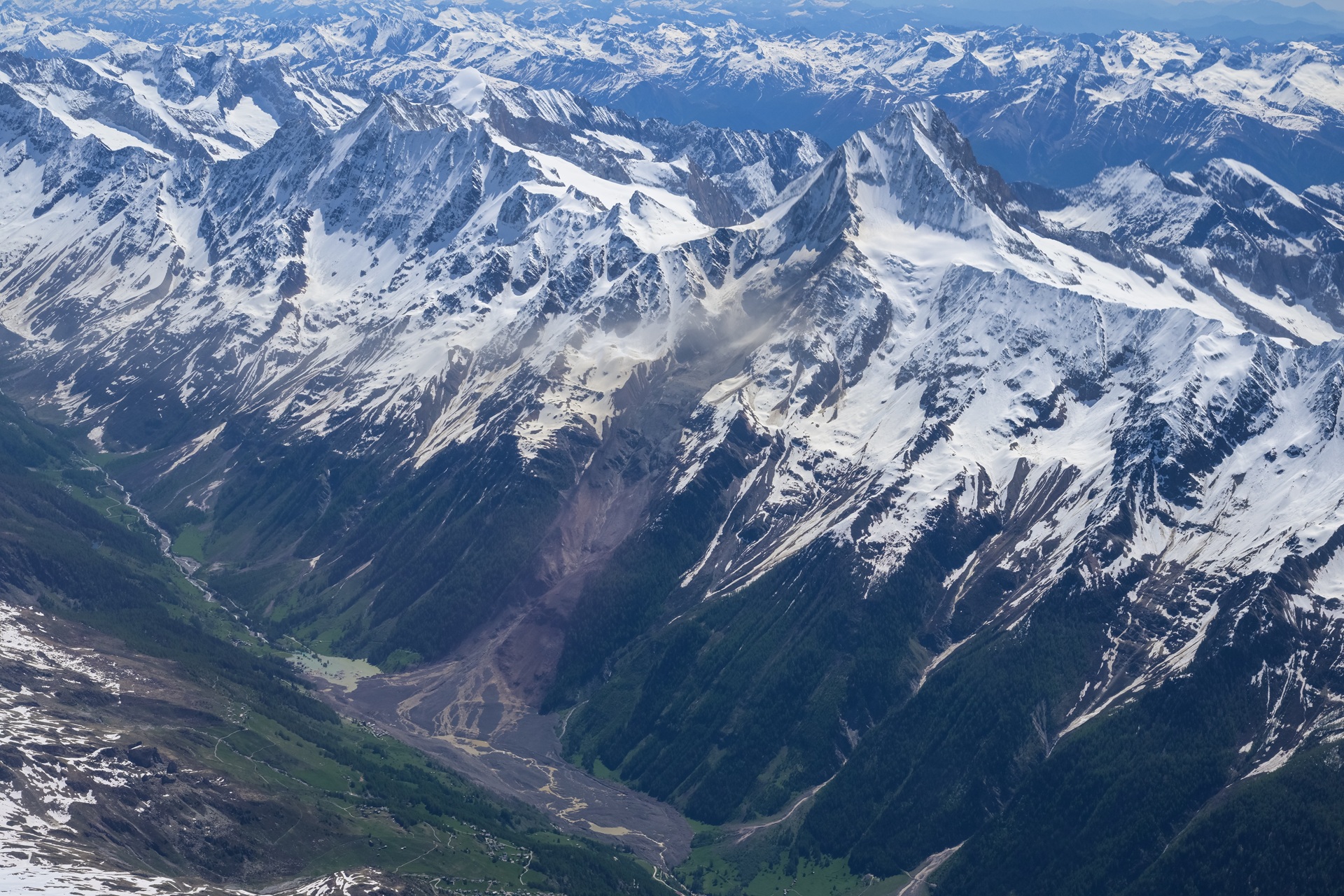
On 28 May 2025, over 9 million of cubic metres of rock and ice crashed down-valley from the Birch Glacier into the Lötschental. This event was also recorded by many seismic sensors, located between five to hundreds of kilometers away. An international research team led by the Swiss Federal Institute for Forest, Snow and Landscape Research (WSL) used this data to reconstruct the events during the rock and ice avalanche and has reported on their findings in the science journal “Communications Earth & Environment”.
The team, which included researchers from ETH Zurich, France, Germany and the USA, collected various measurements relating to the rock and ice avalanche. These included, in addition to data from the seismic sensors, aerial photographs and detailed terrain models before and after the event to estimate the volume of the deposits, as well as deposit samples that provided information on grain sizes and the water permeability of the deposited material in Blatten.
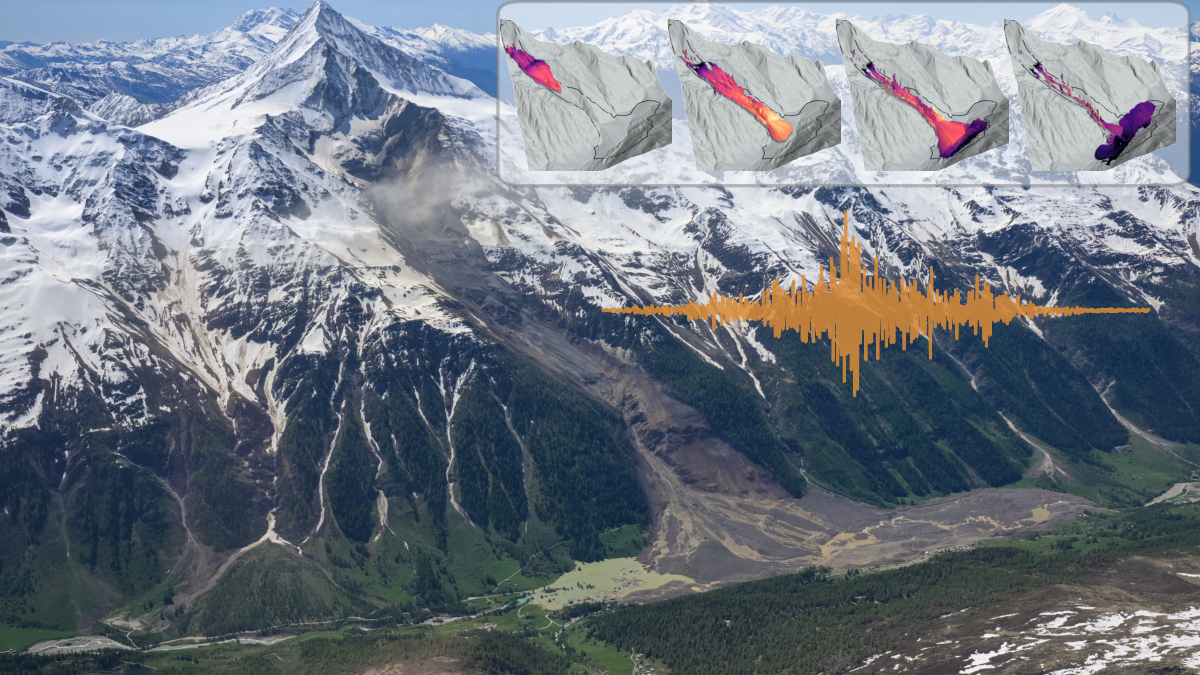
A virtual reconstruction of the avalanche
Jiahui Kang, a geophysicist at the WSL, and her colleagues brought these different data sources together. “This is essentially a reconstruction of the avalanche in the digital world,” she says. They used two different simulation approaches, which they fed with the initial volume, the terrain and physical laws such as flow resistance. The computer then calculated how the mass accelerated, changed direction, spread out and finally came to a halt.
Analysis of the nearby Lauchernalp seismometer’s records identified around 700 rockfalls during the two weeks of increasing instability. The wider seismic network from stations 33 to 110 km away then captured how the main avalanche plummeted towards the valley and what forces acted on the valley floor.
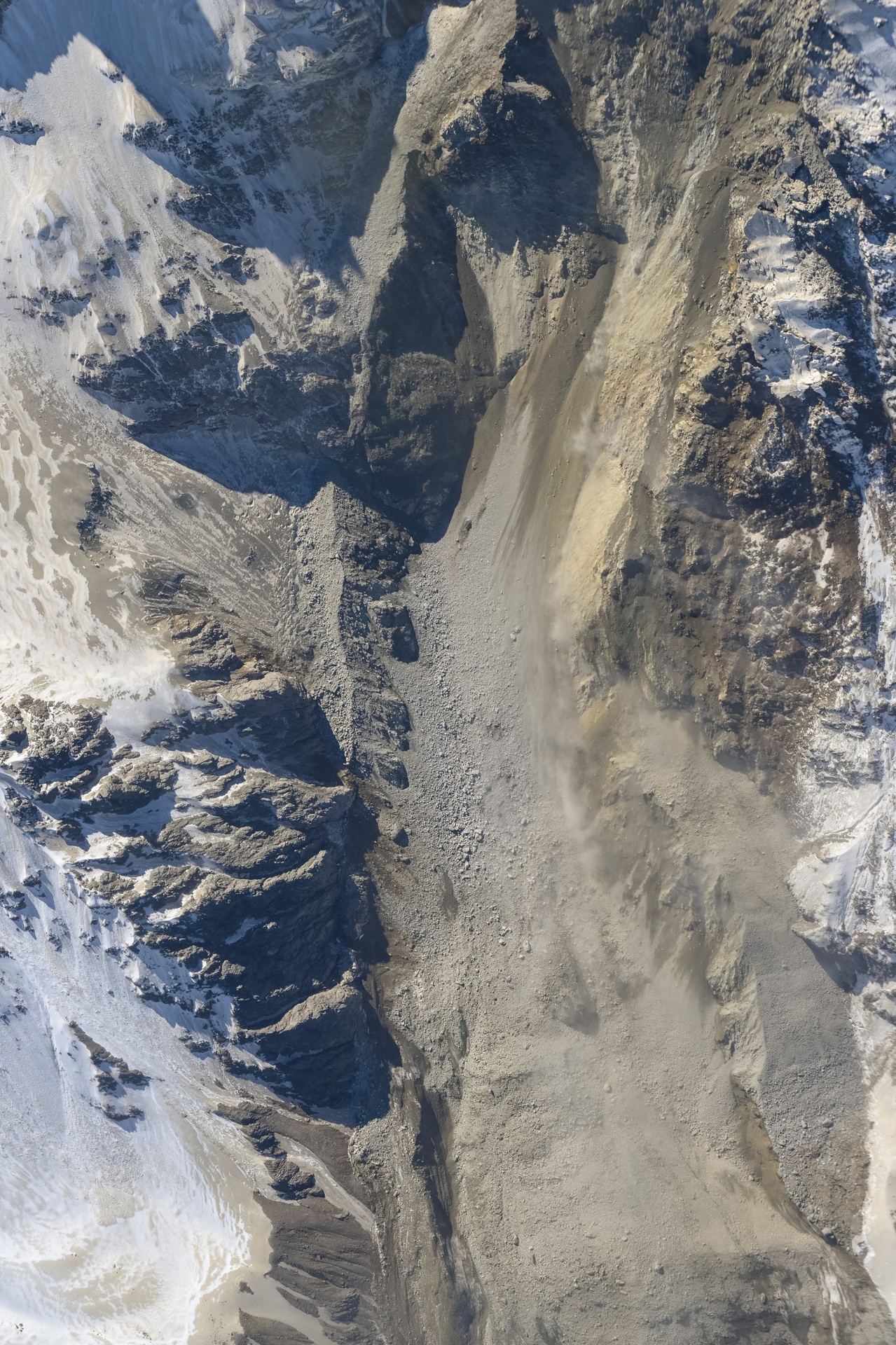
The results show that the readings from the seismic sensors estimated the rock volume remarkably well. The estimate of 3.75 million cubic metres was close to an independent estimate of 3.5 million cubic metres. This latter number the researchers obtained by comparing thickness mapping of the surface of Kleines Nesthorn before and after the collapse and calculating how much material had fallen. For the main avalanche, friction values typically used for dry rock avalanches underestimated its mobility. Ice and water may have helped reduce resistance. Kang had to drastically reduce the friction in the simulations to match the observations.
The Blatten rock and ice avalanche is one of the best-documented events of its kind, Kang emphasises. “This is a unique opportunity to study both the early signs of rockfall and small detachments, as well as the actual collapse.” To date, only a few mixed rock and ice detachments have been surveyed worldwide – too few to issue reliable warnings. Applying the same approach to many more similar events could reveal relations between avalanche volume, ice and water content, and travel distance. These could improve future hazard assessments for communities below unstable slopes and glaciers. “With every event, the models and their predictive power can be improved.”
Contact 
Publications 
Copyright 
WSL and SLF provide image and sound material free of charge for use in the context of press contributions in connection with this media release. The transfer of this material to image, sound and/or video databases and the sale of the material by third parties are not permitted.