

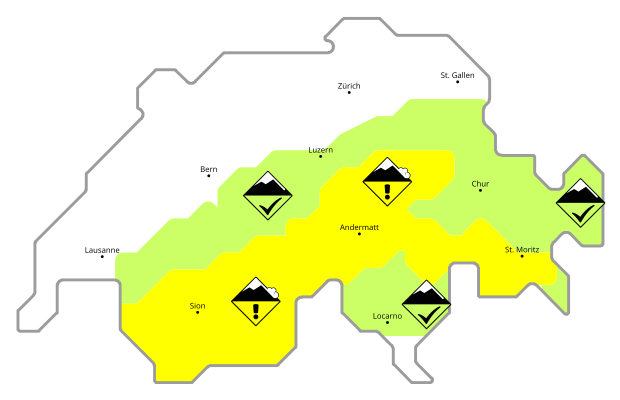
Dry weather and low humidity are the main driving forces behind forest fires, with temperature playing less of a role. Wind and a lack of snow encourage forest fires in winter.
- Detect the risk of forest fires earlier: An SLF researcher has developed a new method serving as a basis for future early warning systems.
- Dry weather is crucial: It is not heat but rather a lack of humidity that exacerbates fires.
- High risk of forest fires in winter: The risk rises significantly during periods of strong winds and little snow.
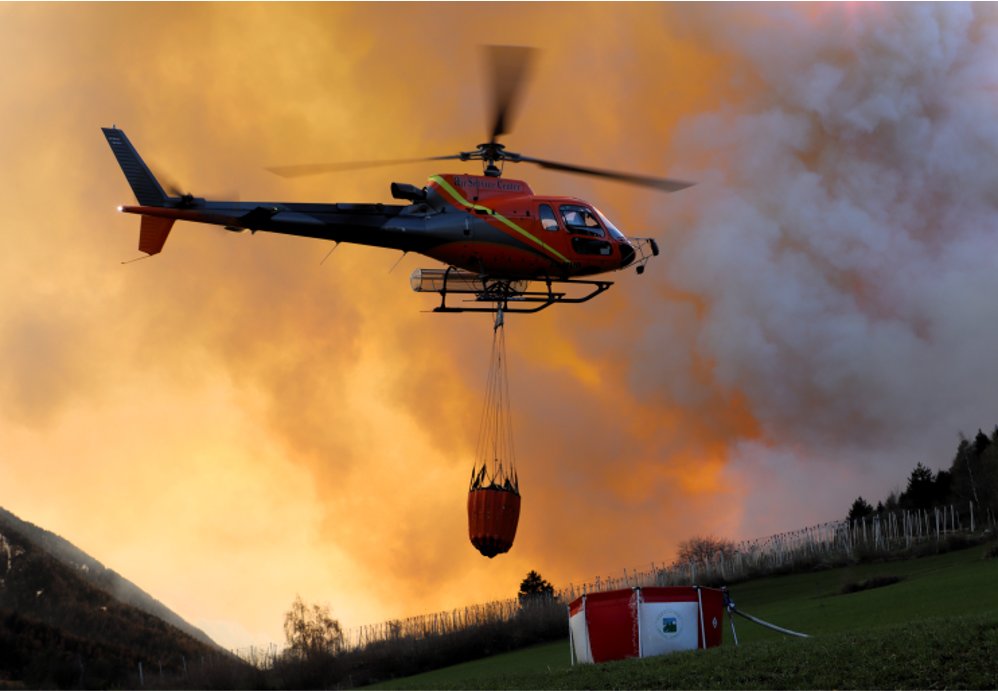
"Conditions conducive to forest fires are increasing in frequency and intensity throughout Europe, including in the Alps," says Julia Miller, an expert in forest fires at the WSL Institute for Snow and Avalanche Research (SLF). She has investigated the factors that contributed to almost 90,000 fires across Europe between 2001 and 2020, finding different meteorological factors depending on the season and region: "Most of these weather conditions are more pronounced in mountainous regions than in non-mountainous regions."
Among other things, her study resulted in a method that can improve the forecasting of forest fires in the future. Miller uses this method to determine the point in time at which the weather deviates from its usual seasonal pattern. "This allows us to show how long various drivers of forest fires have been outside the norm before a fire occurs," says the scientist. Adopting this approach makes it possible to better assess the danger at an early stage.
Heat is not necessary 

Miller's findings show that long periods of dry weather and times of low humidity are especially conducive to fires. She was surprised to find that high temperatures play only a minor role. "People always say it has to be hot, but that's often not the case," explains the researcher.
In spring and winter, she also identified a direct link with snow conditions. Prolonged periods of drought lead to low snowpack in Northern Europe, Eastern Europe and the Alps. Combined with strong winds, this results in snow-free areas, where the vegetation is dry and highly flammable at this time of year. This means that forest fires could spread quickly, as was the case in April 2024 at the Stelvio Pass in Italy. "On days when such fires broke out in winter, the snow depth was particularly low," Miller observes.
An approach that considers the situation across Europe is urgently needed. Until now, the focus has been on areas in Southern Europe that are heavily impacted by forest fires. However, the severe forest fire seasons in recent years, especially in 2022, coincided with severe droughts in Central and Northern Europe. "This suggests that the switch has flipped when it comes to conditions conducive to fires in regions that were previously less affected due to humidity," says Miller.
Provide fire brigades with better equipment 
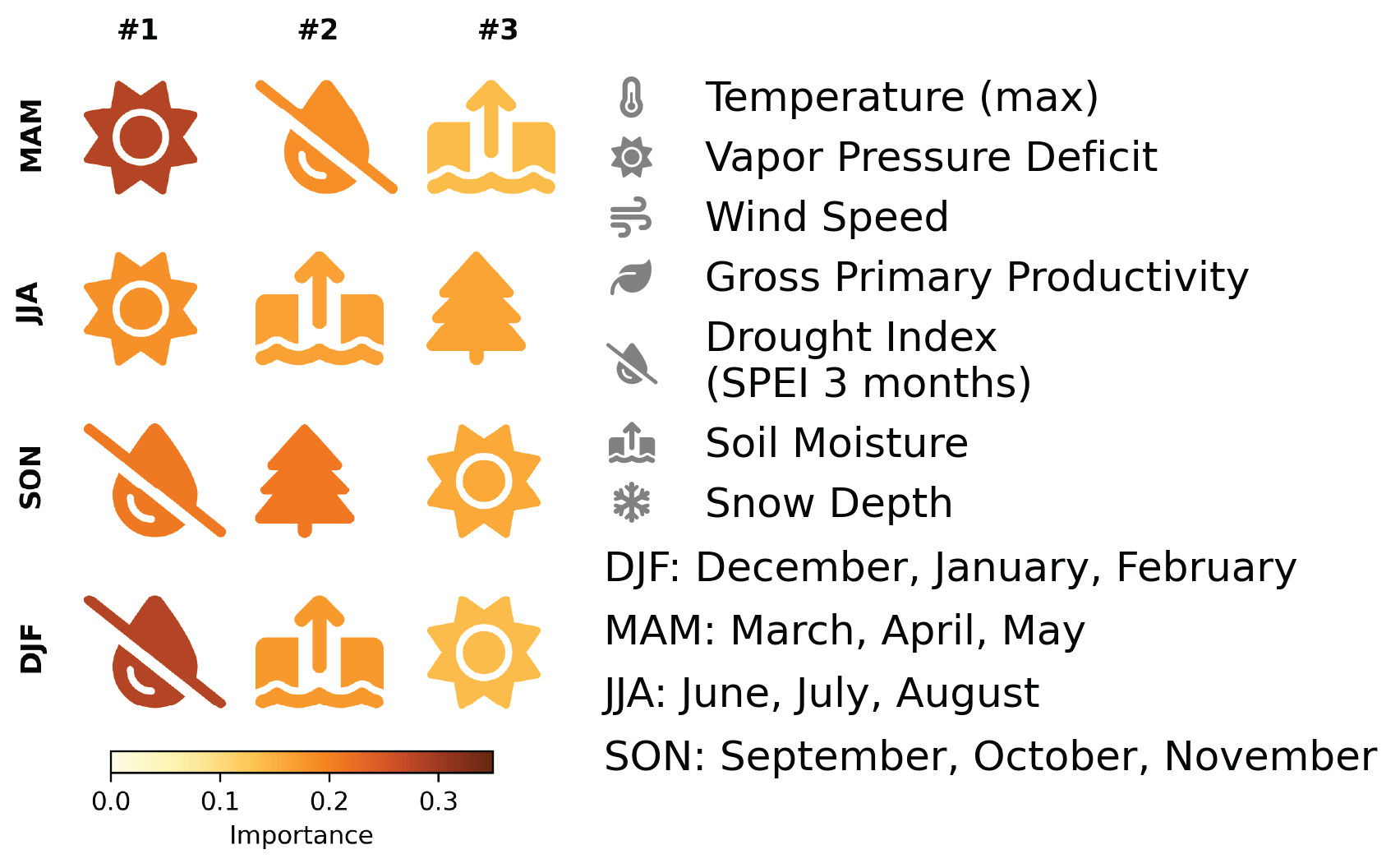
In her analysis, Miller used satellite data able to detect hot spots from space. Combined with information about the terrain, this makes it clear whether a forest, a field, a building or something else is burning at a given hot spot. She determined the prevailing meteorological conditions and the condition of the soil, vegetation and, where present, snowpack on the start date of the forest fires. Miller analysed a total of seven variables, such as wind speed, soil moisture and temperature, for eight European climate regions and mountain ranges. "We compare the state of these variables on the day a forest fire starts with that on days without forest fires," says the climate scientist, describing her approach. The four seasons were also factored into the study.
Miller recommends providing fire brigades with better equipment, as is the case in Ticino, for example, and informing people in the affected regions about imminent dangers at an earlier stage. She is calling for long-term strategies to protect people, nature and the climate, as well as for information campaigns: "In summer, awareness of forest fires and prevention in general is high." In winter, however, the situation is different. That is why more information is urgently needed: "As climate change progresses, forests, animals and people across Europe are increasingly at risk."
Link 
Study Compounding preconditions of wildfires vary in time and space within Europe
Contact 
Copyright 
WSL and SLF provide image and sound material free of charge for use in the context of press contributions in connection with this media release. The transfer of this material to image, sound and/or video databases and the sale of the material by third parties are not permitted.