

20.10.2026 | ETH Zürich | WSL News
A study led by researchers at ETH Zurich, the Swiss Federal Institute for Forest, Snow and Landscape Research WSL, and the Vrije Universiteit Brussel shows that glaciers worldwide could lose ice faster than previously projected. Published in Nature Communications, the research finds that daily weather variability and extreme events can substantially increase projected glacier loss and sea-level rise.
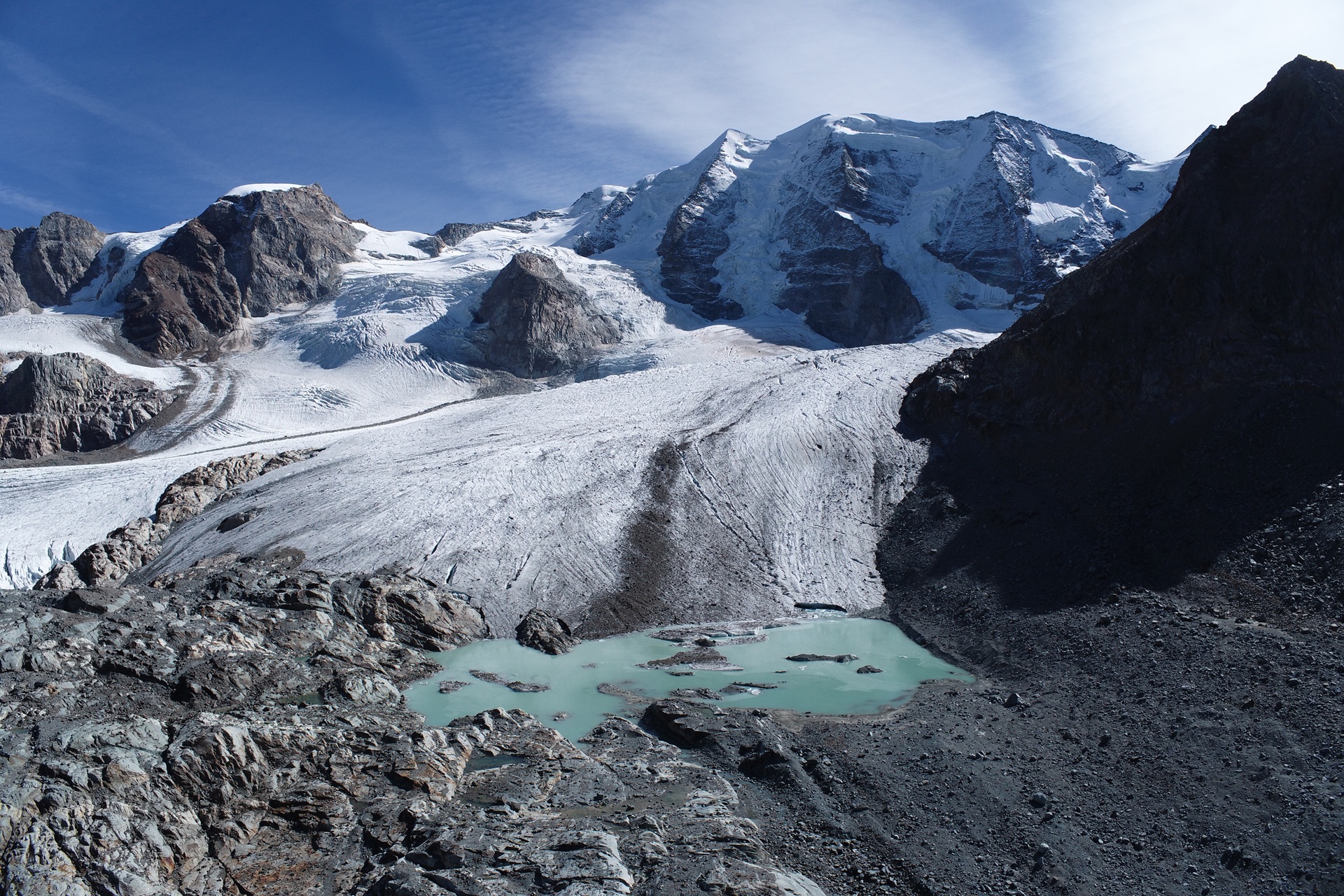
Most global glacier models rely on monthly climate data, which smooth out short-term weather fluctuations. Yet glaciers respond rapidly to individual weather events, including heatwaves, heavy precipitation and sudden temperature changes. A few exceptionally warm days can rapidly remove protective snow cover, exposing darker glacier ice that absorbs more sunlight and thus melts faster. Similarly, whether heavy precipitation falls as rain or snow can strongly influence glacier accumulation and runoff, particularly when temperatures fluctuate around the freezing point. By resolving these processes day by day, the study finds, glacier models can better capture rapid transitions between snow-covered and exposed ice surfaces, as well as the associated changes in melting.
“Glaciers don't respond to monthly averages, but to the weather they experience every single day,” explains lead author Lander Van Tricht (ETH Zurich / WSL / Vrije Universiteit Brussel). “A heatwave lasting only a few days can cause enormous amounts of ice to melt. By averaging weather conditions over an entire month, we risk underestimating the impact of these extreme events.”
To better capture these processes, the researchers extended the Global Glacier Evolution Model (GloGEM) to operate at daily resolution, applying it to more than 12,500 glaciers representing 94% of the world's glacier ice volume. Compared with the traditional monthly approach, the higher-resolution model better reproduces observed glacier mass loss, particularly during exceptional melt years such as 2022 and 2026 in the European Alps, 2023 in Western North America, 2024 in Svalbard, and 2025 in Central Asia.
Extreme melt years could shape the future of glaciers 
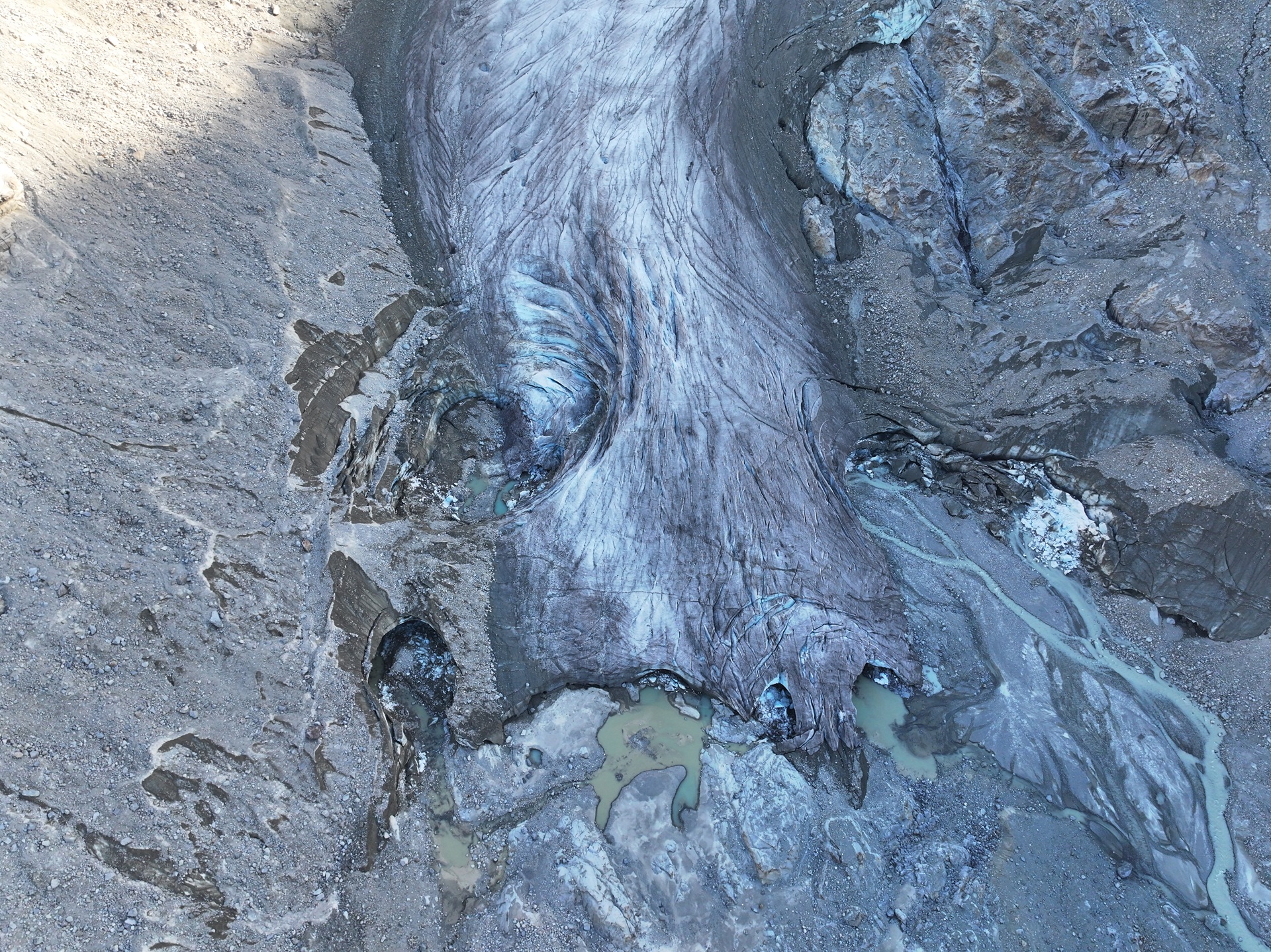
The study shows that the effects of daily weather variability accumulate over time. When projected into the future, the daily model generally predicts faster glacier retreat and greater ice loss than its monthly counterpart, particularly in regions where melting is strongly influenced by short-term temperature fluctuations. This also translates into a larger projected contribution to global sea-level rise. The daily model used in the study projects a 5-10% higher 21st century contribution from glaciers to sea-level rise than its monthly counterpart.
Beyond glacier retreat and rising sea levels, the study also reveals important changes in the timing and intensity of glacier meltwater runoff, with implications for downstream water resources.
“Glaciers are an important source of freshwater for millions of people,” explains Daniel Farinotti (ETH Zurich, WSL) who co-supervised the study. “Understanding not only how much ice will disappear, but also when meltwater becomes available, is crucial for anticipating future changes in water availability. Our study shows that resolving daily weather variability can substantially improve our understanding of these changes.”
Contact 
Publications 
Copyright 
WSL and SLF provide image and sound material free of charge for use in the context of press contributions in connection with this media release. The transfer of this material to image, sound and/or video databases and the sale of the material by third parties are not permitted.