

05.03.2026 | Stephanie Kusma | WSL News
Local recreation areas play an important role in reducing stress. In two new publications, researchers at the Swiss Federal Institute for Forest, Snow and Landscape Research WSL show how visual impressions and sounds interact in this process - and how this knowledge can be used to increase the attractiveness of green spaces.
- The interaction of what we see and what we hear determines how relaxing we perceive green spaces to be
- Design measures such as trees, water features and terrain modelling can compensate for noise pollution and increase perceived landscape quality
- "Positive" sounds like birdsong or the splashing of water enhance relaxation – even when traffic noise is present
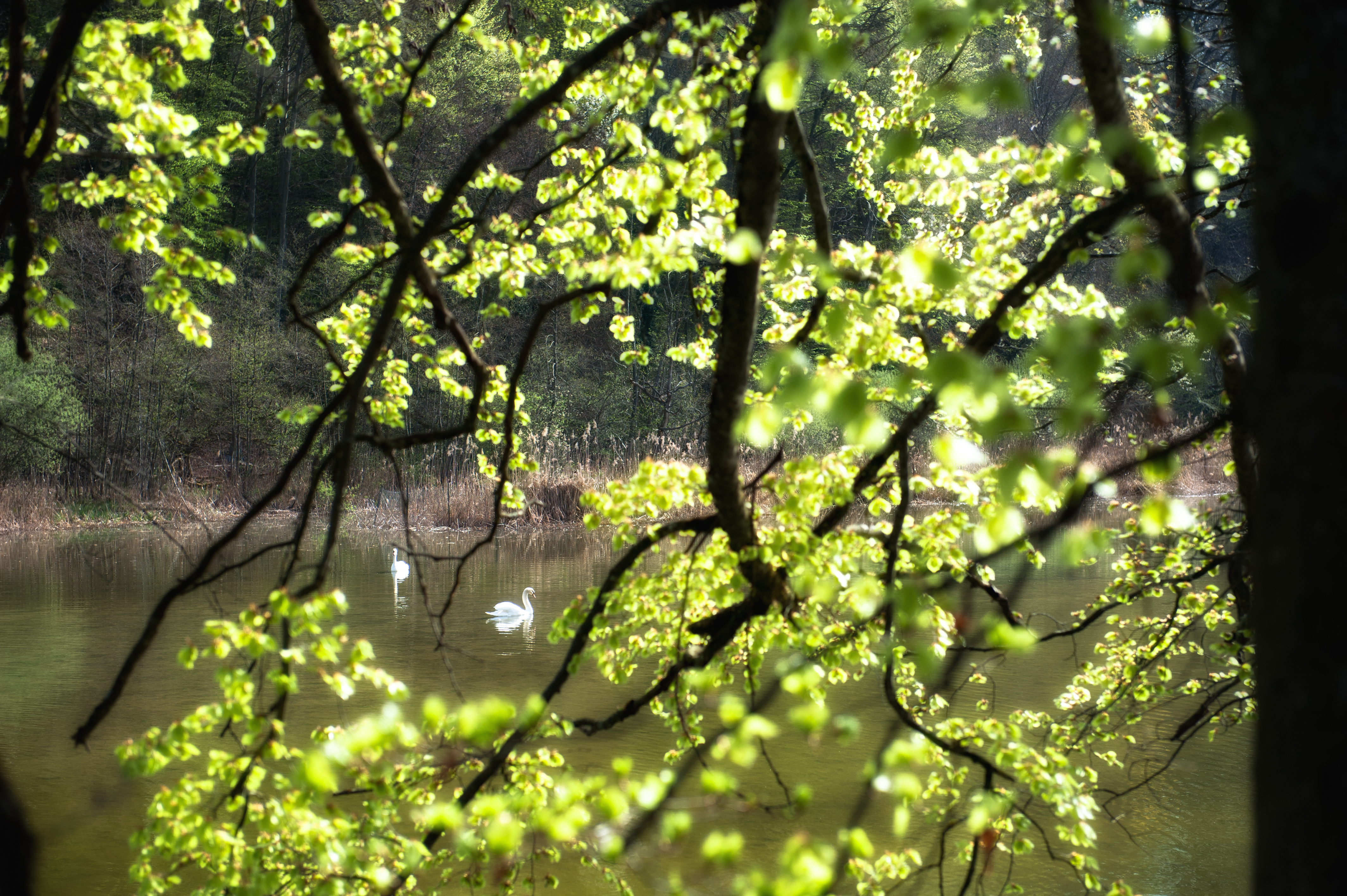
Many people are familiar with this effect: hectic daily routine causes stress, while spending time outdoors helps us unwind. Research confirms this experience – attractive, easily accessible local recreation areas are essential for our well-being. But how does background noise affect relaxation? And what role do specific landscape elements, such as trees or benches, play? WSL environmental psychologist Nicole Bauer has investigated this in several projects. Her conclusion: the eye and ear work together.
"This can be put to use," says Bauer. Traffic noise, for example, is disruptive, but often cannot be reduced sufficiently. Trees, on the other hand, make a place feel more relaxing. "If a small park is surrounded by noisy roads, you probably can't change that," she explains. "But you can plant trees." This improves the perceived quality of the landscape – and the green space is experienced as more relaxing, even though the noise level remains the same.
Another approach is to mask unpleasant noises with positive ones – for instance, the sound of water splashing. "That's why a fountain can enhance the relaxing effect of a place," says Bauer. In the studies, the overall noise level sometimes stayed the same or even increased, but this did not reduce the feeling of relaxation. Bauer notes, however, that none of the recreation areas included in the research were extremely noisy.
Birdsong in suburban areas 

The studies were conducted in suburban and per-urban places – the zone between the city and the countryside, often shaped by commuter traffic. Roads dominate these landscapes, generating noise, while agriculture continues to play an important role, including for local recreation. "Here, too, there is considerable potential to further enhance recreational value," Bauer explains. Simple measures such as benches or structures that attract birds can help. Their birdsong makes a landscape feel more relaxing.
In total, the researchers surveyed around 300 people directly on site in local recreation areas across ten municipalities, including Malters (LU), Rümlang (ZH) and Villar-sur-Glane (FR). Participants were asked how much they liked the surrounding vegetation, how often they visited the area and how they perceived the background noise. The results were then discussed with external experts and specialists from the Federal Office for the Environment FOEN. The researchers have now brought together the findings from these studies – along with practical recommendations – in two WSL publications.
Contact 
Publications 
Copyright 
WSL and SLF provide image and sound material free of charge for use in the context of press contributions in connection with this media release. The transfer of this material to image, sound and/or video databases and the sale of the material by third parties are not permitted.