

05.11.2025 | Sofía Morgade | WSL News
Bark beetles not only cause damage in forests; they also promote forest biodiversity in the long term. Woodpeckers use the dead wood produced by bark beetle infestations as shelter and nesting sites, and build cavities in it which other animals use. Researchers at the Swiss Federal Institute for Forest, Snow and Landscape Research (WSL) were able to demonstrate the extent to which beetles benefit woodpeckers based on almost 30 years of data collected throughout Switzerland.
- Long-term monitoring data show that bark beetles not only damage forests but also promote biodiversity in the long term.
- After a bark beetle infestation, the number of woodpeckers increases and remains high for years after the infestation. Woodpeckers need dead wood to find food and nesting sites.
- Woodpecker cavities are used by other animals as shelter and nesting sites.
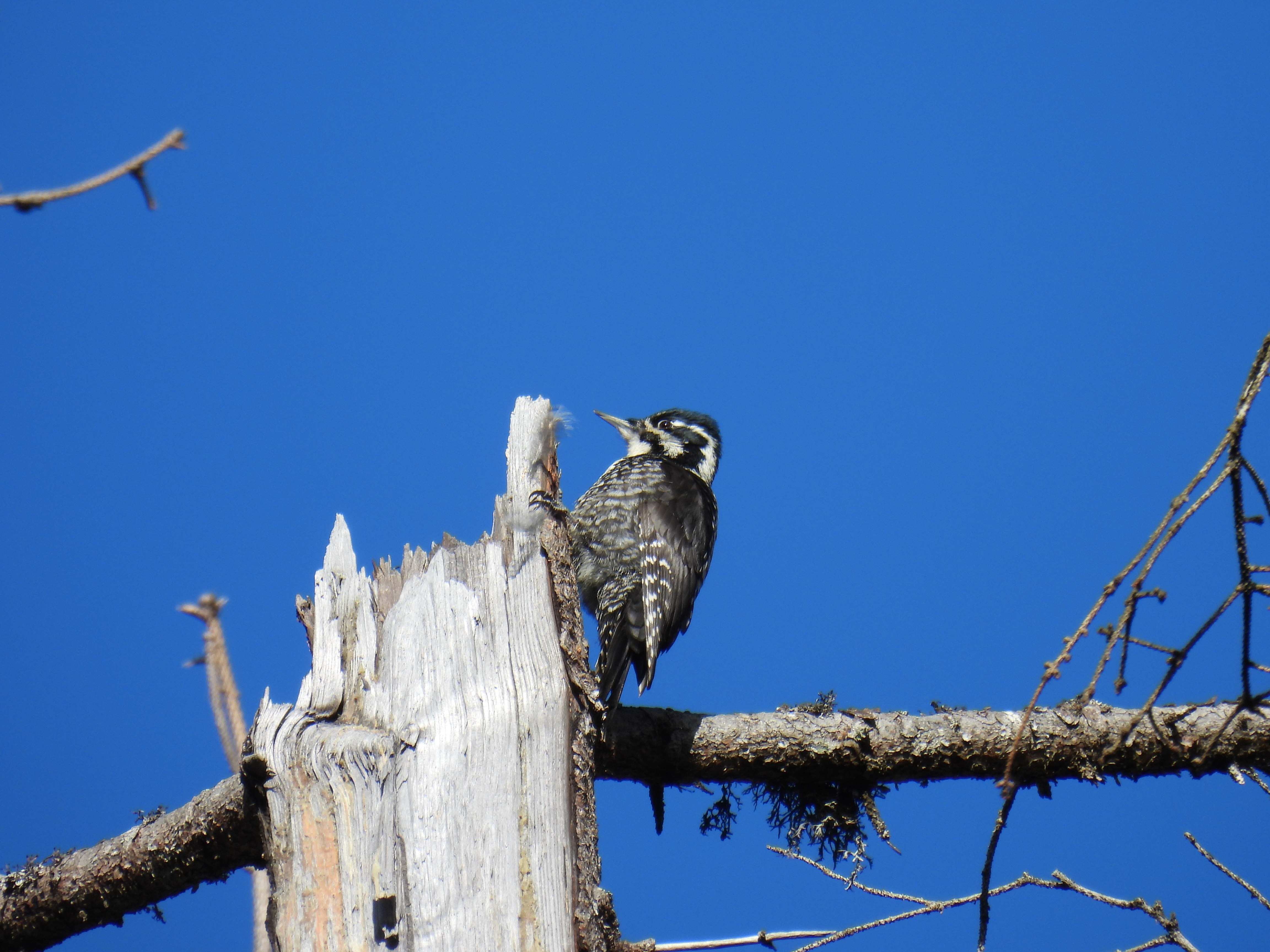
Bark beetles have an undeserved bad reputation. Although they have caused significant economic damage in Central Europe and parts of Switzerland over the past 20 years, they also promote biodiversity in forests. This is shown by a new study conducted by the WSL, which is based on 30 years of monitoring data. Researchers have demonstrated for the first time that there are more woodpeckers in forests following a severe bark beetle infestation. This increase was observed to last for seven to nine years, as the researchers report in the Journal of Animal Ecology. The reason for this is that woodpeckers need dead wood, such as that left behind after a mass reproduction of bark beetles, for food, shelter and nesting sites.
For the study, the researchers compiled almost 30 years of monitoring data from across Switzerland, sourced from the Swiss National Forest Inventory (NFI) and the Swiss Forest Protection (WSS), both of which are run by the WSL, as well as from the Swiss Ornithological Institute. Using computer models, the researchers searched this data for clues as to how bark beetle infestation and woodpecker populations are connected. Of the three woodpecker species studied, they found the strongest correlations in the Eurasian three-toed woodpecker.
This woodpecker feeds on bark beetles, and previous studies have shown that bark beetle infestations lead to higher population densities. However, it was not clear whether this increase was short-term, because they eat bark beetles, or whether there was a longer-term connection, meaning that woodpeckers also benefit from the dead wood that results from bark beetle infestation. This study showed that woodpeckers do indeed benefit from dead wood habitats over a longer period of time.
The research also demonstrates the value of long-term science, which is often difficult to fund, explains Marco Basile, ecologist and bird expert: ‘This data helps us answer ecological questions that we would not be able to answer with short-term studies lasting one or two years,’ he says.
Hidden life in dead wood 
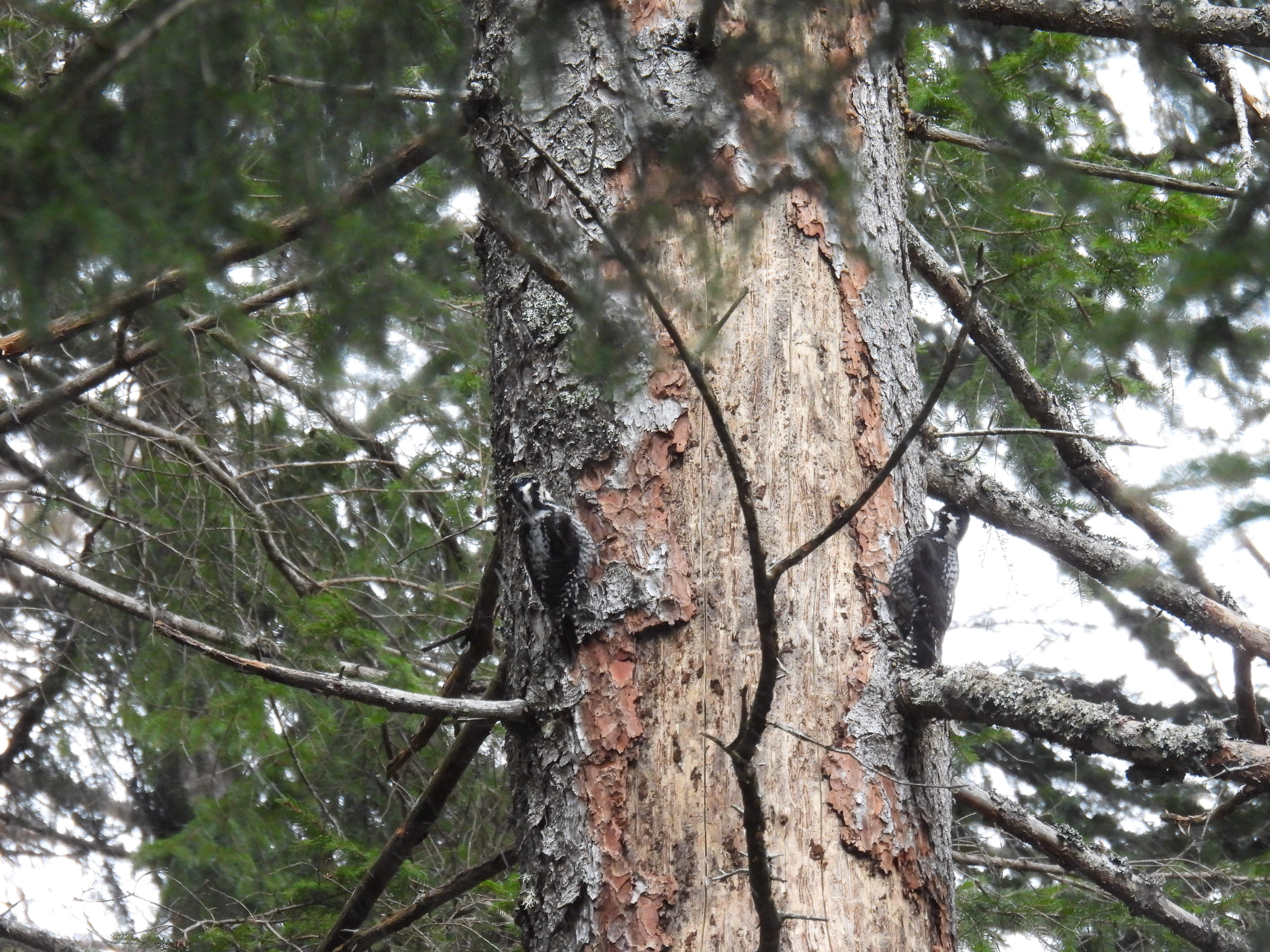
A bark beetle infestation can also promote biodiversity in the forest as a whole, as there are many species that depend on woodpeckers for their life cycle. They build cavity structures in trees that can be used by many other animals such as insects, wasps, bees, beetles, bats, small mammals and squirrels for nesting, shelter and hiding. Deadwood is therefore a very important component of forest health.
The forestry industry has recognised the importance of deadwood for biodiversity and is already promoting it in a targeted manner. These efforts are showing an impact, and there is now more deadwood in Swiss forests than there was a few years ago.
Contact 
Publications 
Copyright 
WSL and SLF provide image and sound material free of charge for use in the context of press contributions in connection with this media release. The transfer of this material to image, sound and/or video databases and the sale of the material by third parties are not permitted.