

07.07.2026 | Lisa Bose | WSL News
In Europe, trees are increasingly dying prematurely. A new study by the Swiss Federal Institute for Forest, Snow and Landscape Research (WSL) on French forests now shows that it is not only drought, but also unusually warm or wet springs that increase the risk – even ideal growing conditions can prove fatal later on.
- Climate anomalies, not just drought, are driving tree mortality. Warm and wet springs can also increase this risk.
- Trees die from a combination of several stress factors. Depending on the species, long and constant or short and extreme droughts have varying degrees of impact.
- Forestry practices must adapt to increasingly scarce water availability. Drought-resistant species, earlier harvest of large trees and thinned stands are becoming more important.
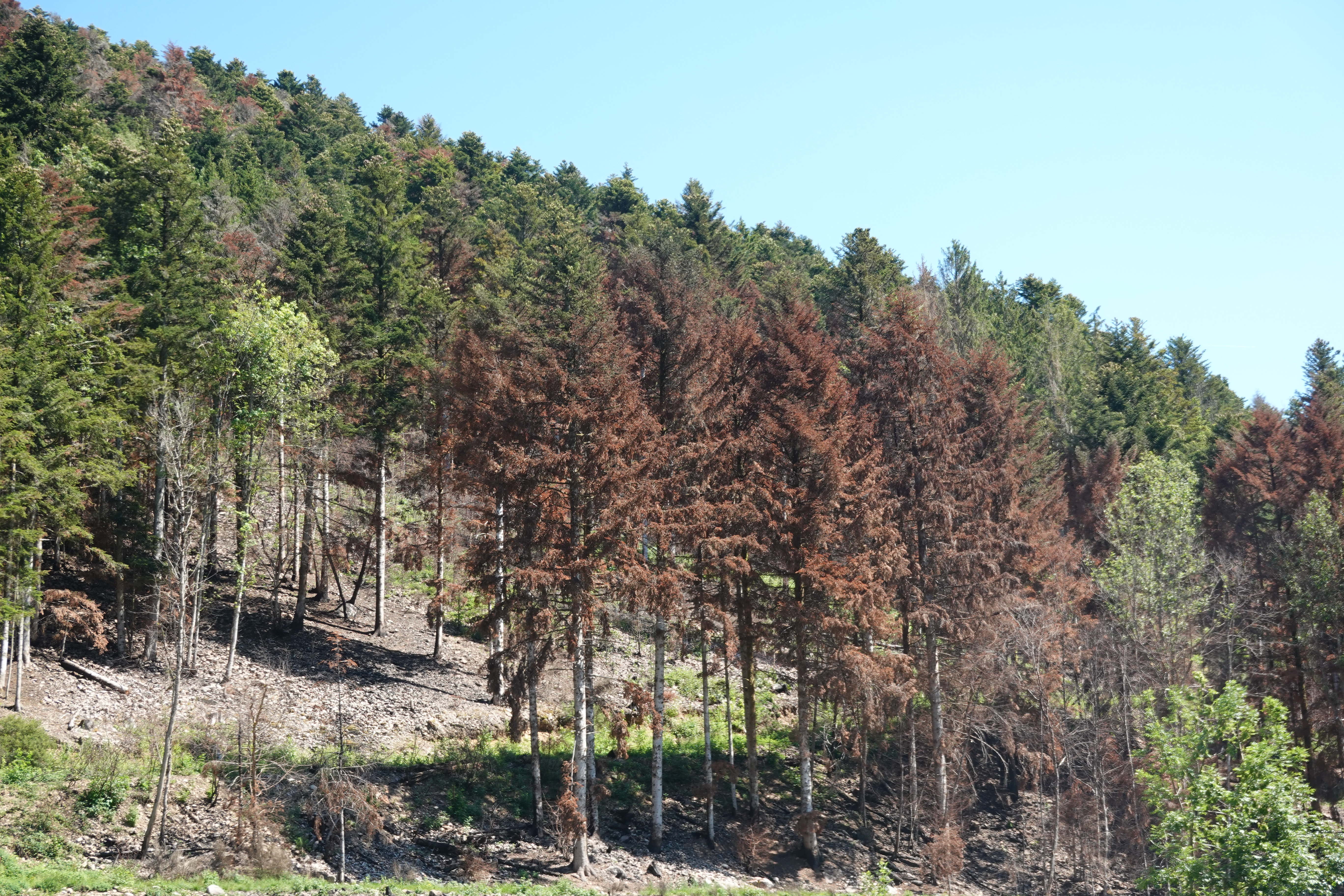
Beech trees with brown leaves in summer, spruce trees withering under bark beetle infestations, trees snapped over by a severe storm: across Europe, there have been signs for about twenty years that more and more trees are dying prematurely. In some regions of the continent, the state of the forests is now even worse than it was in the 1980s, when air pollution caused serious damage to trees in selected regions.
An international team jointly led by the French Laboratoire des Sciences du Climat et de l'Environnement and the Swiss Federal Research Institute WSL has taken a closer look at data from the French Forest Inventory from 2015 to 2023. The researchers aimed to identify patterns in the data that could explain why trees are dying – the data clearly showed that they are. Using a combination of various computer models and machine learning, the team demonstrated that, in addition to tree size and competitive conditions, deviations from the usual seasonal climate were a key factor triggering tree mortality in France. In the process, they made a surprising discovery: even ideal growing conditions, such as warm, wet springs, can increase the risk of trees dying.
Good conditions can also be harmful 
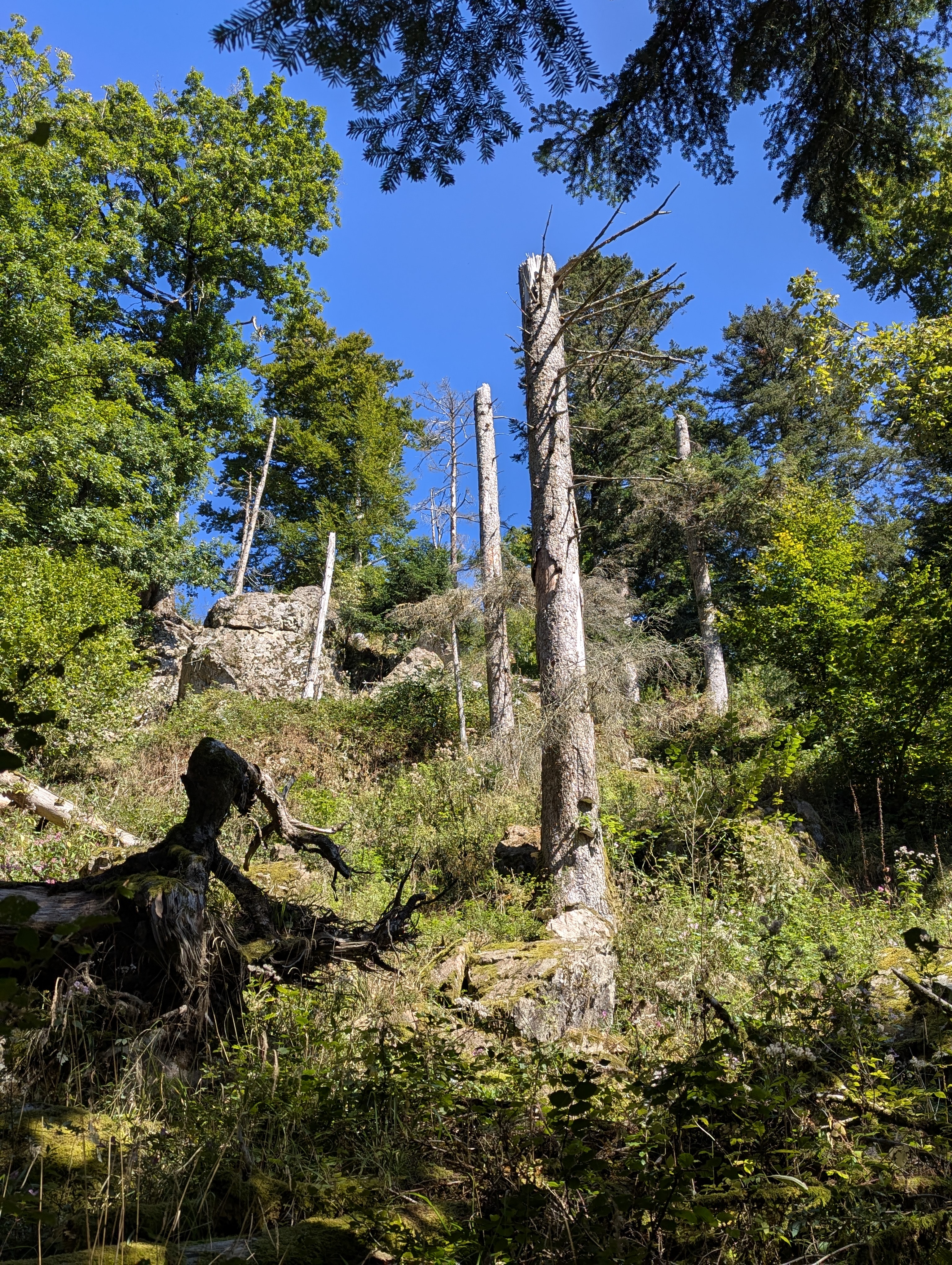
In particular, tall-growing trees such as silver fir died off in greater numbers following such seemingly favourable growing conditions. The researchers suspect that these trees grow more vigorously than usual during such springs. “This increases their water demand and makes them more vulnerable as soon as conditions become dry. At the same time, this means they consume more water from the soil early in the year. If a dry summer then follows, the water reserves in the soil are already depleted and the trees experience drought stress more quickly,” says Pascal Schneider. He is a PhD student at WSL and the lead author of the study published in the journal Nature Communications. Furthermore, wet springs could facilitate the growth of pathogens such as fungi, further weakening the trees.
Using their ensemble approach, Schneider and his team trained several models with different subsets of the forest inventory data. This enabled them to specifically investigate how seasonal deviations from the usual climate influence tree mortality. “Our results show that it isn’t just one ’summer drought’ that causes problems for trees. Depending on the tree species, a slowly increasing water shortage can have a greater impact than a short, intense drought – or vice versa,” says Schneider. But it is not only summer drought that can take its toll on trees. Unusually mild winters can also be problematic, as pests survive better in higher winter temperatures. Warm springs can further increase the risk, as budburst then occurs earlier, making young leaves more susceptible to late frosts. Therefore, trees die from a combination of climate anomalies, rather than solely due to individual extreme events.
Less water, fewer trees 
For forestry practice, this means that future planting schemes should place greater emphasis on drought-resistant trees from southern regions – both from populations of species already in use and also when selecting new ones. Furthermore, foresters must be aware that, in future, forests will generally have less water available in summer, according to Schneider. Large trees that consume a lot of water would need to be removed from the stand slightly earlier, so that the remaining trees still receive sufficient water. Thinning the tree stand would also play an important role – particularly following periods of otherwise good growing conditions. This would ensure that the scarce water resources are sufficient for the remaining stand.
The French Forest Inventory was particularly well-suited to this research. The database covers 500,000 trees of 52 different species. France encompasses almost all the geographical and climatological conditions found in Europe – from Mediterranean to alpine climates. Consequently, the findings from this study can be applied to other regions in Europe, allowing forest management to be adapted accordingly.
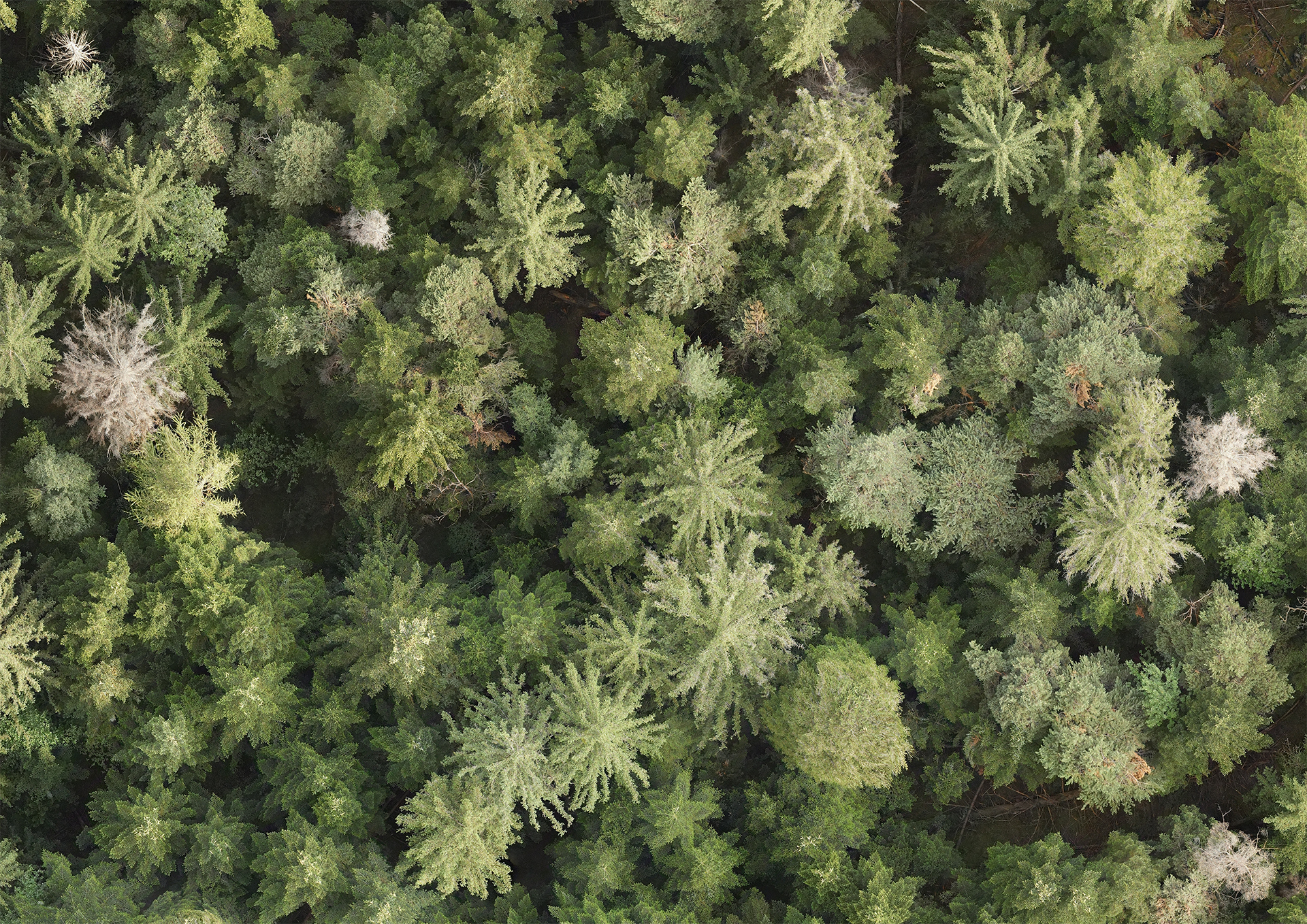
This research was carried out as part of the SNSF project UPSCALE. The research project, led by ETH Zurich and WSL, is developing new methods to monitor forest vitality at an early stage and predict damage caused by drought or heat. To this end, it combines remote sensing data (e.g. from satellites and drones), forest inventories and measurements taken from trees and soils. The aim is to identify at-risk forests at an early stage and to better support forest management and policy-making. Further information: https://upscale-project.ch/
Contact 
For enquiries in French
Agnes Pellissier-Tanon
Laboratoire des Sciences du Climat et de l'Environnement
Original publication: 
Schneider, P., Pellissier-Tanon, A., Zhou, C. et al. Rising tree mortality in France is associated with distinct seasonal climate anomalies. Nat Commun (2026). https://doi.org/10.1038/s41467-026-74613-9
Further publication 
Copyright 
WSL and SLF provide image and sound material free of charge for use in the context of press contributions in connection with this media release. The transfer of this material to image, sound and/or video databases and the sale of the material by third parties are not permitted.