

09.09.2025 | Beate Kittl | WSL News
At WSL, Catherine Graham researches why which species live in which habitats. Now the German Academy of Sciences Leopoldina has appointed her as a member, which is one of the highest honours for natural scientists that a German institution can bestow.
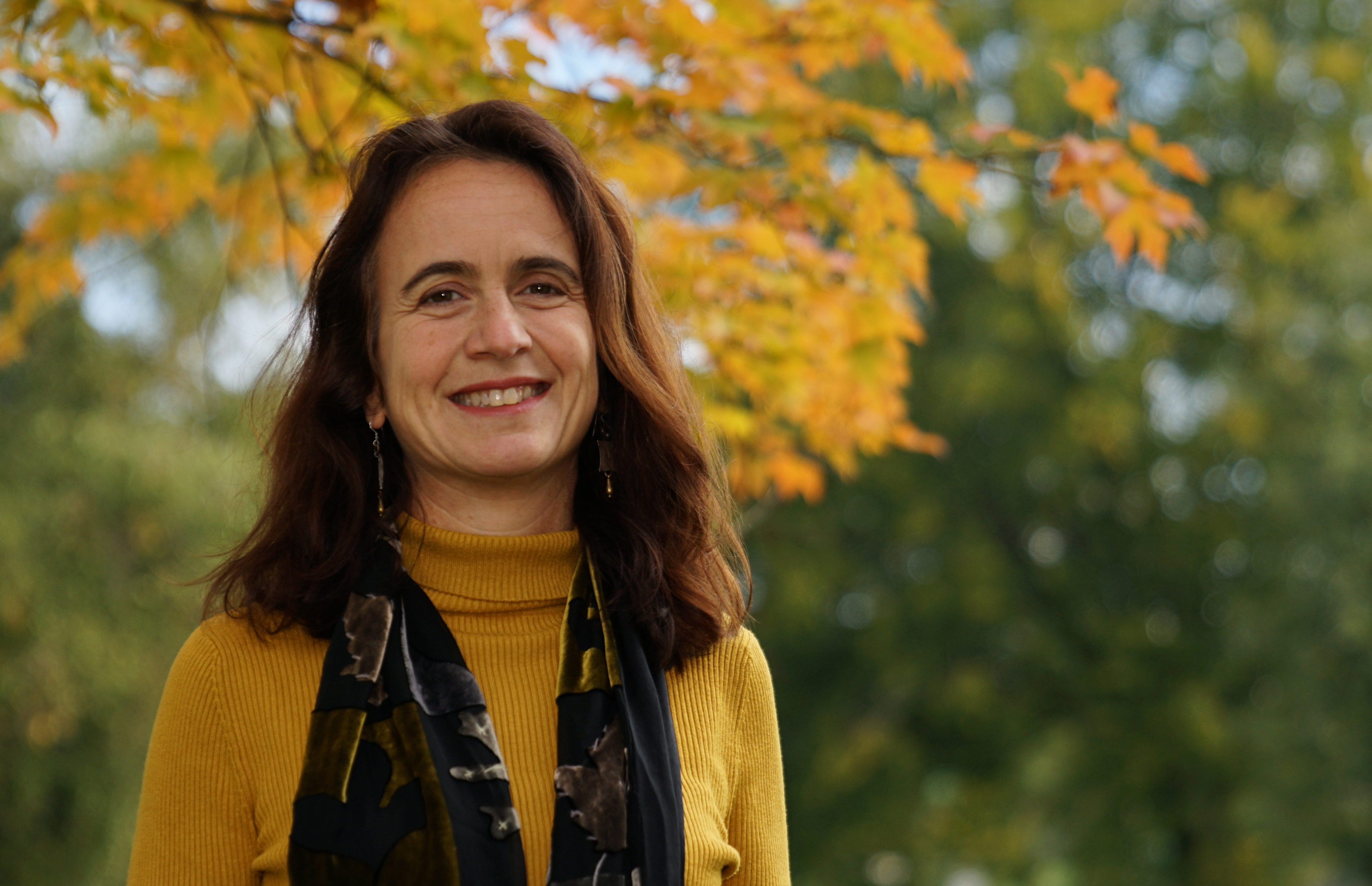
Catherine Graham is a woman for "the big picture". The US ecologist investigates how biodiversity is linked to spatial and environmental conditions - for example, why mountains or the tropics have such a high level of biodiversity. And she does this on a local, regional and global level. Graham, who has headed the Spatial Evolutionary Ecology group and the Biodiversity Centre at WSL since 2016, wants to determine the mechanisms that control the creation and maintenance of this diversity and how humans influence this. This knowledge should enable nature conservation planning and the sustainable management of ecosystems.
Graham's research group is exploring which montane grasslands in the Alps and Carpathian’s harbor the greatest species richness. In a Biodiversa project, the highly international team is not only investigating where grasslands are particularly valuable in terms of biodiversity, but also how management might influence this diversity. In addition, new richness data are being collected in the Carpathian Mountains, which have been little researched relatively little to date compared to the Alps.
Hummingbirds and their food plants
Mountain forests in the tropics of South and Central America are also exceptionally rich in species. Here, Graham's team is investigating how hummingbirds and their food plants interact as hummingbirds provide a key ecosystem service, pollination. Given that many of these forests have been destroyed by humans, the knowledge of what plants are key resources for hummingbirds aids in the design and implementation of restoration projects.
Her research projects are often based on co-operation and transdisciplinarity, i.e. how science and practice can work together for the benefit of society. For example, Graham is involved in the ETH Domain's Speed2Zero joint initiative, which explores the interfaces between biodiversity, renewable energy and social assessments. Its aim is to assess the risks of climate and land use changes on biodiversity and to propose measures for its conservation.
The Leopoldina nominates members on the basis of their "significant scientific achievements", as stated on the website. "The nomination is a great honour for my scientific work," says Graham, who will be a member of Class II Life Sciences.
About the German National Academy of Sciences Leopoldina
The Leopoldina was founded in Schweinfurt (Germany) in 1652 and is one of the oldest science academies in the world. As the National Academy of Sciences, it provides independent science-based policy advice on socially relevant issues and is committed to the common good. Members of the Leopoldina have included Marie Curie, Charles Darwin and Albert Einstein. Today, the Academy has 1700 members from more than 30 countries and brings together expertise from almost all areas of research.
Contact 
Copyright 
WSL and SLF provide image and sound material free of charge for use in the context of press contributions in connection with this media release. The transfer of this material to image, sound and/or video databases and the sale of the material by third parties are not permitted.