

Mountain forest regeneration
2020 - 2025
FinancingImproved basis for assessing and more targeted regeneration management in mountain forests 

The aim of the "Mountain forest regeneration" project is to create a scientific and technical basis for the long-term and sustainable promotion of natural regeneration in mountain forests through silviculture. Long-term silvicultural experiments have been started on ten experimental sites in spruce-fir forests and results on the development of natural regeneration will be obtained from repeated inventories of the stand and regeneration. We will also assess how environmental changes, including climate change, affect natural regeneration. It is essential to maintain the protective effect of mountain forests, e.g. against natural hazards, which is significantly influenced by the density of regeneration and the stocking of the stand. Ultimately, practical tools for evaluating natural regeneration are to be created, among other things.
Contents 
Current Status 
All ten experimental plots have been fully established, and the first major regeneration inventory (baseline assessment of stand structure and regeneration layer) has been conducted across all sites. Silvicultural interventions have been completed, and fencing was installed on all experimental plots in 2024.
The regeneration inventory following silvicultural intervention (post-treatment inventory) was completed across all sites in the summer of 2024. The primary objective of this inventory is to assess mortality rates and damage to natural regeneration resulting from logging activities.
Additionally, the second major regeneration inventory was conducted in eight of the ten experimental plots in the summer of 2023/2024, one year after the post-treatment inventory. Continuous monitoring of regeneration density, ground cover by regeneration and understory vegetation, demographic development of individual regeneration plants, and assessment of micro-site conditions—including soil and light availability—will be finalized in 2025 with data collection on the last two experimental plots, Pfäfers and Ormont-Dessus. The seed production assessments of the four main tree species—Norway spruce (Picea abies), silver fir (Abies alba), sycamore maple (Acer pseudoplatanus), and European beech (Fagus sylvatica)—are planned for 2025 across all sites.
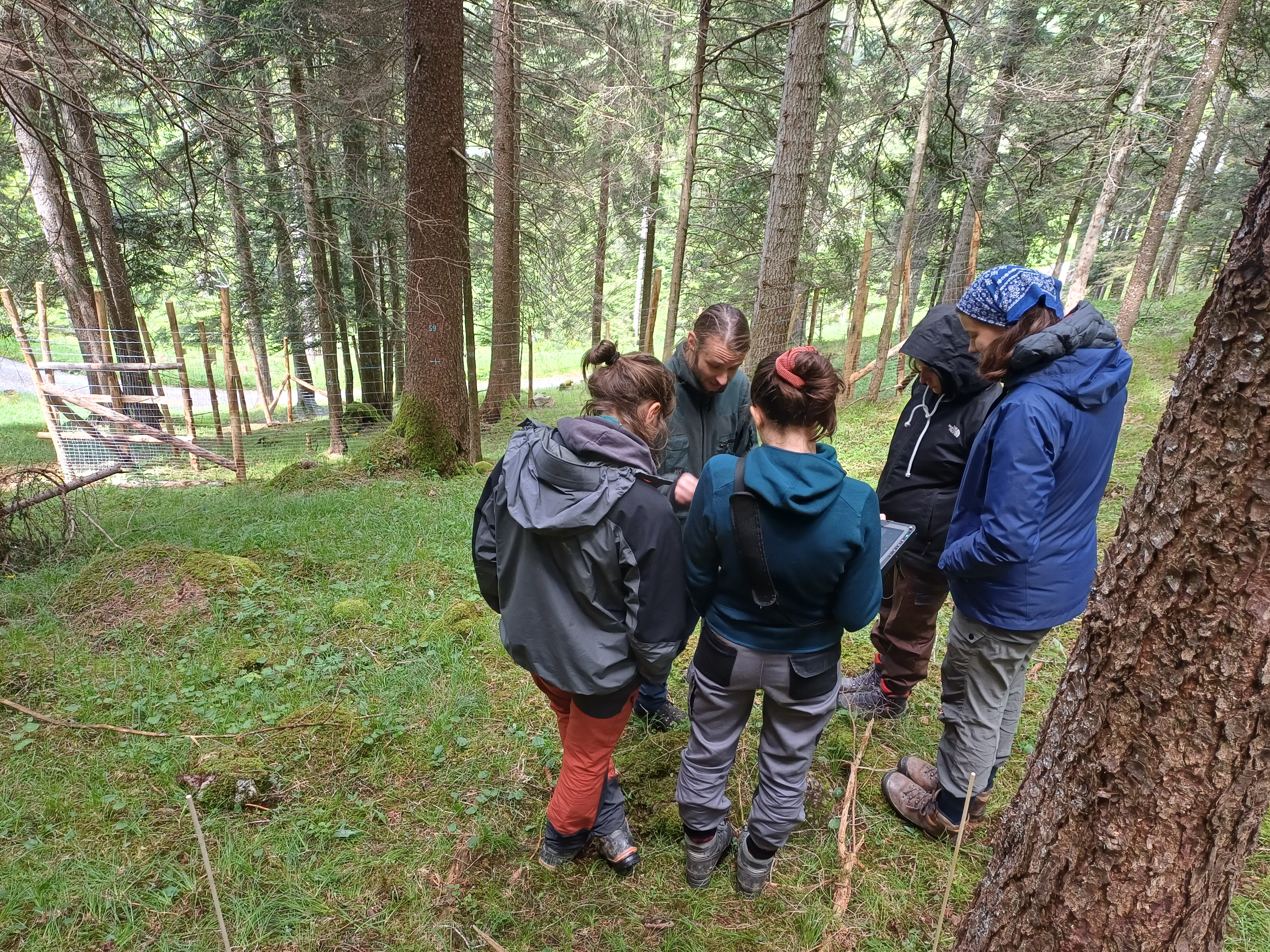
Damage to regeneration, including browsing damage, is systematically recorded on all plots. Starting in summer 2024, camera traps have been installed in selected plots to determine wildlife abundance through image analysis.
The collected data provide initial insights into the short-term effects of silvicultural interventions on natural regeneration and associated micro-site conditions in mountain forests. Ongoing data collection will facilitate long-term analyses of regeneration dynamics and demographic trends.
Motivation 
Today's forest regeneration is the key to tomorrow's forest services. Regeneration dynamics are extremely variable in time and space (stem numbers can range from less than 500 ha-1 to well over 100,000 ha-1) which leads to large differences in regeneration density among tree species and size classes. Therefore, regeneration stocks are difficult to assess, and their quantification requires profound knowledge of the prevailing regeneration processes as well of potential influencing factors. These include various threats from adverse weather conditions (e.g., wet snow, drought), pathogens (e.g., snow mould) and wildlife (especially browsing ungulates). Since these influencing factors interact strongly and often have an impact on regeneration processes over decades, they make it difficult to reliably assess forest regeneration.
In recent decades, great progress has been made in important areas of mountain forest management, for example when assessing the protective effect of stand structures. However, there are still large gaps in knowledge regarding regeneration processes due to the major challenges in selecting and recording key parameters that accurately reflect regeneration dynamics. In addition, it is difficult to estimate how regeneration will develop, as both the mortality of individual plants and additional seeding can be subject to extreme fluctuations. This is especially problematic as sufficient, diverse forest regeneration is very often a decisive factor in the management of mountain forests and creates the basis for the forest of the future.
Project Objectives and Research Questions 
The long-term project goals (time horizon 2025-2030) are to:
- Create a scientific and technical basis so that natural regeneration can be effectively promoted through silviculture. In the long term, regeneration plants should become forest stands that conform to targets and provide important forest services (focus on protection forest).
- Clarify how climate change affects regeneration development. For example, in dry summers, seedlings and saplings of drought-sensitive tree species could be affected by increased mortality, or natural regeneration of tree species from lower elevations could become increasingly established.
- Elaborate a "Practical Guide to Assessing Natural Regeneration". This methodological guide should provide information on natural regeneration at the stand level that is meaningful, technically sound, and therefore comprehensible and robust (reproducible). An important application of this information is silvicultural decision-making in the NaiS framework (Sustainability and Success Control in Protection Forests).
The project focuses on spruce-fir forests. However, the project results are likely to be relevant for other forest types as well.
For the creation of the technical bases, we will determine:
- The demographic dynamics (long-term development of tree populations) of natural regeneration in mountain forests.
- The influence and relative importance of factors (site, stand, disturbances) that are important for natural regeneration (demographic development, stem numbers, size distribution, height increment, tree species composition).
In addition, accompanying studies on sub-processes are planned that will improve the mechanistic understanding of regeneration processes in mountain forests.
Experimental Plots 
A total of ten experimental sites were established in the Swiss Alps (Table 1 and Figure 2). Important criteria for site selection were:
- homogeneity within each site with respect to stand structure, relief, aspect and site type;
- tree species composition: good representation of Norway spruce and silver fir in the regeneration pool, and a gradient in the proportion of silver fir in the mature stand;
- environmental/site gradient: the main site types in fir-spruce forests were considered including differences in elevation and aspect. Experimental sites in the continental Central Alps were deliberately avoided because fir trees are only rarely found there.
All experimental sites are 1.1-1.5 ha in size, established as growth and yield plots (dbh threshold: 4 cm) and are contractually secured as long-term research plots.
Table 1: Characterisation of the experimental sites. Site types according to ARGE Frehner M, Dionea SA and IWA –Wald und Landschaft AG 2020: NaiS-NFI – Allocation of NFI-sampling plots to site types. Final report. Mandated by the Federal Office of the Environment BAFU, 68 p.
Community (Canton) | Elevation | Aspect | Site type (will be checked) | Silver fir proportion (estimate, %) |
Albula (Grisons) | 1300 | N | 53*Ta | 62-86 |
Flüelen (Uri) | 1485 | NW | 50 + 57C | 18 |
Lauterbrunnen (Bern) | 1495 | O | 46 | 0/scattered |
Ormont-Dessus (Vaud) | 1480 | NW | 50(49) | 30 |
Pfäfers (St. Gall) | 1530 | W | 51(60*) + 50(50*) | 20 |
Rougemont (Vaud) | 1600 | NW | 50 | 12-25 |
Sagogn (Grisons) | 860 | NO | 52F | 34-48 |
Visp (Valais) | 1120 | N | 55*Ta | 60-79 |
Wildhaus-Alt St. Johann (St. Gall) | 1365 | N | 50 | 0/scattered |

Experimental Design 
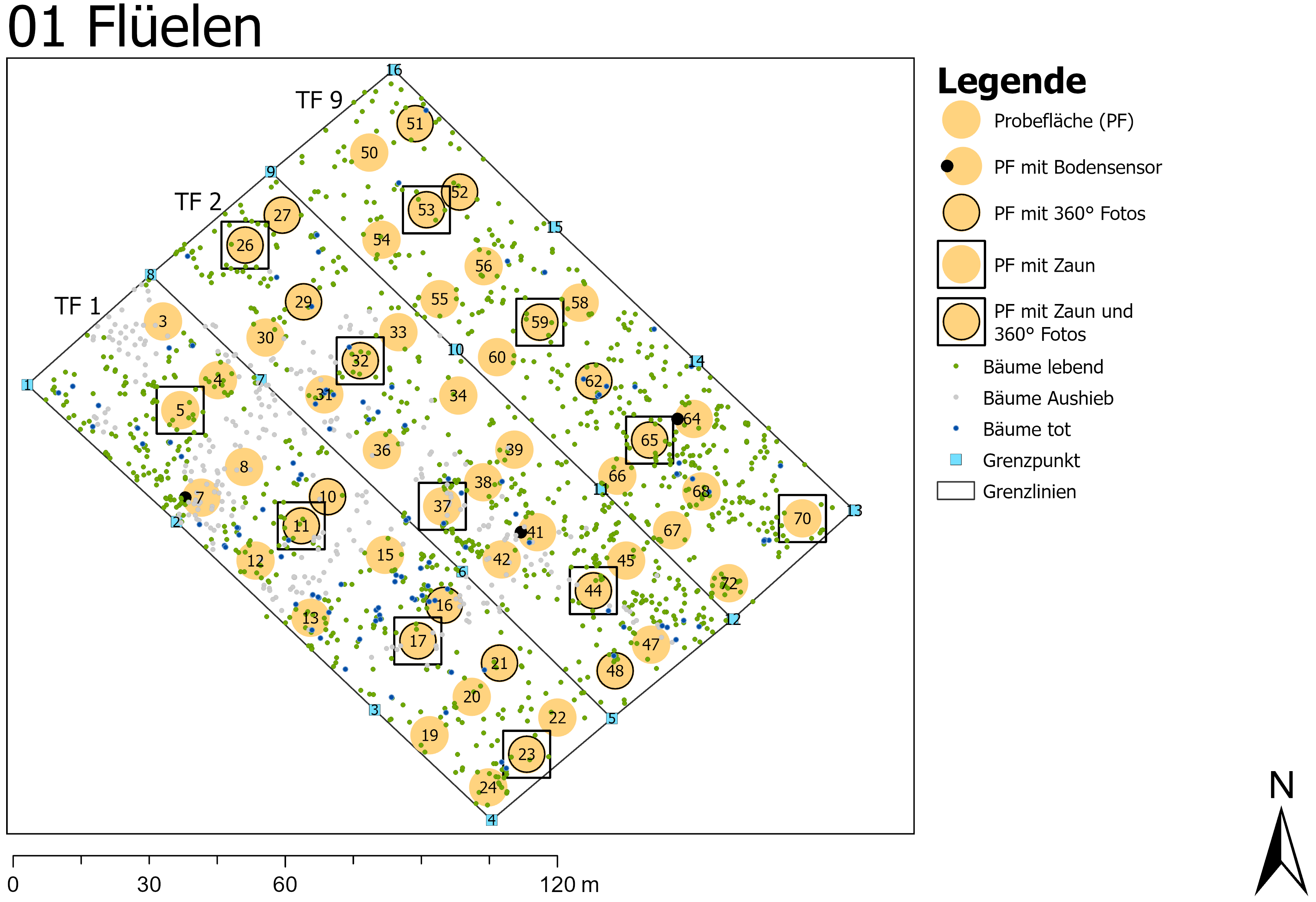
The study design enables long-term monitoring of regeneration populations along site gradients. Ten specific plots (case studies) were selected, and targeted silvicultural interventions (three treatments) were implemented to enhance small-scale light availability gradients within each plot. The design allows for the statistical analysis of regeneration development across various environmental conditions with a representative number of sampled plants. Targeted silvicultural treatments further enable the assessment and quantification of intervention effects on micro-site conditions (particularly ground vegetation) and regeneration processes.
Study Phases 
- Phase I: The initial conditions of forest stands (stand structure, regeneration) are recorded for all ten experimental plots.
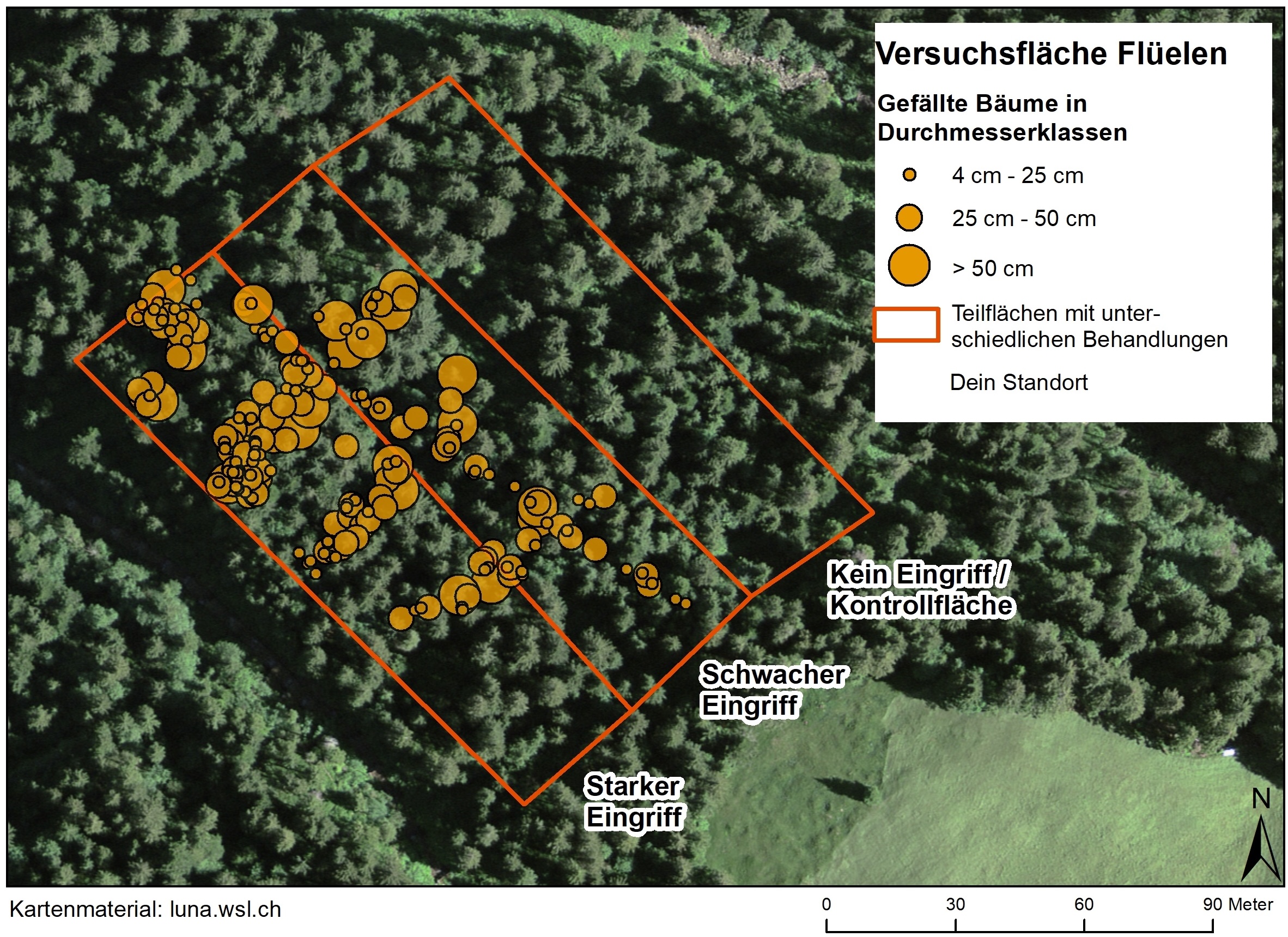
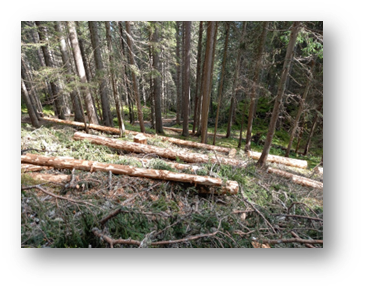
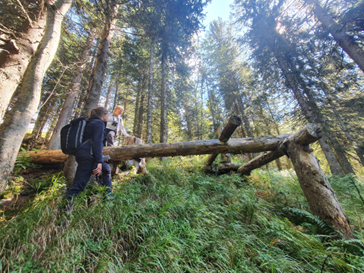
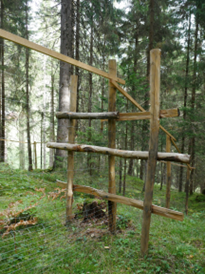
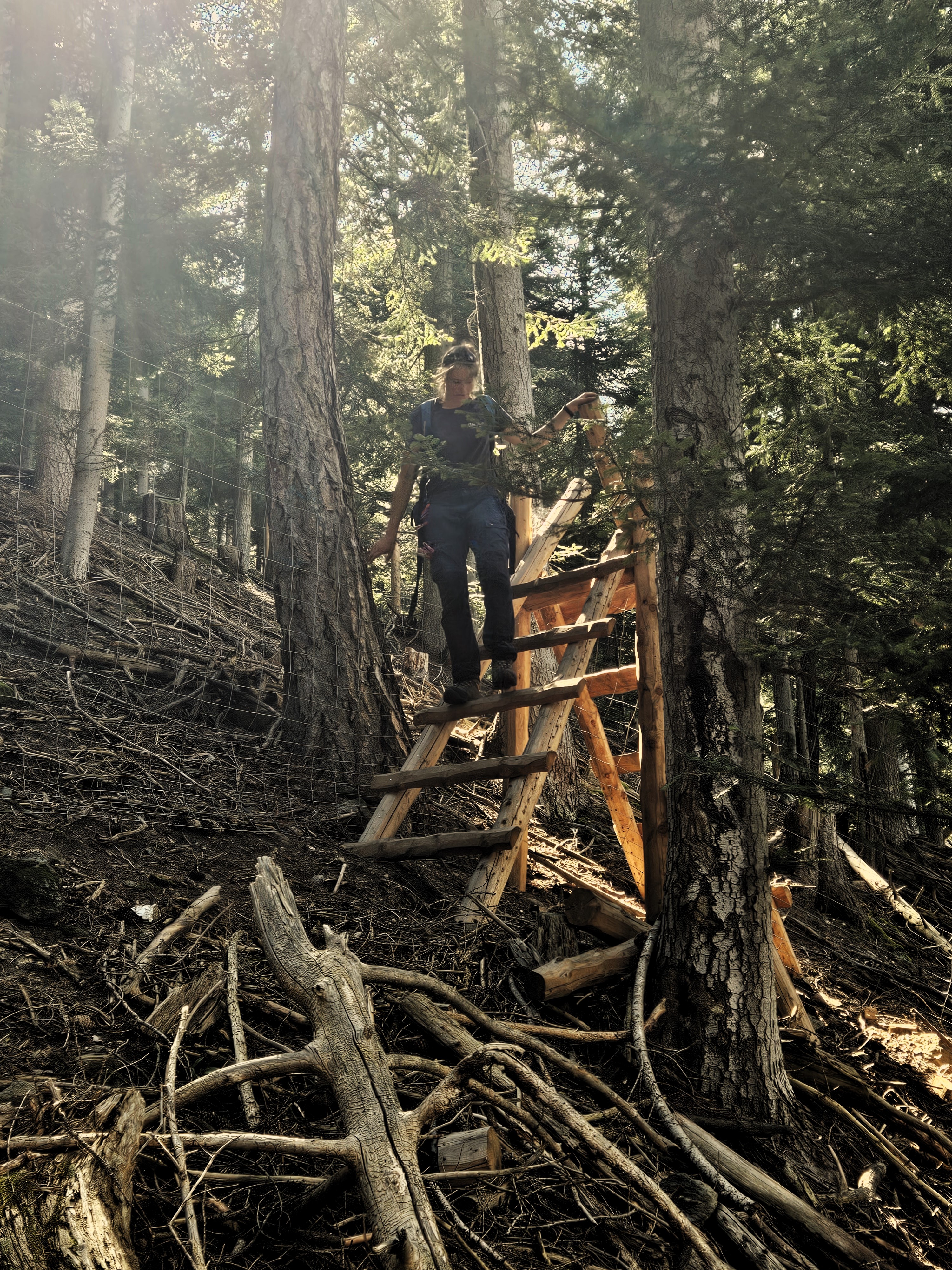
- Phase II: Each plot is divided into three subplots (treatment areas) for different silvicultural interventions. One subplot remains untreated (control), while the second undergoes a light intervention (removal of 15-20% of the initial basal area) and the third a strong intervention (removal of 25-30% of the initial basal area) (Figure 3). To assess the impact of wild ungulates on regeneration, four sample plots within each subplot are enclosed with 2-meter-high deer-proof fences.
- Phase III: Regeneration inventories on the experimental plots are repeated in a three-year cycle.
Regeneration Assessment 
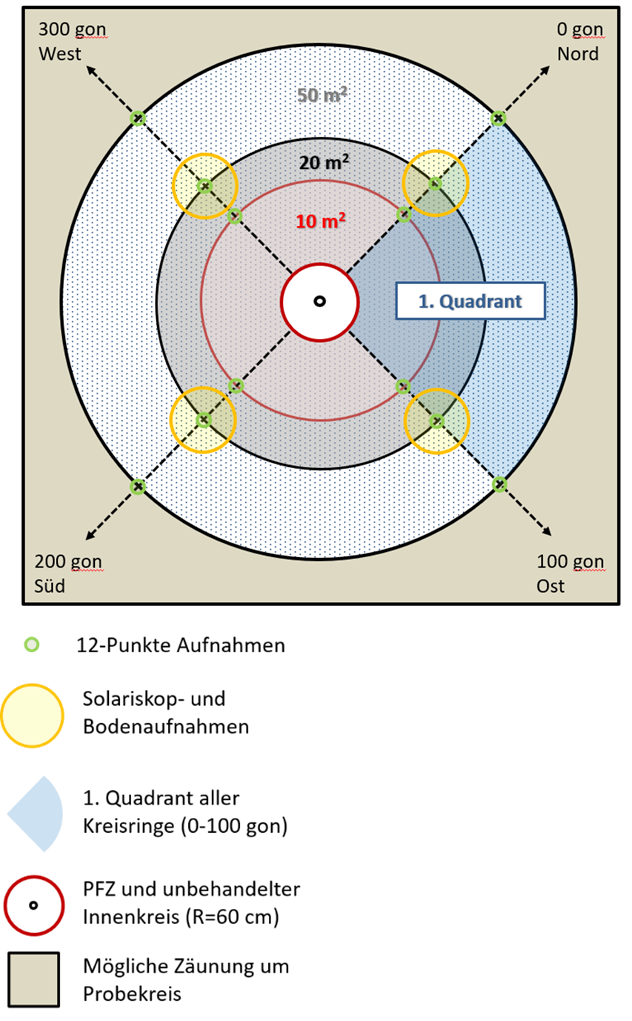
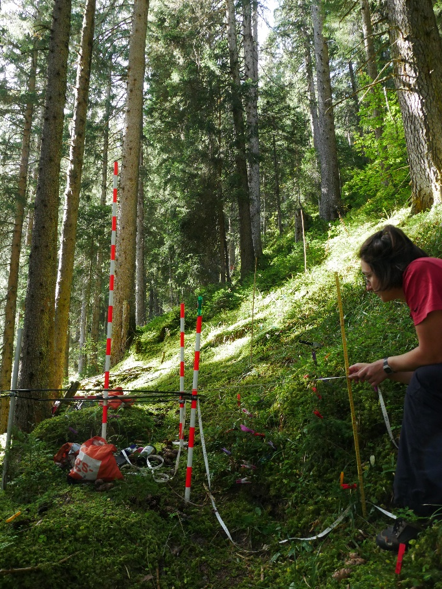
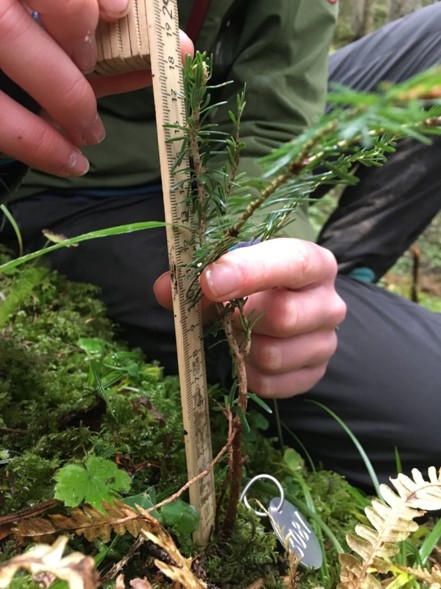
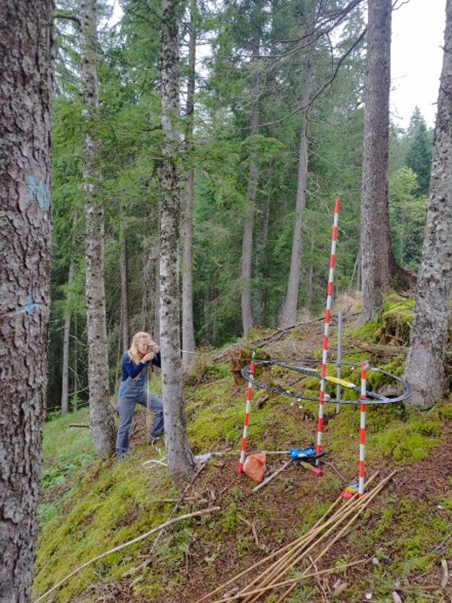
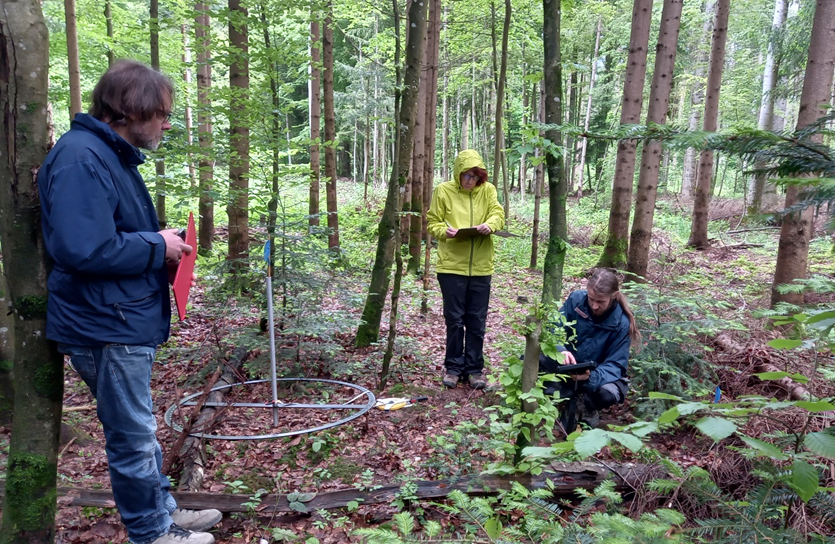
Regeneration processes are examined in approximately 500 sample plots (SP), with 36–54 SP per experimental plot (EP). Each SP is subdivided into three concentric circular subplots (Figure 5):
-
10 m²: Regeneration plants in size class 1 (> 1-year-old up to 9.9 cm in height; seedlings are excluded).
-
20 m²: Size class 2 (10 cm to 39.9 cm in height).
-
50 m²: Size class 3 (40 cm to 129.9 cm in height) and size class 4 (130 cm in height up to a diameter at breast height (DBH) of 3.9 cm).
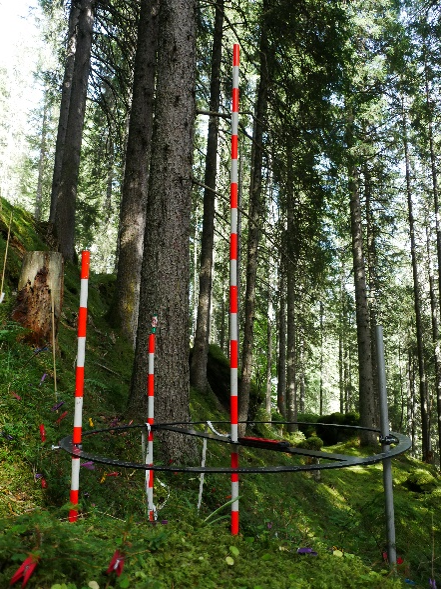
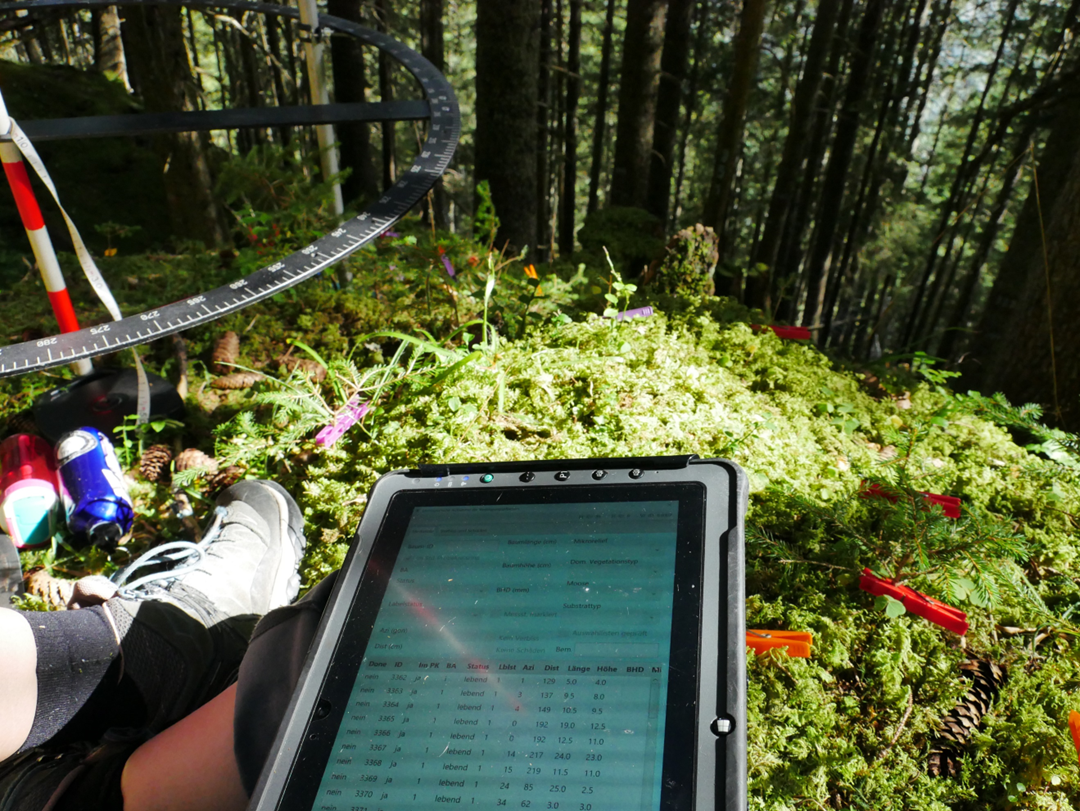
The inner circle around the center of the sample plot (radius = 60 cm) is excluded from sampling. Regeneration plant positions are measured using an azimuth ring (Figures 6 and 7).
-
Assessment of micro-site characteristics (relief and vegetation) and regeneration presence at 12 fixed points.
-
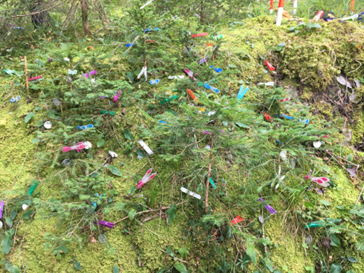
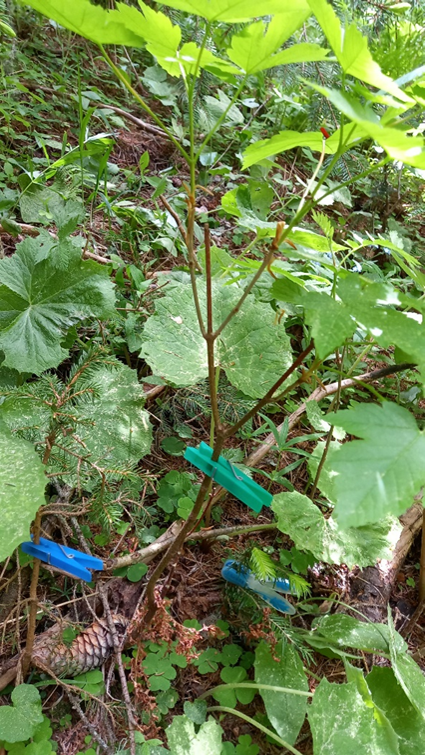
Recording and marking of individual regeneration plants, including micro-site conditions and demographic development (mortality, plant height), with a focus on the first quadrant.
-
Assessment of total regeneration density in the concentric sampling rings by tree species and size class.
Additionally, at four of the 12 points, measurements of organic layer thickness, humus form, and light conditions are conducted using a Solariscope (Ing.-Büro Behling, Hermannsburg, Germany).
Student Research Opportunities 
Each year, topics for student theses are announced, and multiple internship positions are available during the summer months.
Impressions 
Fieldwork 
Social Activities 


Excurstions 
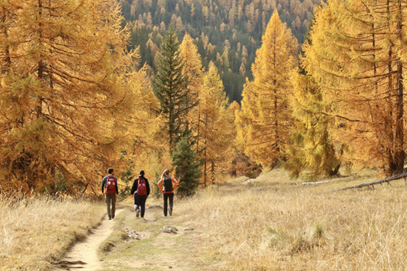
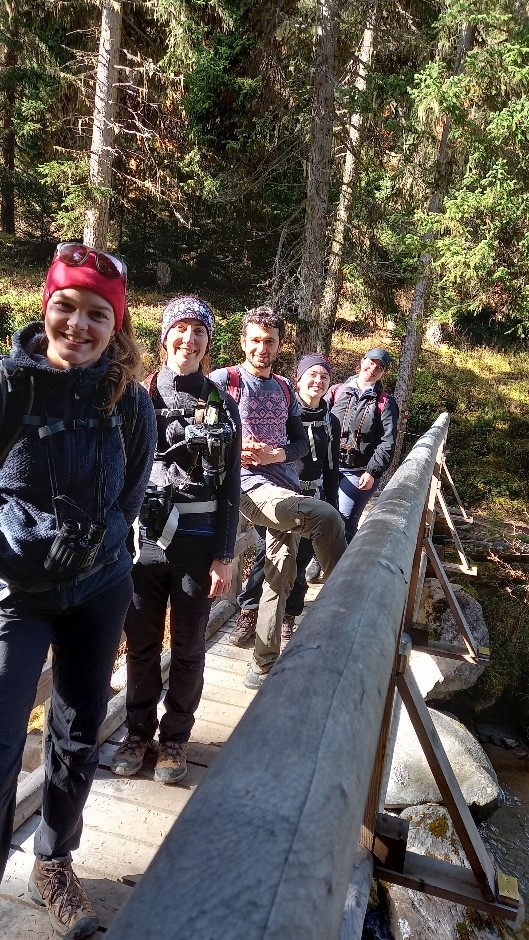
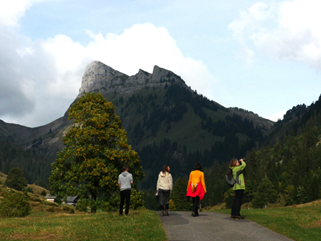
Photos: L. Scheele, C. Spori, E. Hartmann, F. Fürst, P. Nikolova, R. Schai
Further Cooperations 
Completed Theses 
Fürst, Florian (2024): Veränderung von Licht, Mikrostandort, Bestand und Naturverjüngung nach Holzschlag im Schweizerischen Gebirgswald. Bachelorarbeit. Hochschule Bremen, Deutschland. 72 S.
Eggenberger, Nicole (2022): Ökologie im Gebirgswald – wie viel Licht braucht die (Ko-)Existenz? Bachelorarbeit. Wädenswil/Birmensdorf: Zürcher Hochschule für Angewandte Wissenschaften/Eidgenössische Forschungsanstalt WSL, 32 S.
Probst, Tamara (2022): Abhängigkeit der Naturverjüngung von Tanne (Abies alba) und Fichte (Picea abies) von lokalen Umweltfaktoren in Tannen-Fichtenwäldern. Masterarbeit. D-USYS, ETH Zürich, 60 S.
Fox, Felix (2021): Bestimmende Faktoren für die Weiß-Tannen- (Abies alba), Fichten- (Picea abies) und Vogelbeeren- (Sorbus aucuparia) Naturverjüngung im Gebirgswald der Gemeinde Flüelen, Kanton Uri, Schweiz. Bachelorarbeit. Hochschule für Forstwirtschaft, Rottenburg, Deutschland. 86 S.
Publications and Reports 
Schwarz J., Hobi M., Tellenbach C., Nikolova P. (2026) Forests on the dark side: Life-stage and species-specific drivers of advance regeneration in extensively managed Swiss mountain fir-spruce forests. Forest Ecology and Management 618. https://doi.org/10.1016/j.foreco.2026.123961
Nikolova P., Kalt T., Jaeger E. (2026) Verjüngung: Die Folgen der Holzernte. Landwirt. (3), 76-79. Institutional Repository DORA
Nikolova P.S., Kalt T., Nitzsche J., Tellenbach C., Schneider B., Schwarz J. (2026) Waldverjüngung nach waldbaulichem Eingriff: erste Entwicklungen in hochmontanen Gebirgsnadelwäldern. Schweiz. Z. Forstwes. 177(2), 92-101. https://doi.org/10.3188/szf.2026.0092
Moser B., Nikolova P., Wohlgemuth T. (2026) Wird die Waldverjüngung zur Hauptaufgabe der Waldbewirtschaftung? Schweiz. Z. Forstwes. 177(2), 72-75. https://doi.org/10.3188/szf.2026.0072
Nikolova P., Kalt T., Jaeger E. (2025) Wie Forstarbeit die Vorverjüngung im Gebirgsnadelwald beeinflusst. Wald Holz. 77(8), 12-15. Institutional Repository DORA
Literature list Turkish hazel 2025
Ambs D, Schmied G, Zlatanov T, Kienlein S, Pretzsch H, Nikolova PS, 2024. Regeneration dynamics in mixed mountain forests at their natural geographical distribution range in the Western Rhodopes. Forest Ecology and Management 552, https://doi.org/10.1016/j.foreco.2023.121550
Nikolova PS, Allgaier Leuch B, Frehner M, Wohlgemuth T, Brang P, 2024. Indikatoren der Waldverjüngung und ihre Anwendungsbereiche. Schweizerische Zeitschrift für Forstwesen, 175(3), 108-115. https://doi.org/10.3188/szf.2024.0108
Nikolova PS, Kalt T, Royek J, Schneider M, Schwarz J, 2024. Ergebnisbericht der Phase II (2020-2024). Eidg. Forschungsanstalt WSL, Birmensdorf. 77 S. + Anhang
Kalt T, Nikolova P, Ginzler C, Bebi P, Edelkraut K, Brang P, 2021. Kurzes Zeitfenster für die Fichtennaturverjüngung in Gebirgsnadelwäldern, Schweiz Z Forstwes 172: 156-165 https://doi.org/10.3188/szf.2021.0156
Zaugg A, Lässig A, Nikolova P, Brang P, 2020. Projekt Gebirgswaldverjüngung: Dokumentation der Flächenauswahl. Interner Bericht. Birmensdorf, Eidg. Forschungsanstalt WSL, 9 S. + Anhang.
Brang P, Nikolova P, Gordon R, Zürcher S, 2017. Auswirkungen grosser Verjüngungslücken im Gebirgswald auf Verjüngung und Holzzuwachs. Schlussbericht des Projektes Eingriffsstärke und Holzzuwachs im Gebirgswald. Birmensdorf, Eidgenössische Forschungsanstalt WSL. 48 p. https://doi.org/10.3929/ethz-b-000184480