Water retention on agricultural fields as a drought mitigation measure: hydrological effect of Keyline systems
Anna Leuteritz, Mike Schwank, Yiwen Zhou, Maurus Nathanael Villiger
2025 - 2029
Cooperation FinancingContents
To address the projected increase in the frequency of droughts and more intense rainfall events, the agricultural sector is seeking management practices that retain water during periods of excess precipitation and store it for times of scarcity. Recently, the summer 2026 an exceptional drougth interecepted by intense rainfall events like the one in Zurich on the 19.06.2026 with over 50mm of precipitation in one hour (MeteoSchweiz) highligths the need of such measures. In this project, we aim to evaluate the water retention effectiveness of one such measure, called Keyline design. A multi-year field study is planned on an agricultural plot, using multi-sensor soil moisture monitoring. The goal is to demonstrate the effectiveness of Keyline systems under drought conditions.
Keyline System Uitikon 
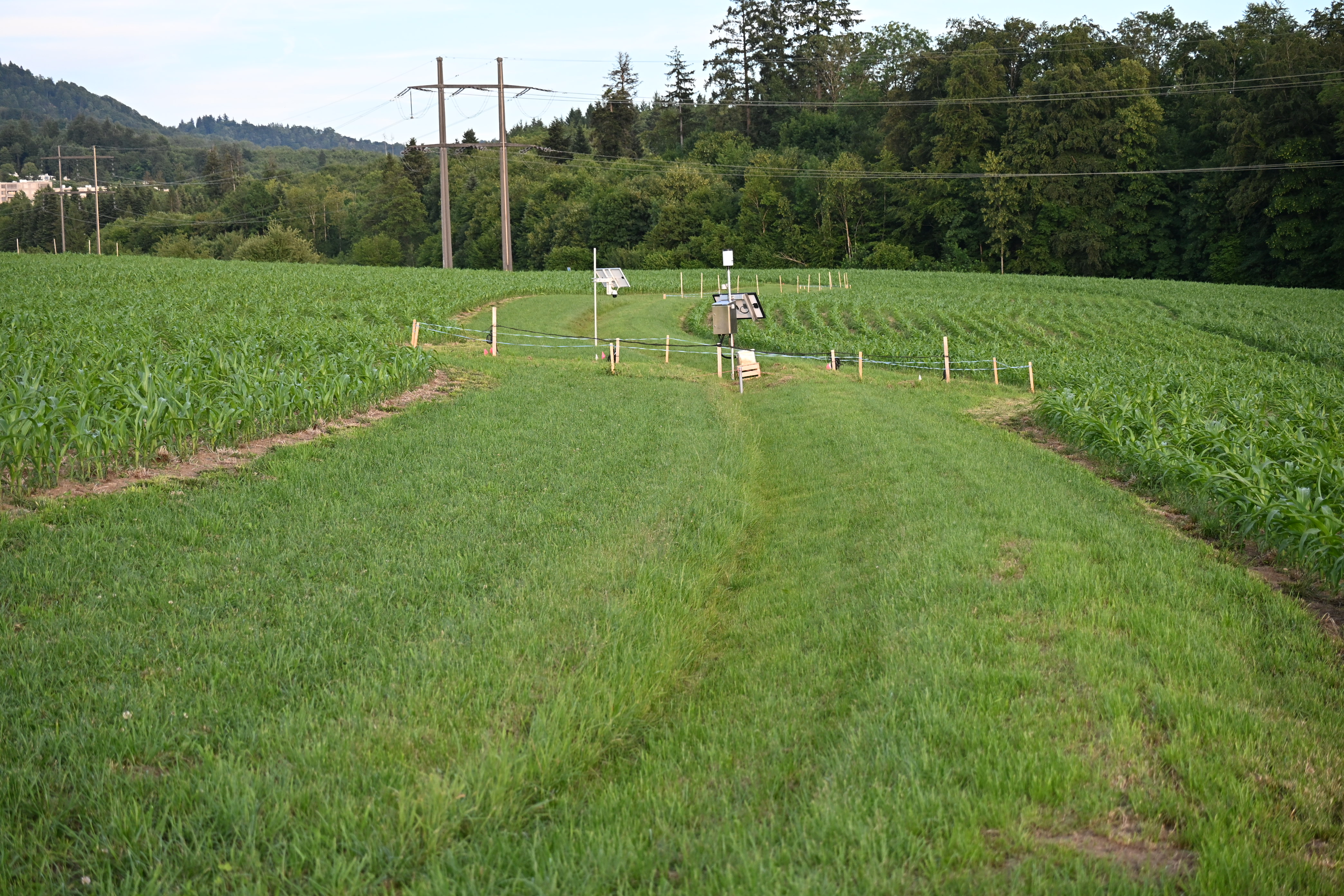
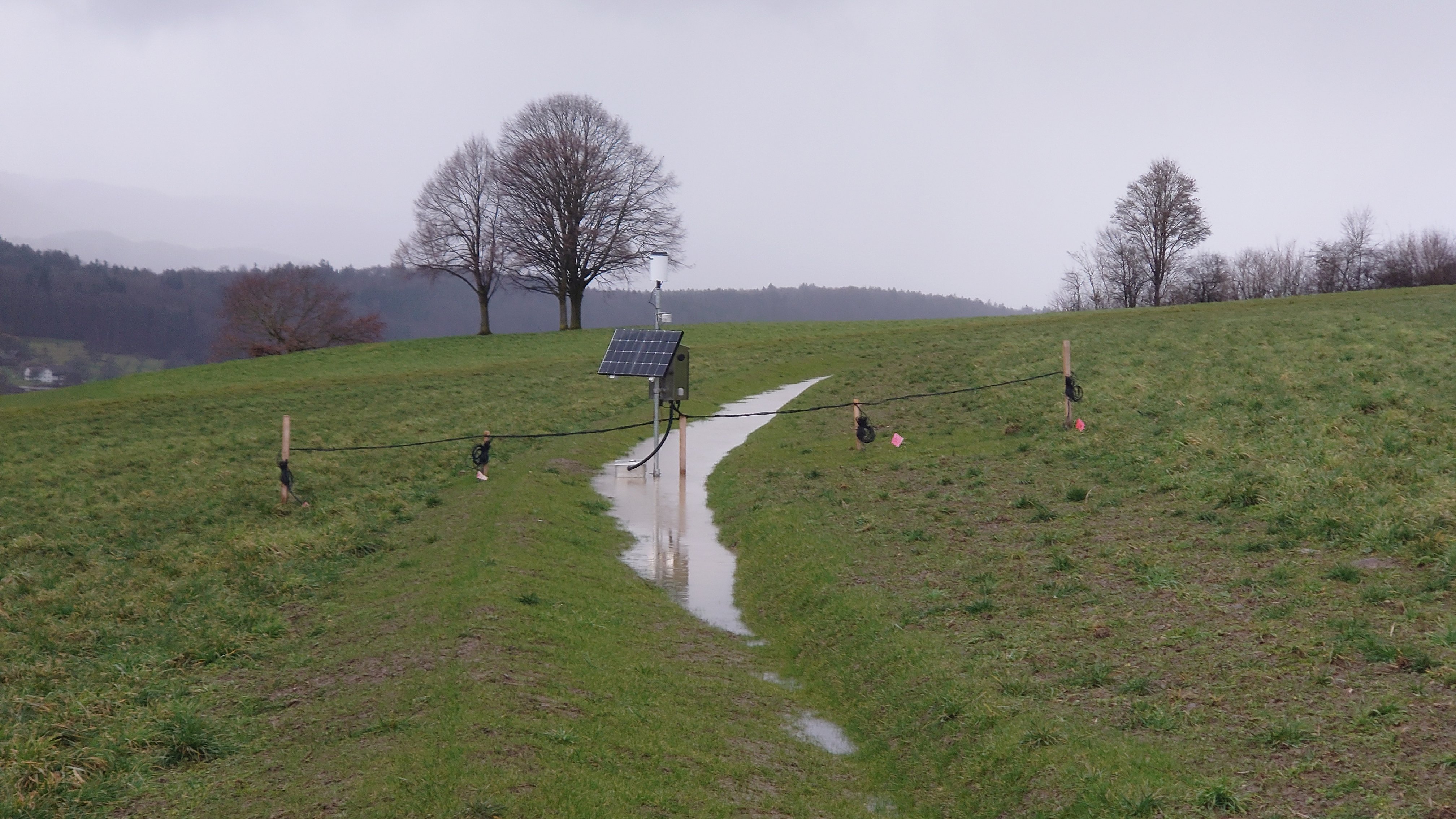
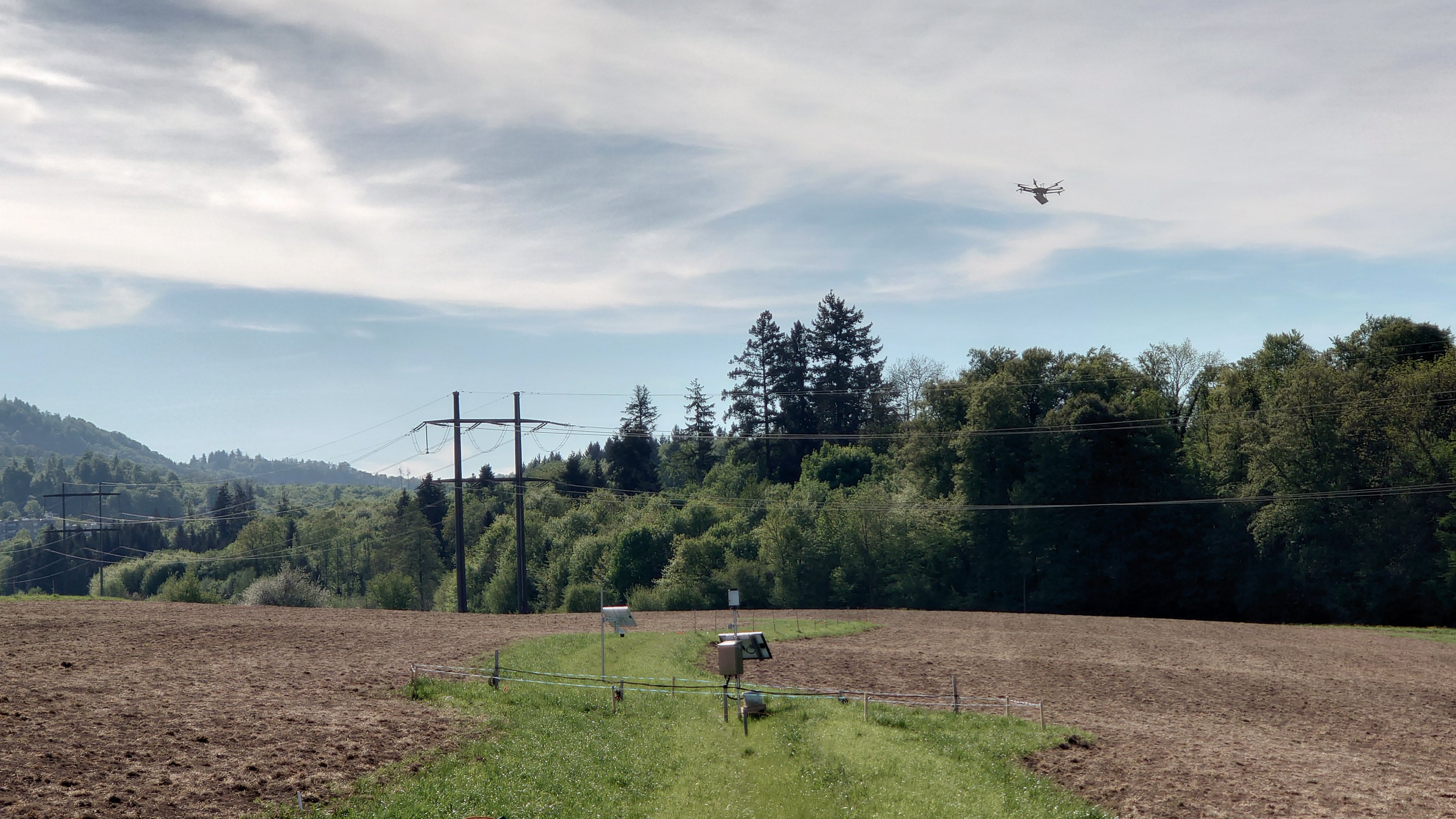
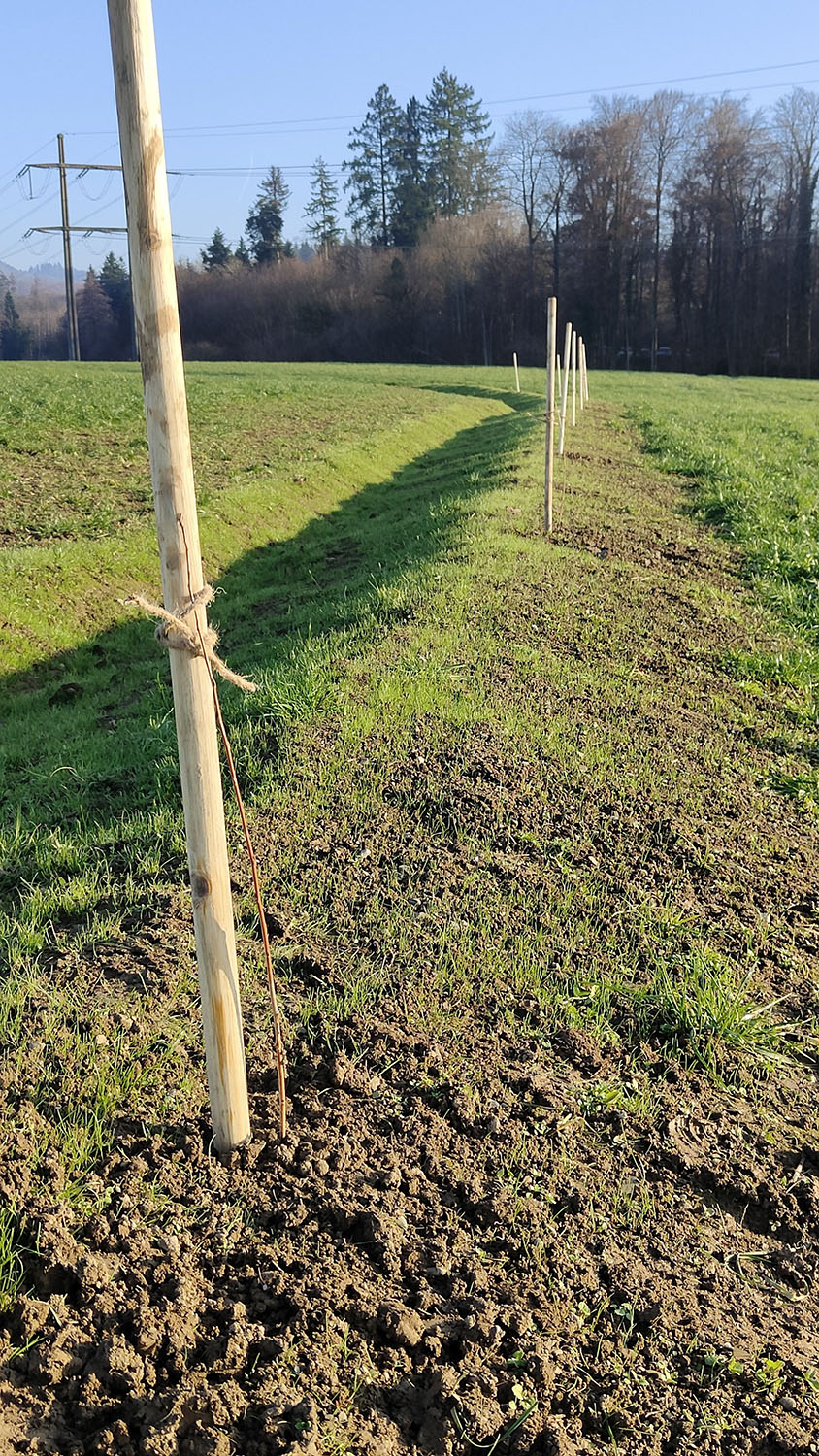
The Keyline-System in Uitikon (ZH) was established in fall 2025 and consists of three Keylines parallel to each other. The field is cultivated by Strickhof as a normal agricultural field with the exception of the Keyline stripes. For example in 2026, corn was planted and harvested on the field. Exceptional at the site in Uitikon is, that a part of the Keylines is covered by trees to determine the additional influence trees have on the soil moisture dynamics. Both Keyline systems (with and without trees) contain a measurement station. Next to the Keylines is a part of the field which does not contain Keylines but is cultivated in the exact same way, acting as a control area. In our observations so far we saw mainly water beeing trapped in the Keyline during winter, but also during summer when intense thunderstorms hit the area water was trapped, retained and infiltrated over the subsequent hour.
Publications and further information:
November 2025: The science program nano (3sat) reported about our keyline experiment at Uitikon (ZH).
Mai 2026: Poster about the applied measurement methods at the European Geoscience Union General Assembly 2026.
November 2026: Presentation at the Swiss Geoscience Meeting in Fribourg.
Keyline Systems Jurapark 
At the Jurapark (AG) are several fields with Keyline System of which two are equipped with a measurement station (Wölflinswil and Herznach) to determine the effects from Keylines. Because the agricultural practices and the soil properties, slope and geology are different, these measurement will provide insigths on the effects the environmental conditions have on the hydrological effects from Keyline systems.
Publications and further information:
August, 2025: In the current issue of the ETH Zurich ‘Globe’ magazine(p. 40-44), you can find an article about our project and the collaboration with the Reallabor Jurapark Aargau.
September, 2025: Fricktal.info and the Neue Fricktaler Zeitung also recently reported on an event held in Wölflinswil as part of the Realexperiment «Vom Regen zur Ressource Wasser».
Mai 2026: Information event “Keylines in der Landschaft: Planung und Forschung” on the 18.05 in Herznach organised by the Reallabor Jurapark Aargau.
November 2026: On the 14. November there will be public event where the results regarding the hydrological effects from Keyline systems are shown.
Measurement Systems 
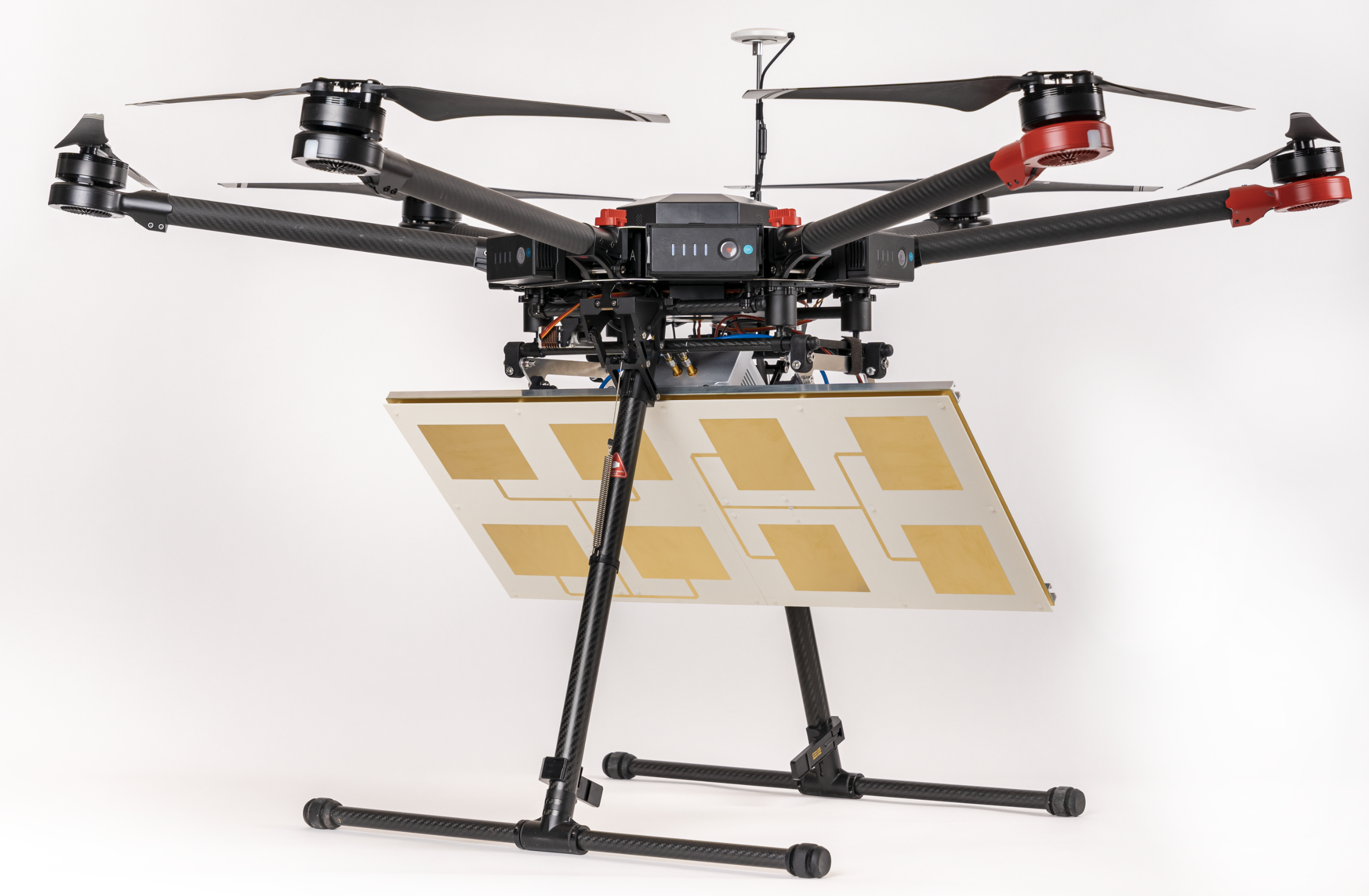
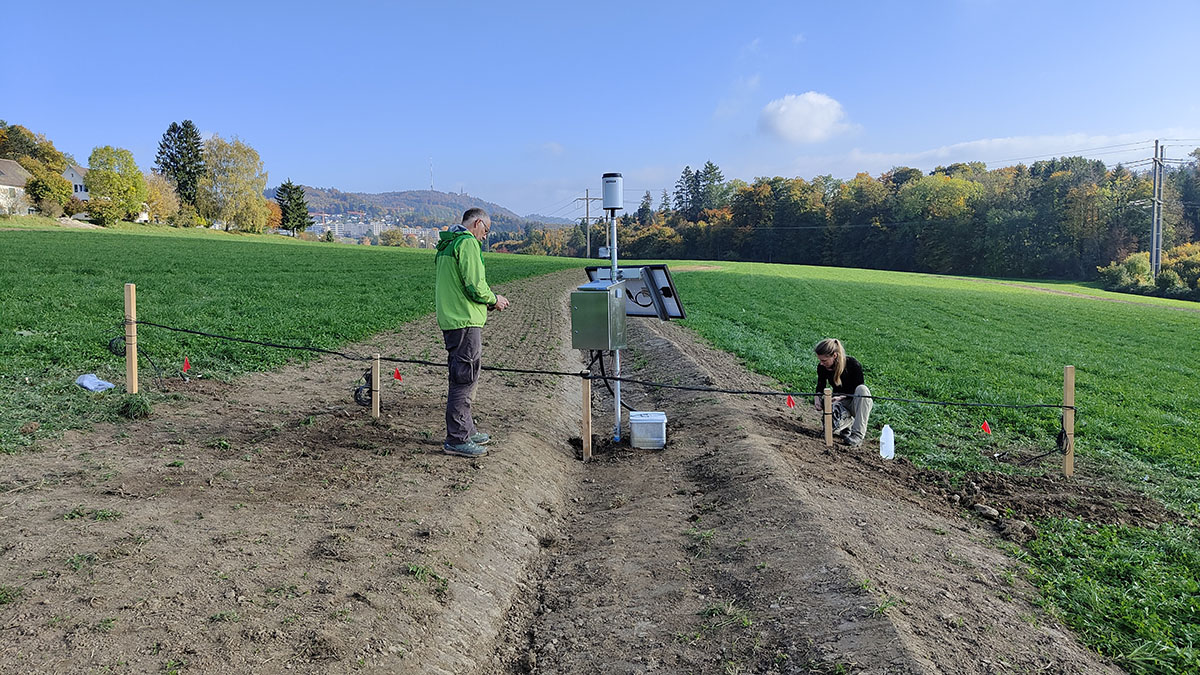
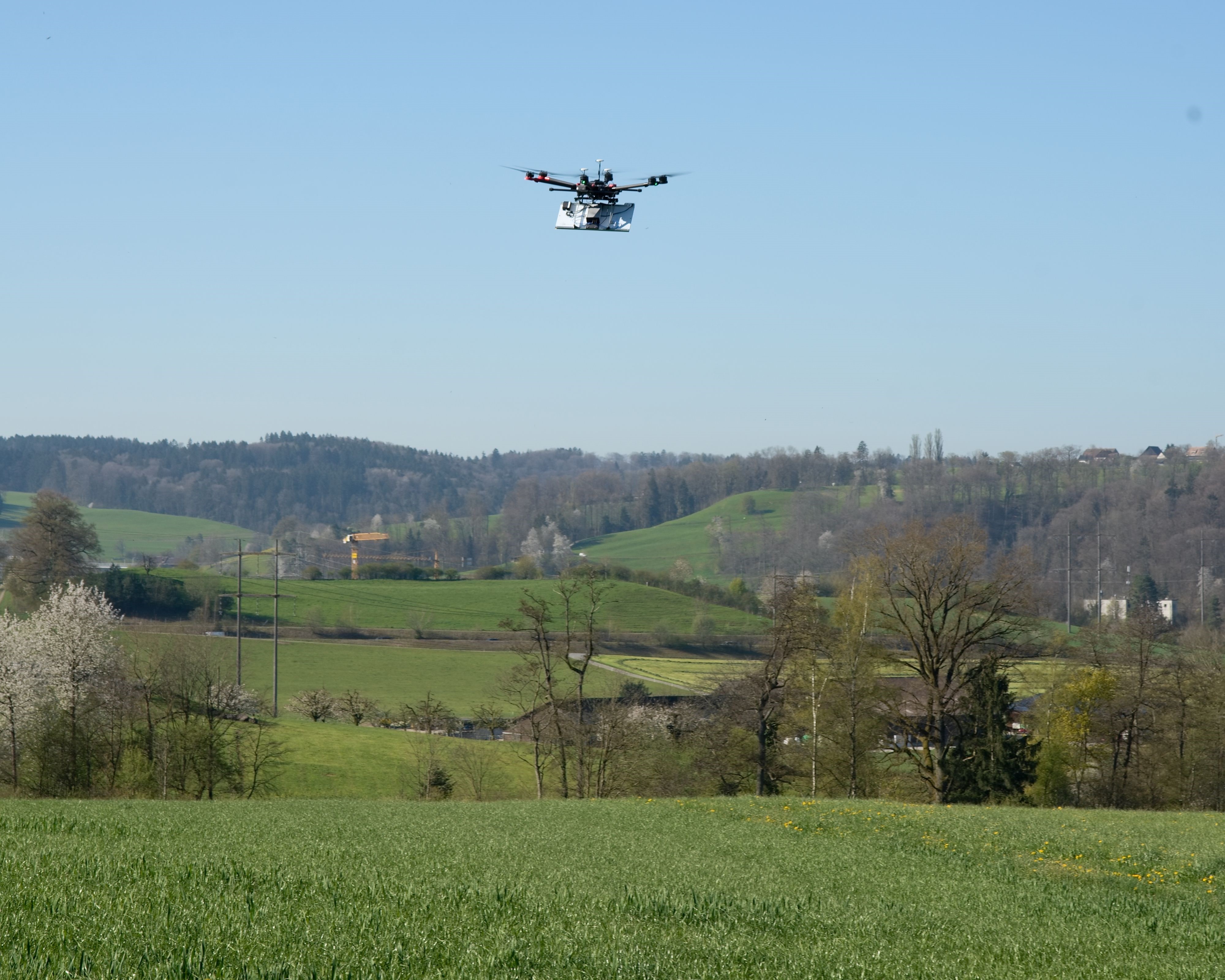
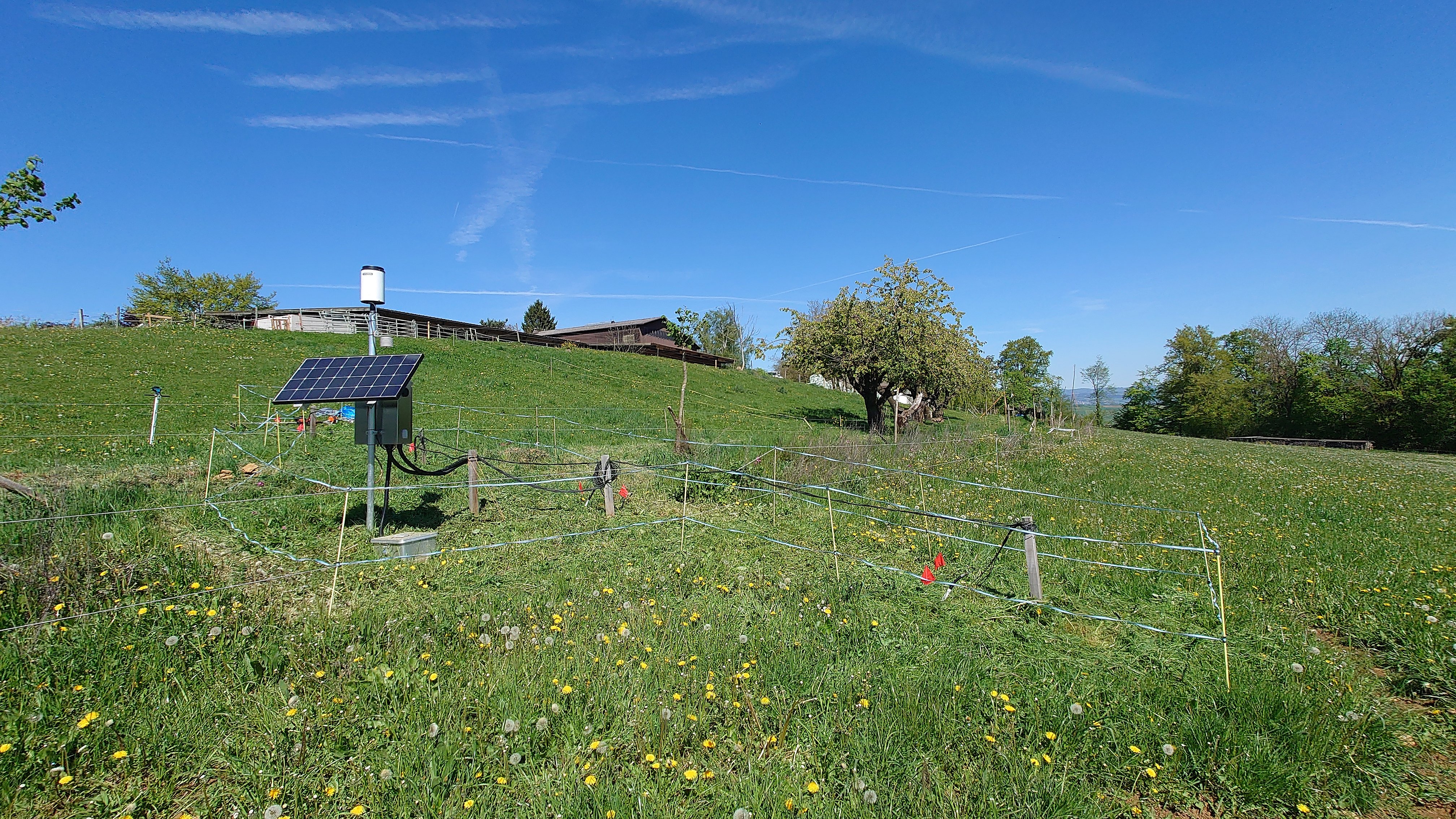
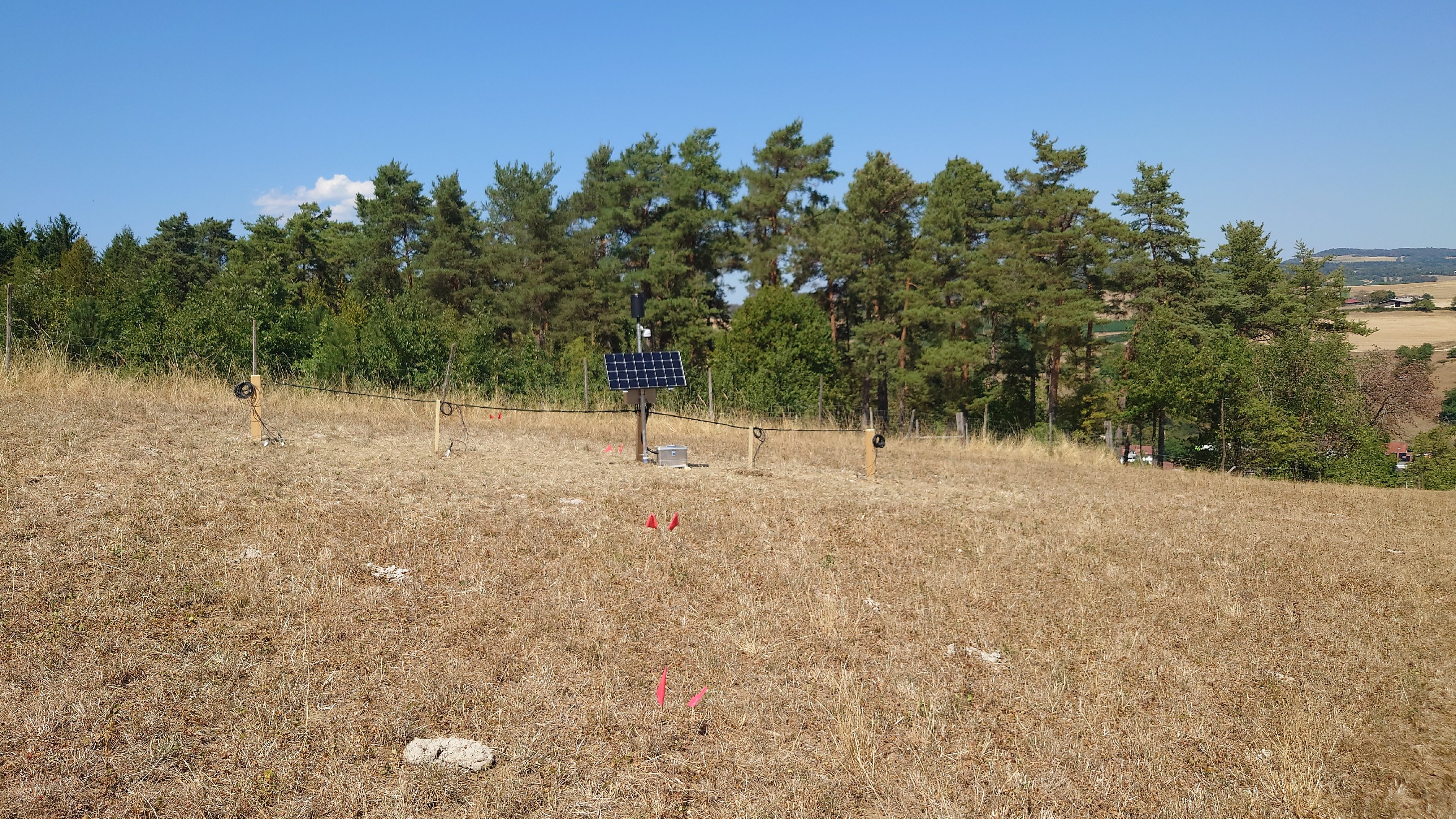
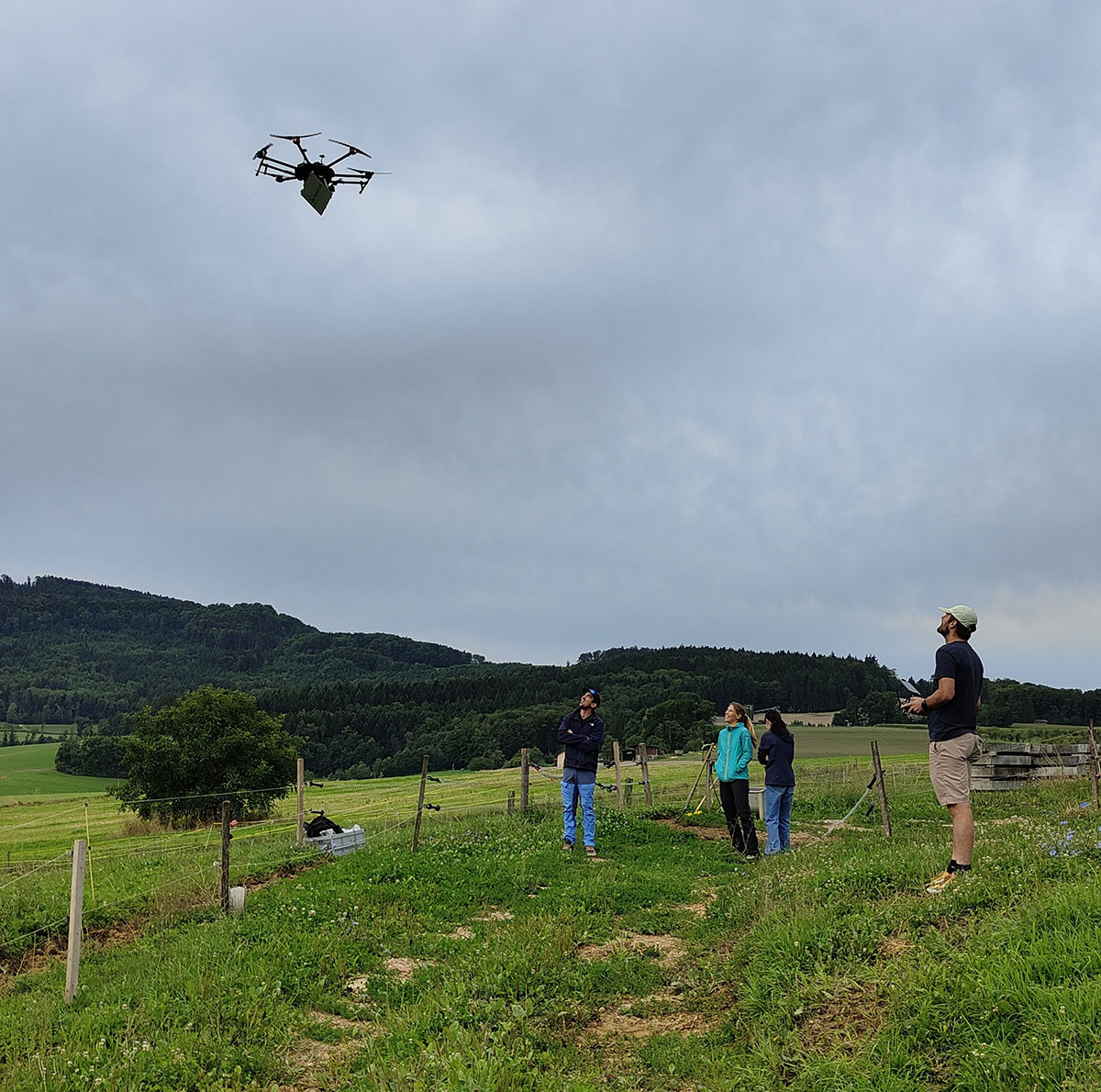
Since 2025 there are measurement systems at different locations of the project, which measures the difference in soil moisture over different points along a transect over the Keyline (volumetric water content and matrix potential, see image below). These measurements are accompanied by drone- and cart-based remote sensing systems, which allow to determine the effects Keylines have on the soil hydrological dynamics over the whole area of the field. Additionally, geophysical methods yield a 2D-profile over and along the Keyline to see more into the depth how the soil moisture develops over time and in dependency of the Keyline. These different measurement systems with different spatial and temporal resolutions allow to draw a holisitc picture of the soil moisture dynamics in a Keyline system on an agricultural field.