

Leaves turning brown as early as July, and watercourses running at record-low levels: the summer of 2026 was extremely dry and hot. Experts from WSL and SLF answer frequently asked questions.
This text was amended and clarified on 26 August 2026.
Contents 
Hydrological drought / water scarcity 
General situation 
How unusual is the situation this summer?
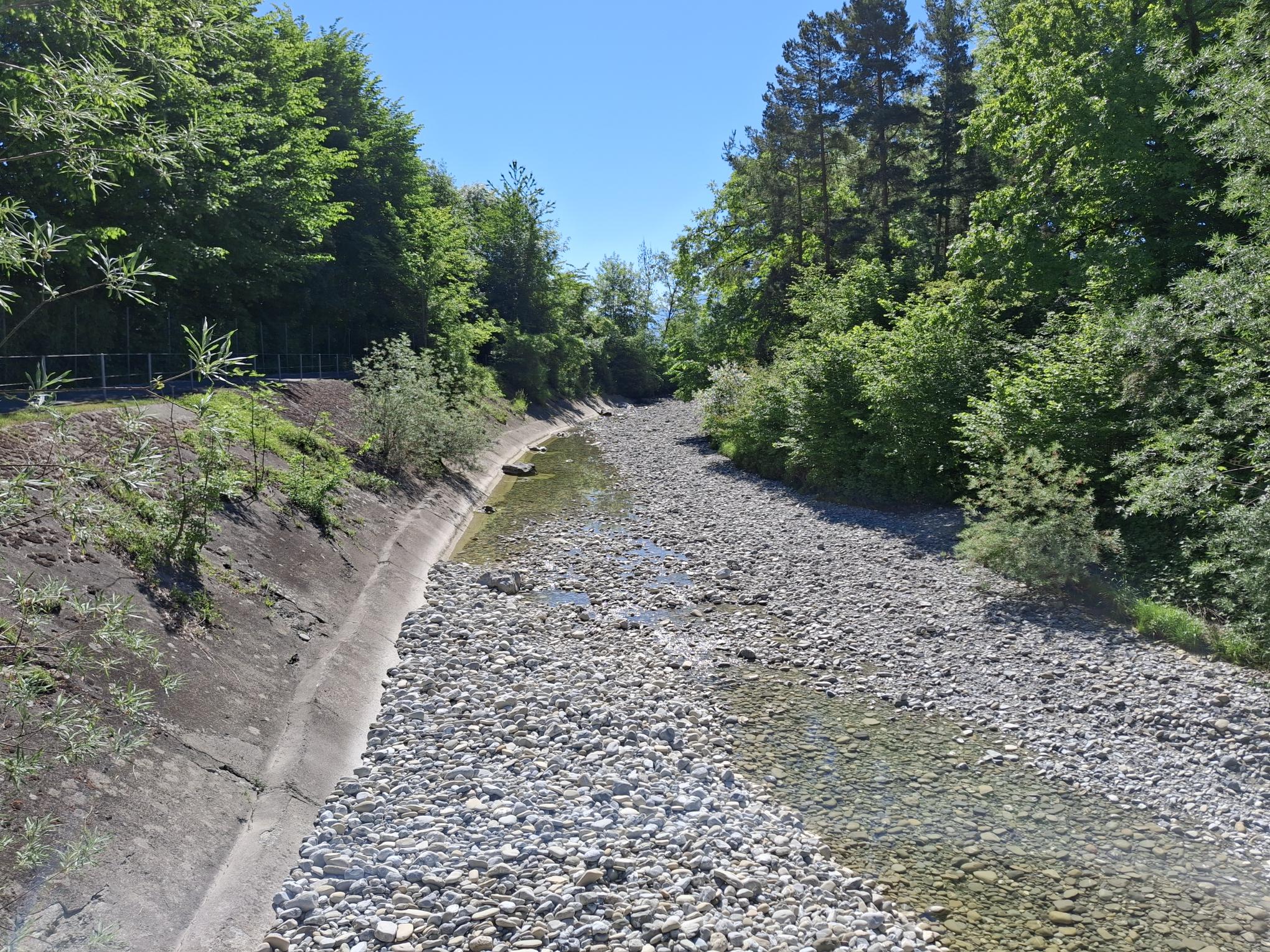
The situation is highly unusual. As early as July, we observed record-low water levels on many rivers in Switzerland. The Aabach (cantons Lucerne and Aargau) had water levels lower than at any time since records began, and the water level of Lake Hallwil (canton Aargau) was lower than ever before in July.
All over Switzerland, rainfall – particularly in the Central Plateau – was significantly below the long-term average. At the same time, temperatures have repeatedly been above usual for this time of year. Statistically speaking, the figures towards the end of June fell within a range that occurs every two to ten years – and in some cases even less frequently. The effects are evident, amongst other things, in the dry soil and the low water levels in rivers and groundwater. The situation has worsened further since mid-July.
The drought is caused by a combination of several factors: low snowfall in the Alps during the winter, significantly below-average rainfall in Central Europe since April, and several severe heatwaves that have affected almost the entire Alpine region.
Where is the situation worst, and where is it slightly less severe?
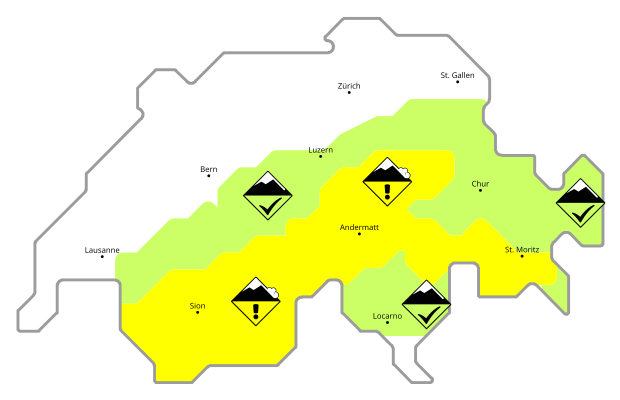
The federal government’s national drought platform shows that the majority of Switzerland is affected by extremely dry conditions. Although the Alpine regions were for some time able to benefit from snowmelt, snow has also been sparse this year, which is why mountain streams are exceptionally dry for this time of year.
Can we call this a drought?
We speak of a drought when there is a period of significantly below-average rainfall, leading to water deficits in the soil, in watercourses and in groundwater levels, and thereby affecting natural and human systems. A distinction is made between different types of droughts, which differ in their causes and effects. These include meteorological, agricultural and hydrological droughts. If a drought persists for a prolonged period – as has been the case for more than four months now – in a climate such as Switzerland’s, it is referred to as a drought.
How long and how heavy would rainfall need to be for conditions to return to normal?
Short-lived rainfall only partially improves the situation. Surface waters react quickly to rain, whereas groundwater and deep soil layers require a longer recovery time. A sustained improvement in the situation therefore requires more prolonged and widespread rainfall. At the same time, rainfall should not be too intense, as otherwise it can lead to surface runoff and flooding in local areas. Heavy rain is generally a problem, as it often exceeds the soil’s infiltration capacity. This applies to both dry and wet periods. This effect can be exacerbated where surfaces are sealed. Optimal preparation therefore begins with land use.
Impacts 
What are the effects of the drought?
In August 2026, rivers and lakes were affected by a severe water deficit; around half of the sites where groundwater levels are measured by the federal government recorded below-average levels. The water shortage consequently affects virtually all sectors of water management. For example, there are restrictions on water use from rivers. This means that the agricultural sector can no longer irrigate to the usual extent. Many alpine farms have had to bring their cows back down to the valley unexpectedly early because water and fodder have become scarce. Furthermore, many farms are already being forced to draw on their winter fodder reserves. As a result, some farms are reducing their livestock numbers.
The low water levels in Lake Constance are also causing problems: in some places, private boats are no longer in the water. River shipping on the Rhine (Germany) for the transport of goods from the North Sea to Switzerland can now only carry a small fraction of its usual cargo. At Kaub, a bottleneck on the Rhine, shipping is even at risk of coming to a temporary standstill.
Fish and other river wildlife are also suffering from the low water levels. From 25 degrees onwards, the mortality rate of the vast majority of fish rises significantly. Furthermore, they are under stress and reproduction is impaired. Fish rely on cool refuges – but as water levels fall, these refuges are increasingly being lost. The Swiss Fishing Association reports numerous fish rescues and record-high fish mortality rates.
What are the implications for groundwater and the drinking water supply?
Prolonged dry spells such as this one also affect groundwater levels. Although these levels usually respond only slowly, if a rainfall deficit persists for long enough, groundwater levels can fall. Low groundwater levels can have a negative impact on spring flow and thus on the volume of water available for the drinking water supply. In some local communities, therefore, water availability may not fully meet demand.
Does the drought also have consequences for the electricity supply?
The current drought does not currently pose a threat to Switzerland’s electricity supply. Indeed, Alpine reservoirs are filling more slowly than usual, and two of Switzerland’s four nuclear power stations have had to temporarily their reduce production or be temporarily taken off the grid due to high water temperatures. However, the rapid expansion of photovoltaic capacity since 2020 is proving to be a valuable contribution to the current electricity supply. On sunny days, solar power generation regularly accounts for more than half of the power demand during the midday hours; in the evening and at night, hydropower takes on the central role. Furthermore, electricity consumption in Switzerland is usually at its lowest level of the year in August.
Even with a view to the coming winter, when electricity demand reaches its seasonal peak, there are currently no signs of a critical supply situation. Although the replenishment of the reservoirs is progressing more slowly than in an average year, reservoir levels are continuing to rise. Switzerland’s pumped-storage power plants are responsible for transferring water from the summer to the winter months in order to generate winter electricity.
Nuclear Power Plants: There are currently four nuclear power plants in operation in Switzerland. The two smaller reactor units at the Beznau nuclear power station (each with an installed capacity of around 365 MW) have had to repeatedly reduce their output or be temporarily taken off the grid in recent weeks. This was due to the high water temperatures in the River Aare, whose water is used for flow-through cooling. This occurs when the water temperature reaches 25°C or above.
Photovoltaics: Since 2020, there has been a rapid expansion of photovoltaic capacity in Switzerland. As a result, its share of annual electricity production has risen from around 4.5 per cent to approximately 14 per cent. This development is proving particularly valuable during the current dry and sunny summer, as the high levels of sunshine are leading to above-average solar power generation, thereby offsetting the lower output from individual hydroelectric power stations and nuclear power stations.
Hydropower: The 10 per cent largest hydropower stations in Switzerland generate more than 90 per cent of annual hydropower output. These largest plants are predominantly located on the major rivers of the Swiss Plateau or utilise the high heads in the Alps to generate electricity. As the major rivers in the Swiss Plateau are currently carrying significantly less water than the long-term average, many run-of-river power stations can only operate at reduced capacity. Alpine storage power stations, on the other hand, are in some cases benefiting from increased snow and glacier melt, which helps to compensate for some of the shortfall in precipitation.
In one of our latest studies (under review), we demonstrate, using examples, that an energy mix comprising various renewable energy sources can make a significant contribution to a resilient electricity supply. The different energy sources complement one another both seasonally and in response to weather conditions:
- During sunny and dry summer periods, photovoltaics account for a large proportion of electricity generation.
- During periods of high rainfall, more energy is available from hydropower.
- In winter, wind power could make an important contribution, as its output is often high when solar power generation is low.
Although wind power could make a valuable contribution to the electricity supply, particularly during the winter months, there is currently a lack of public acceptance in Switzerland for its rapid expansion.
Where do we see conflicts over water use?
There are conflicts of use between the various sectors, for example between energy production and agriculture. The energy sector wants to store water in reservoirs until winter so that it can then be used for electricity generation when prices are higher. For agriculture, on the other hand, it would be ideal if the water were available for irrigation in summer. It is not yet clear how such conflicts of use are to be resolved.
Drought has been an issue in Switzerland for just over 20 years. In 2022, the Federal Council has commissioned a national system for drought monitoring, forecasting and warning; since 2025, the risk of drought has been included in the natural hazard warning system (federal drought platform). In addition, the federal government is drawing up a national water management strategy. This is intended to help identify conflicts over water use at an early stage, improve the data base and manage available water resources sustainably over the long term. The Federal Council is expected to take a decision on this by the end of 2027. Water management remains the responsibility of the cantons.
The challenge is that drought management is multidimensional, meaning there are many stakeholders involved. The newly launched NCCR Clim+ research project will, amongst numerous other aspects, investigate at which spatial level the issue of water distribution should be addressed.
How can such conflicts be resolved?
In the short term, the main priority is to reduce water consumption. From a research perspective, in agriculture – one of the largest consumers of water – it would, for example, be advisable to use more efficient irrigation systems or to grow more drought-resistant crops that require less water.
Another approach could be to adjust the licences (water use rights) for hydroelectric power stations in the medium term. These could be subject to certain conditions, such as the requirement that, in the event of severe drought, a larger proportion of the water must be released into watercourses than is currently the case, without unduly compromising the operators’ planning certainty.
In the long term, it makes sense to store more water in the landscape – be it in towns, forests, soil or groundwater – in order to increase socio-economic resilience and reduce pressure on water bodies.
Measures 
Can water bodies be protected from drying up?
Depending on the location, certain water uses are restricted in order to leave more water in natural watercourses – for example, through bans on or restrictions of water abstraction for irrigation purposes. On the River Emme (cantons Bern and Solothurn), for example, water is diverted for the operation of small hydropower stations. If this water is missing from the natural watercourse, the effects on the aquatic ecosystem are immediately noticeable. There are also examples of this in other sectors of water management.
Can’t we simply store excess rainwater from wet years for use during dry periods?
The way reservoir lakes in Switzerland are currently managed, they are geared towards transferring water from summer to winter in order to meet electricity demand during the colder months. Consequently, the reservoirs are often largely empty by spring. If rainfall then fails to materialise and there is also little snow in the catchment area, very little water is available that could be used to combat drought. Furthermore, hydropower operators are currently focused on refilling the reservoirs for the coming winter, rather than compensating for the lack of rainfall in the Swiss Plateau by releasing more water into rivers.
Could it be that we will have to ration water?
Switzerland generally continues to have abundant water resources; however, during periods of severe drought, water shortages or corresponding restrictions may occur in certain regions and for limited periods of time. At such times, water resources come under considerable pressure from usage.
With climate change, this pressure will continue to increase, particularly during the summer months. Climate simulations show that there will be a seasonal redistribution of flow in watercourses: increasing flows in winter and lower flows in summer – precisely when water consumption is at its highest.
In Switzerland today, there is no comprehensive overview of when, where and how much water is drawn from natural water bodies. Furthermore, there is as yet no official prioritisation of the various uses of water which, in the event of water scarcity, would determine how the available water should be allocated. In most cases, responsibility for water bodies lies with the cantons; in some places, it lies with the local authorities. A national water strategy, which is currently being drawn up, is intended to remedy the situation.
What can I do as a private individual?
Let’s assume a municipality has one or two springs and no access to a river or lake. In such cases, good water management is essential during periods of drought. For example, some municipalities have called on residents to stop filling their swimming pools, washing their cars or watering their lawns. In this way, individual actions can make a difference. In recent years, there have also been efforts to better link the water supply systems of individual municipalities. But that takes time too. In Valais, for example, some municipalities began merging their local supply networks as long as ten years ago.
Future prospects 
Do you expect summers like this to become the norm in future?
An increase in such events has been noticeable since the early 2000s and their occurrence has risen significantly over the last ten years. Climate simulations indicate that dry spells will become more frequent and intense in the future.
When one takes into account the massive retreat of glaciers and the reduction in snow cover, it becomes clear that we are losing vital water reservoirs. These can partially compensate for a lack of rainfall, particularly during dry and hot periods. Last spring and this year are harbingers of what we must expect to face more frequently in the future.
The current drought has three main causes: a snow deficit in winter, a severe lack of rainfall in spring and summer, and high evaporation due to the heatwave. All these factors are influenced by climate change: summer rainfall and snowmelt are continuing to decline. This means that in future we must expect more frequent drought events such as the one we have experienced this year.
So, do we need to prepare ourselves better for such dry periods?
Dry spells such as the current one highlight where the problems lie and where adaptation is needed. It is important to learn from such events and to put those lessons into practice effectively. Alongside adapting to climate change, the effective mitigation of climate change must be a priority, because every effective measure against rapid global warming spares us the need for future adaptation.
Will Switzerland ever run dry?
We now realise that we face a challenge and that drought will continue to be an issue as climate change persists. In Switzerland, we do have the advantage that the Alpine arc runs right across the country – this forces air masses to rise, which promotes the formation of precipitation. Nevertheless, in future we will be less able to compensate for hot and dry periods because the contribution to runoff from glacier and snowmelt will decrease. As a result, we will become increasingly dependent on precipitation, which makes us more vulnerable due to its irregular distribution.
Previous news on drought 
Drought and forests 
How precarious is the heat for our trees?
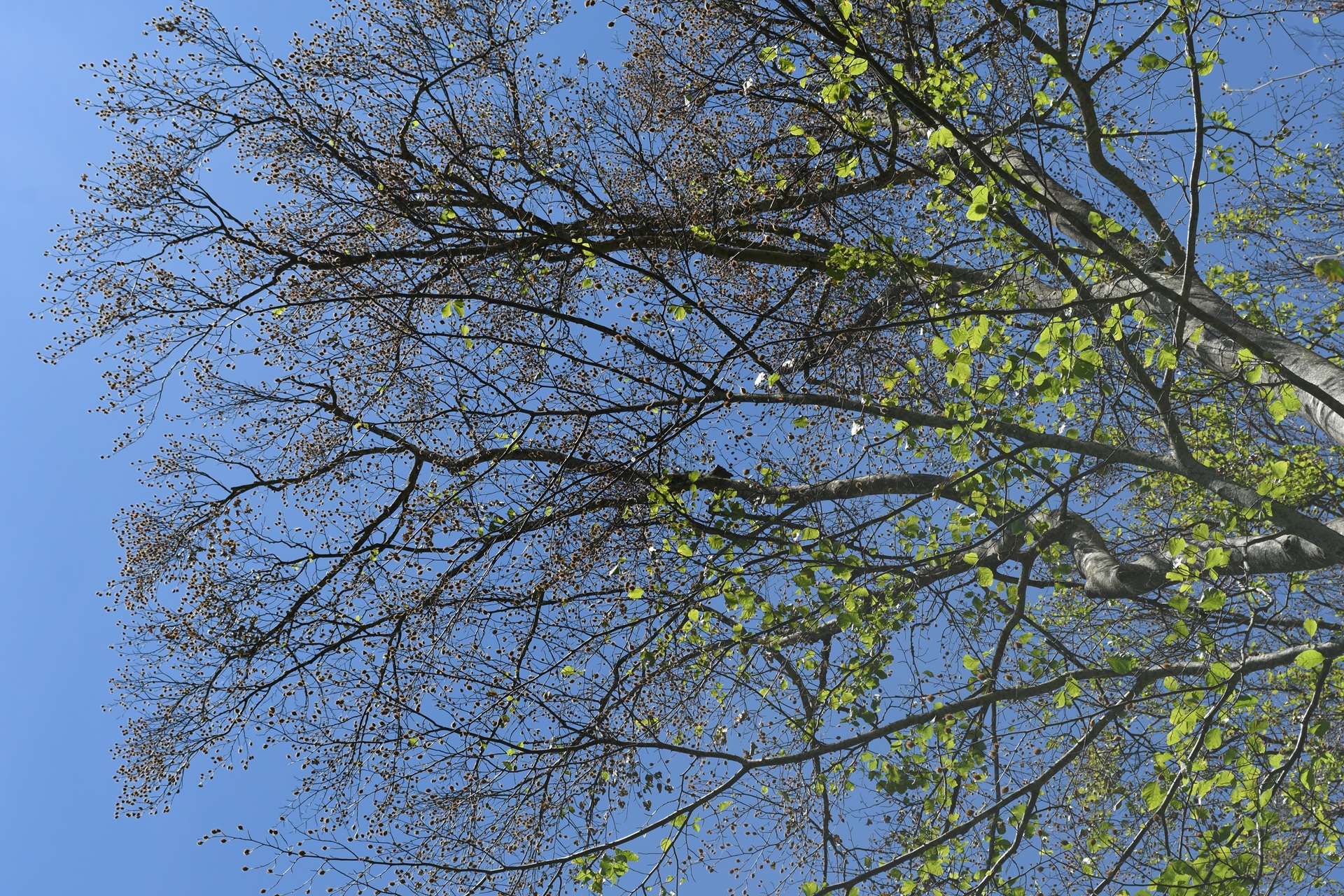
In areas where there has been little or no rainfall in recent weeks, the situation for trees can be, or may become, very precarious. Due to low levels of winter and spring rainfall, the soil is already very dry and warm in many places. This is also shown by measurements from the LWF sites and from the Pfyn Forest. This applies in particular to shallow soils with low water-holding capacity.
The Jura Arc has been particularly hard hit, just as it was during the extreme years of 2018/2019. The situation has deteriorated rapidly since early July for tree species such as the beech. If the drought continues unabated, browning and the shedding of leaves that are still green could occur over very large areas.
Future-proof tree species 
Which tree species would cope better with the future climate?
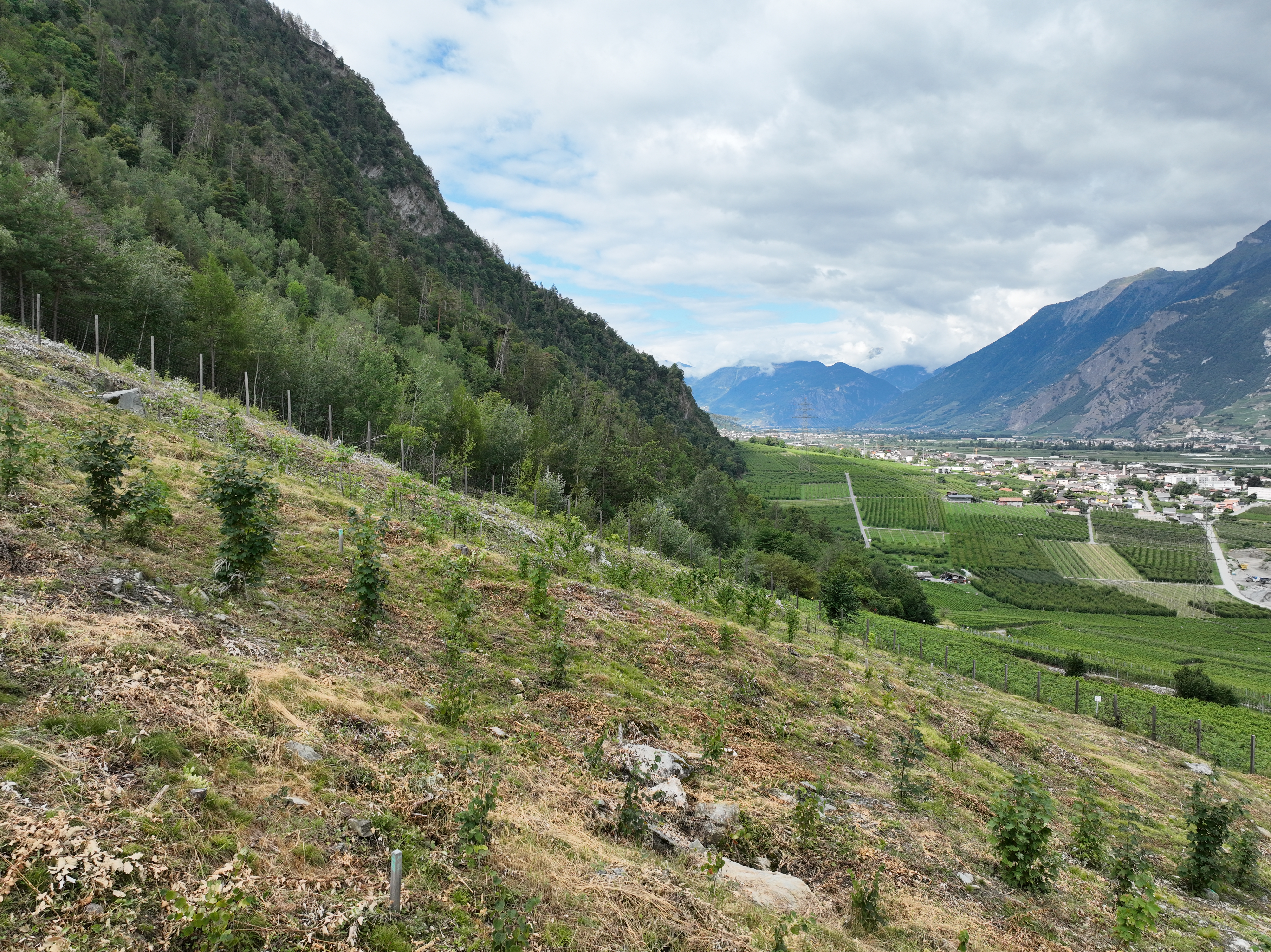
We certainly need to consider various tree species. However, this has been happening for some time now. There are tree species that cope better with situations such as the one in summer 2026 than beech and spruce. Native tree species that tolerate drier and hotter conditions better include Norway maple, service trees, whitebeam, wild cherry, small-leaved lime, some oak species, walnut, field maple, hawthorn (in tree form), and, depending on the circumstances, silver fir and ash – although the latter is currently facing major problems due to ash dieback. In principle, it is primarily the tree species that are currently rare that are likely to become more common.
Suitability always depends on the location as well, and there are limits even for these tree species, particularly as such extreme weather events become more frequent and intense. In the long term, fewer trees per hectare will be able to grow, as recurring droughts will limit a site’s carrying capacity. Gaps in the forest and, overall, sparser stands – as we already see today in Mediterranean regions – will then be unavoidable.
Should we plant tree species from dry and warm regions?
As we rely on ecosystem services provided by the forest, we should also consider non-native tree species. Protection against natural hazards, the protection of drinking water and the use of biomass from the forest are essential. Taking into account the known risks associated with non-native species, these can represent important alternatives in specific cases and depending on the situation. The WSL has launched a long-term project (www.testpflanzungen.ch) in which both native and some non-native species have been planted at various sites across Switzerland in locations where the respective tree species do not yet occur naturally. Their development is to be monitored for 30 to 50 years.
It makes sense to start by looking for suitable species in nearby ecosystems that are already adapted to dry conditions – such as in Mediterranean regions. On the one hand, there are individuals of native species genetically adapted to warmer locations, such as the European beech or the silver fir. On the other hand, non-native tree species may also be an option, such as evergreen oak species or the Hungarian oak (Quercus frainetto), the Oriental beech or the Atlas cedar. The Douglas fir, which originates from North America and was introduced over 100 years ago, is also often well-suited to dry and hot conditions. However, it is important to bear in mind that non-native species must also withstand winter frosts and the late frosts that occur in our region. Furthermore, care must be taken to ensure that new species are not invasive, meaning that they do not spread uncontrollably and displace native species.
Leaf color change 
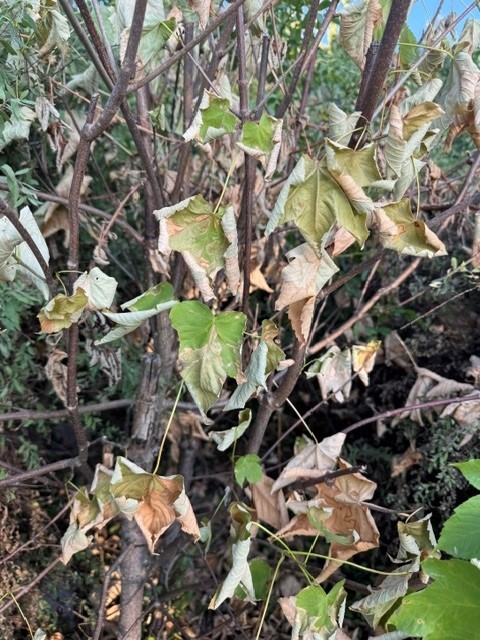
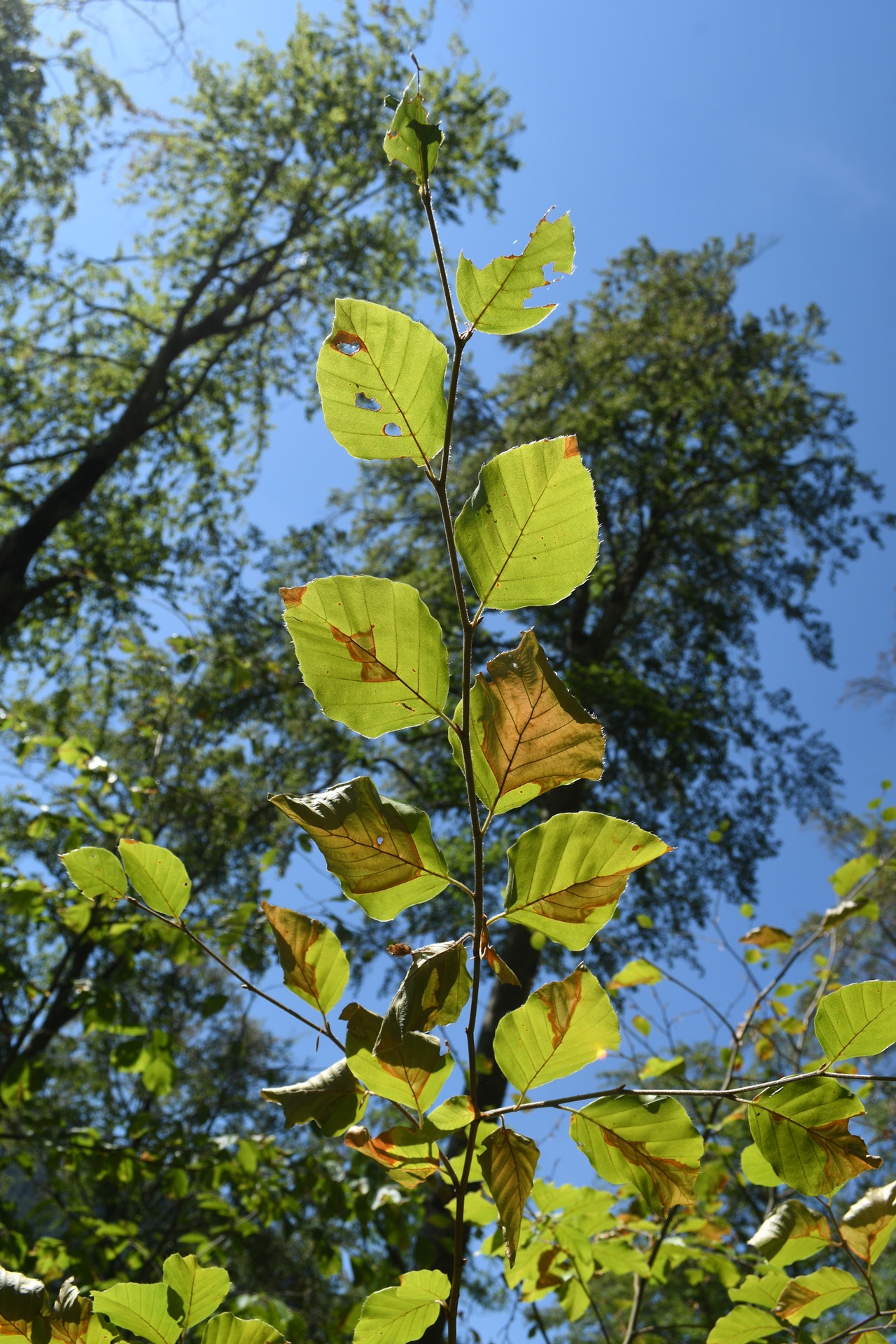
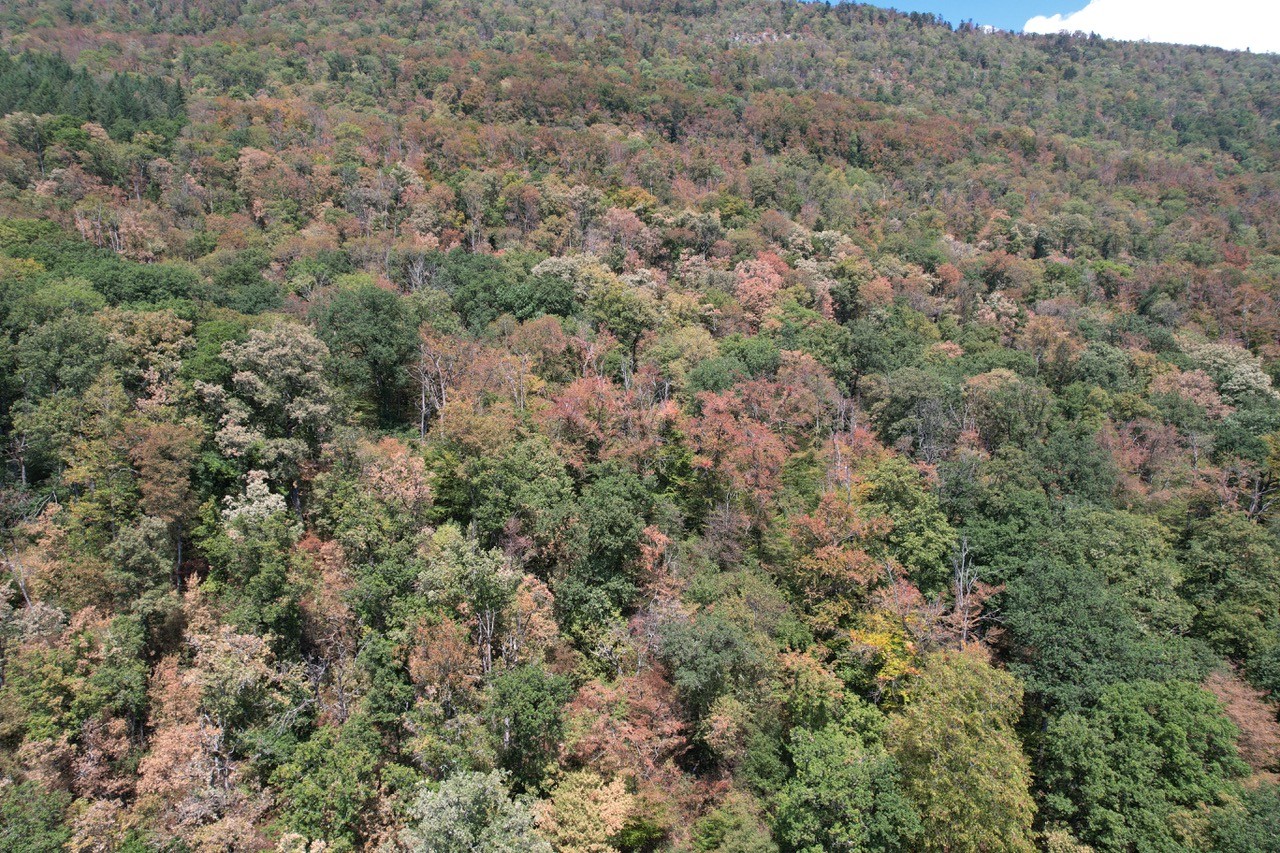
In some places, the trees already look as if it were autumn?!
This is due to a combination of the effects of the heat and insufficient water supply to the leaves caused by a disruption to the water transport system.
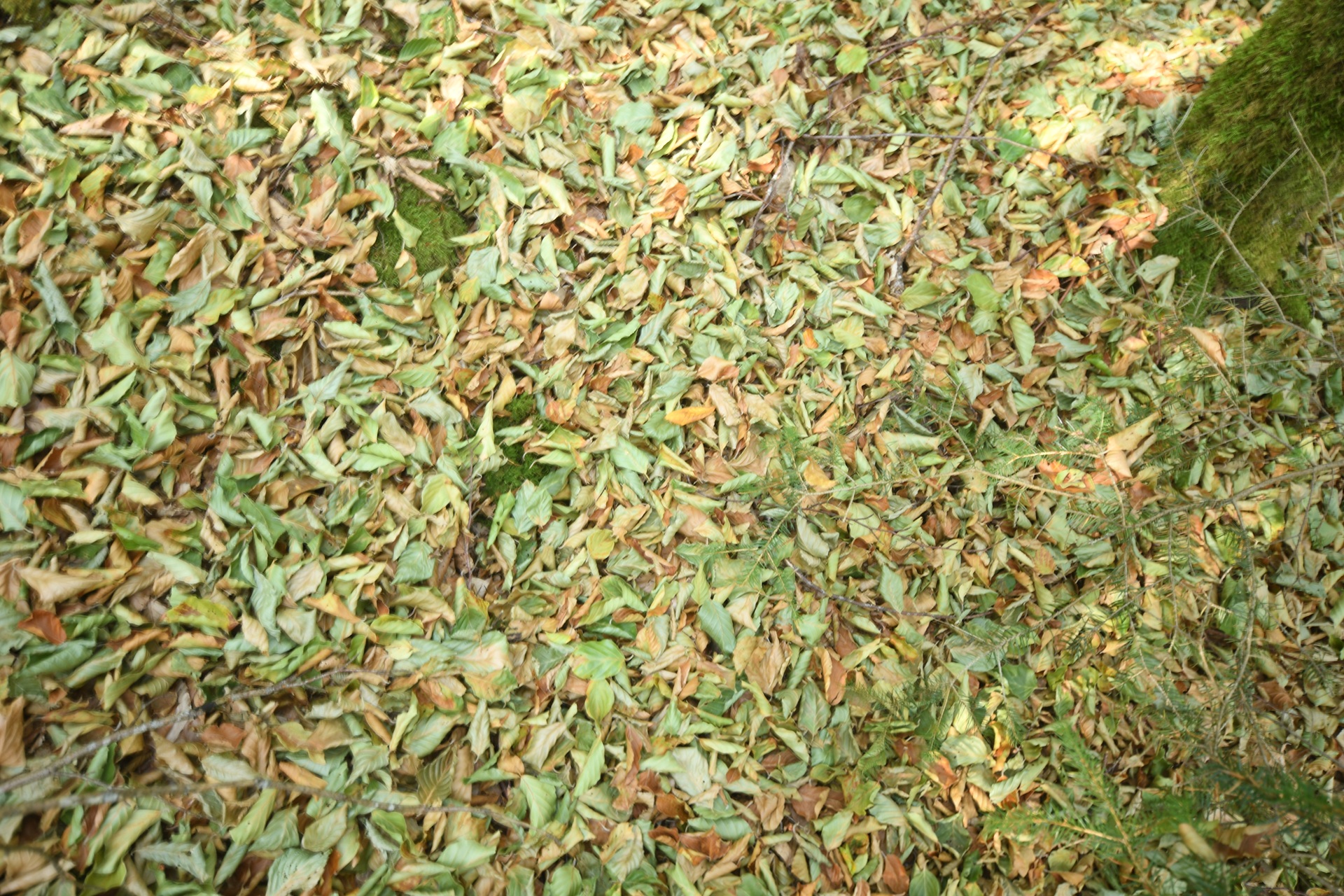
In 2026, the discolouration began as early as mid-June; we have never experienced such conditions so early in the year before. If these symptoms (brown patches on the edges of leaves, indicating scorch, or green leaves falling off, etc.) appear so early in the summer, this indicates an acute stress reaction. The trees’ normal response – whereby they draw nutrients from the leaves back into the wood before shedding them – no longer takes place.
The extent to which trees are affected by premature leaf fall also depends on the tree species, each of which has different leaf formation strategies. Beech trees, for example, only produce the leaves that were already formed in the buds during autumn. Early leaf fall therefore marks the end of photosynthesis and growth. Birches, on the other hand, can produce new leaves throughout the year – even if they have had to shed their leaves due to drought. However, we do not currently know whether certain tree species will attempt to sprout again this year – assuming there is sufficient rainfall. In August this is generally rather unlikely.
How long does a heatwave need to last to cause leaf scorching?
That is difficult to say. In very high temperatures, with dry air and little water in the soil, damage can occur after just a few days. If the soil is still moist, trees can usually withstand the heat for longer. Young trees, trees on shallow or compacted soils, and trees with restricted root space are particularly at risk.
This Waldwissen article examines the phenomenon of premature leaf discolouration in depth.
What you can do 
What can you do in the garden?
Watering: The most important thing is to reduce drought stress. If the plants have enough water, they can evaporate water through the stomata on their leaves, thereby cooling the leaves. A layer of mulch keeps the soil cooler and moister. In the long term, it helps to choose hardy varieties and soils with a high humus content, which retain water better.
What can be done in the forest?
You cannot simply irrigate large areas of woodland. It is therefore important to increase the resilience of woodlands. This includes mixed stands with several tree species, greater genetic diversity and a reduced stand density, so that individual trees compete less fiercely for water.
Sudden branch drop 
In some places, the authorities advise people not to stand under large trees in parks. The reason: falling branches due to drought. Are these isolated incidents, or is this actually a problem?
The phenomenon referred to in specialist literature as ‘Summer Branch Drop (SBD)’ is well-known.
Many tree species respond to prolonged heat and drought with a survival mechanism: they reduce their evaporative surface area by shedding leaves (which is very evident in our local woods at the moment) and entire branches. However, it is not known whether summer branch drop serves as a protective mechanism in all tree species, or whether it is the result of fatal damage to the water-conducting system in the affected branches.
The tricky thing is that branches can look completely healthy on the outside – and yet suddenly break off, typically on hot, windless afternoons. It is not possible to detect this in advance through a visual inspection.
Deciduous trees such as maple, beech, oak, chestnut and plane tree may be affected, as well as conifers such as the Scots pine. A particular problem is certainly posed by large park trees or solitary trees with spreading branches, under which many people seek shade, and which then pose a real danger.
The warnings issued by several Swiss towns and various forestry services are therefore justified and logical.
And what about spending time in a forest? Can forests become danger zones during the approaching heatwave?
Even in the forest, stressed trees – whose crowns have been weakened by the persistent drought since April – can lose branches without any prior warning. However, the danger is certainly heightened in forest areas where leaves are already turning brown or where withered green leaves are falling. Forests can therefore indeed become danger zones during such an extreme summer. Particular care should be taken around large, old trees with extensive crowns.
Previous news on forests and drought 
Drought and soils 
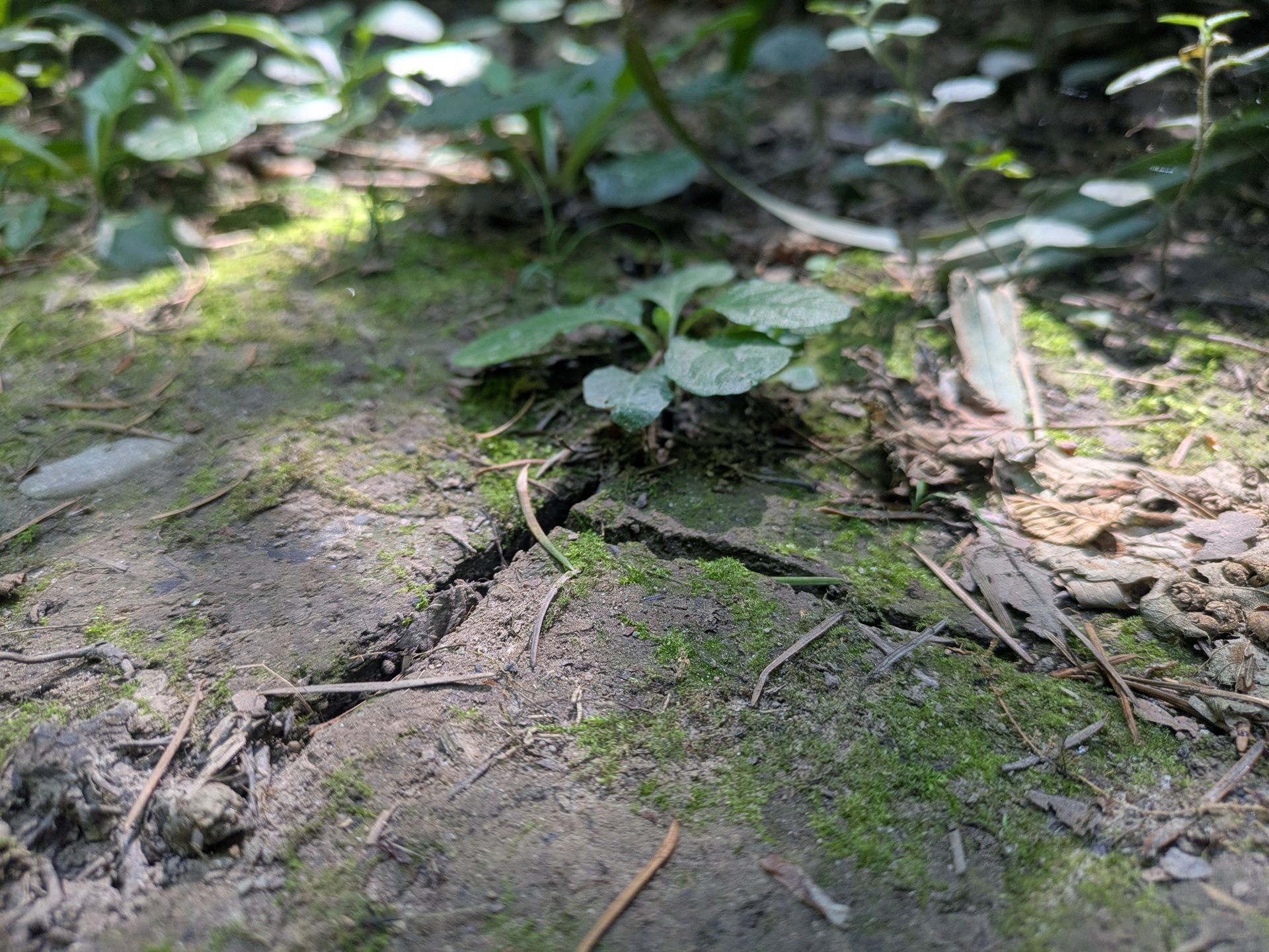
How does the drought affect the soil?
Without sufficient moisture, soils can no longer effectively supply plants with nutrients. There is simply no water left to transport nutrients to the roots. Similarly, the activity of microorganisms such as bacteria and fungi is severely restricted, which further reduces soil fertility and the supply of nutrients to trees. Soil organisms play a vital role in breaking down dead plant material and recycling nutrients. When their activity is restricted by drought, these processes slow down, which can affect nutrient availability and overall soil health.
Heatwaves are particularly critical for soil organisms. Earthworms, for example, have an optimal temperature range of around 10–18°C and depend on moist soil, as gas exchange takes place via their thin, moist skin. During short periods of heat and drought, earthworms escape these conditions by burrowing deeper into the soil, curling up and entering a state of summer dormancy (aestivation), a resting state similar to the better-known hibernation. Many other soil animals adopt similar strategies, although earthworms are among the groups most sensitive to drought.
However, if the dry spell lasts too long, earthworms and many other soil organisms may starve. During their dormant phase, they remain inactive and are unable to feed, yet they still require energy to maintain basic metabolic functions. If the dry conditions persist for even longer, or if the animals are unable to retreat into deeper soil layers, they will eventually die of dehydration.
In the long term, repeated summer droughts lead to a decline in soil fauna populations. In a long-term experiment conducted by the WSL in the Pfyn Forest, the density of earthworms and small annelids closely related to earthworms (enchytraeids) fell by a factor of five to eight under persistent drought conditions. Drought is therefore one of the factors that most severely damage soil biodiversity and the functioning of the ecosystem.
The current heatwave is therefore likely to lead to significant losses among soil organisms. However, soils and their biological communities can recover following rainfall, although the extent and speed of recovery depend on the intensity and duration of the drought and on soil properties.
Previous news on soils 
Further links 
- Forest fires - faqs and feature
- Focus: Drought in the Swiss water tower
- WSL ‘Extremes’ research programme: website und webapp
- Drought.ch: WSL research platform for the early detection of drought and water shortages in Switzerland.
- National drought platform
Press contact 
Copyright 
WSL and SLF provide image and sound material free of charge for use in the context of press contributions in connection with this media release. The transfer of this material to image, sound and/or video databases and the sale of the material by third parties are not permitted.