

23.10.2025 | Lisa Bose | WSL News
An experiment conducted by the Swiss Federal Research Institute WSL and EKZ (Zurichs Cantonal Power Utility) shows that people find warm light more pleasant, but the body relaxes more under cool white light. This means that compromises are necessary when choosing street lighting.
- In an experiment conducted by WSL and EKZ in Richterswil (ZH), participants found warm light more pleasant, but cool white light reduced their stress levels more effectively.
- There is no such thing as perfect street lighting; compromises are necessary.
- When redesigning street lighting, energy savings and the protection of biodiversity should be taken into account in addition to public acceptance.
Streetlights have become an integral part of our everyday lives. In public spaces, they provide safety and orientation at night. However, artificial light not only affects insects and other animals, but also human health. A new study by WSL on different colour temperatures shows that what we perceive as pleasant does not necessarily correspond to how our bodies react to artificial light.
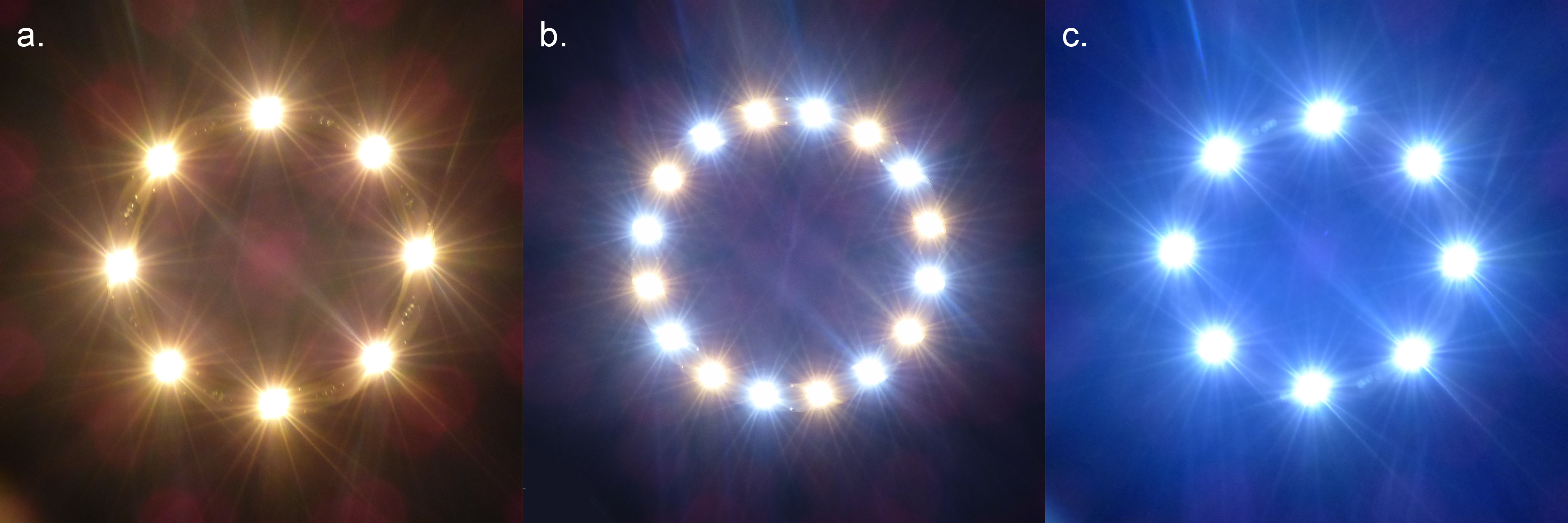
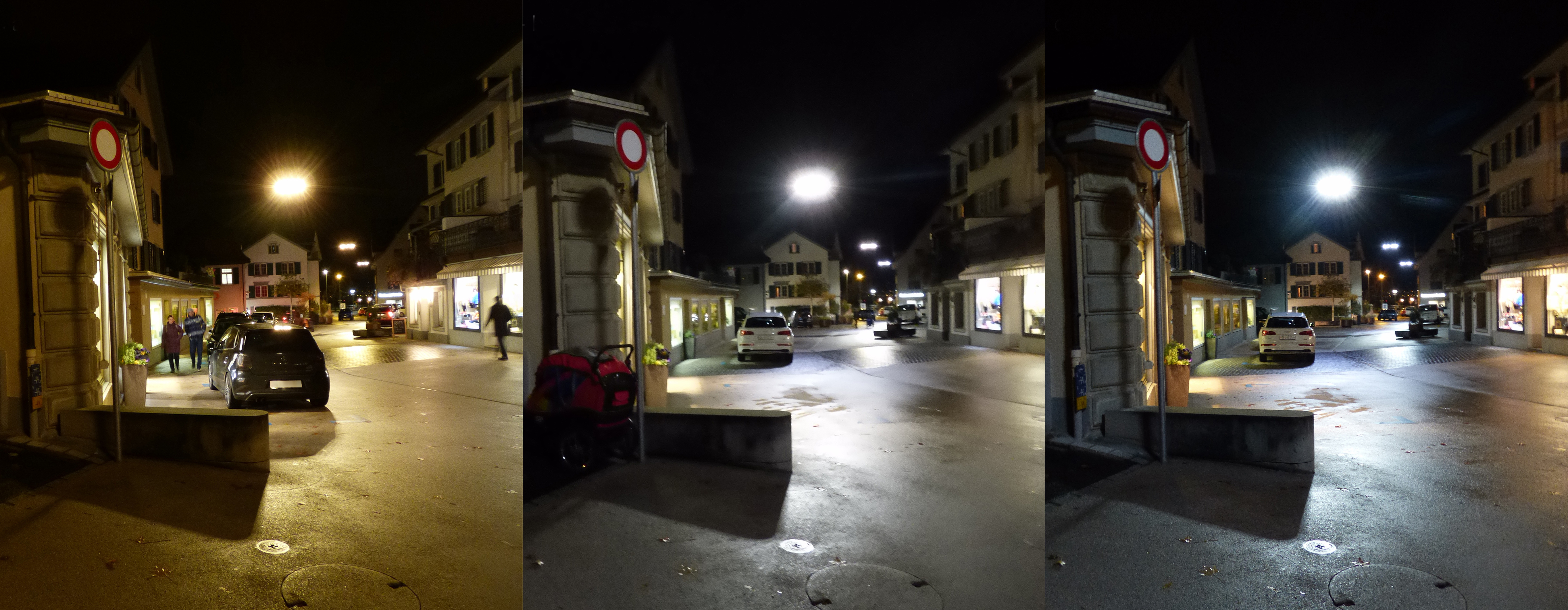
In an experiment conducted in collaboration with EKZ, volunteers in Richterswil (ZH) were exposed to LED streetlights with different colour temperatures for twenty minutes. WSL study leader Solène Guenat randomly assigned the 77 participants to one of three colour temperatures: warm (2700K), white (4000K) and cool white (6500K). The participants answered questions about their well-being and sense of security before and after the experiment. Guenat also took saliva samples from the participants before and after the experiment and determined their respective stress levels based on the hormone cortisol in their saliva.
Contradiction between perception and physical reaction 
When asked about their preferences, most participants stated that they found warm light more pleasant than white and cool white light. Cool white light was often perceived as dazzling and too intense, even though the light intensity was the same for all lamps. The feeling of safety and the self-reported stress levels did not depend on the light colour. However, cortisol level measurements showed a different picture: after twenty minutes under cold white light, participants' cortisol levels dropped more than under warm light. This could be because cold white light is similar to daylight. "We feel safer during the day than at night, which could be the reason why the participants' stress levels dropped under cold white light," says Guenat.
So while people prefer warmer, cosier lighting at night, the body shows greater relaxation under colder light. "This discrepancy between perception and physiological effect shows that compromises are necessary when planning public lighting in cities," says Guenat.
There is no perfect solution 
For cities and municipalities that want to renew their street lighting and, in particular, make it more energy-efficient, this raises questions: should they focus on the preferences of the population or more on the health effects of light? "Warm light is probably more widely accepted than cold light," says Guenat.
However, in addition to the stress aspect, another argument in favour of cold light is the fact that it saves energy – cold white lights consume 30 % less electricity than warm ones. "In Switzerland, warm white lights are now the norm in most places. These offer a good compromise between energy efficiency on the one hand and acceptance on the other," says Jörg Haller, Head of Public Lighting & Smart City at EKZ. Because warmer light colours are also considered to have a slightly more favourable overall impact on the environment, the relevant recommendations and guidelines also point in this direction, according to Haller.
"We don't see a perfect solution from our experiment," says Guenat. When adapting lighting, priorities should be set in such a way that they not only improve light quality but also work hand in hand with other sustainability goals – such as energy saving, biodiversity protection or health. "Such synergies create win-win situations," says Guenat.
Colour temperature describes the colour impression of a light source and is measured in Kelvin (K); the lower the value, the more yellowish and warmer the light; the higher the value, the more bluish and cooler.
Contact 
Publications 
Copyright 
WSL and SLF provide image and sound material free of charge for use in the context of press contributions in connection with this media release. The transfer of this material to image, sound and/or video databases and the sale of the material by third parties are not permitted.