

18.05.2026 | Anna Püntener | WSL News
What renders a city garden attractive to insects such as solitary bees, bumblebees and hoverflies? And how well do they pollinate plants in urban areas? A study by the Federal Research Institute for Forest, Snow and Landscape shows that insects can pollinate plants in the entire city. However, they still require more insect friendly green spaces.
- WSL researchers have investigated where and when insects pollinate plants in gardens in the city of Zurich. For their study they even measured bee tongues.
- They show that a wide assortment of flowers in private gardens in densely built-up city centers help solitary bees and bumblebees. Other species such as beetles and hoverflies cannot make their way to flowers there.
- Accordingly, flowers that are pollinated by beetles and hoverflies are rarely pollinated in dense urban areas.
- In the city, insects need more insect-friendly habitats on the scale of entire neighborhoods and not just on the scale of single gardens.
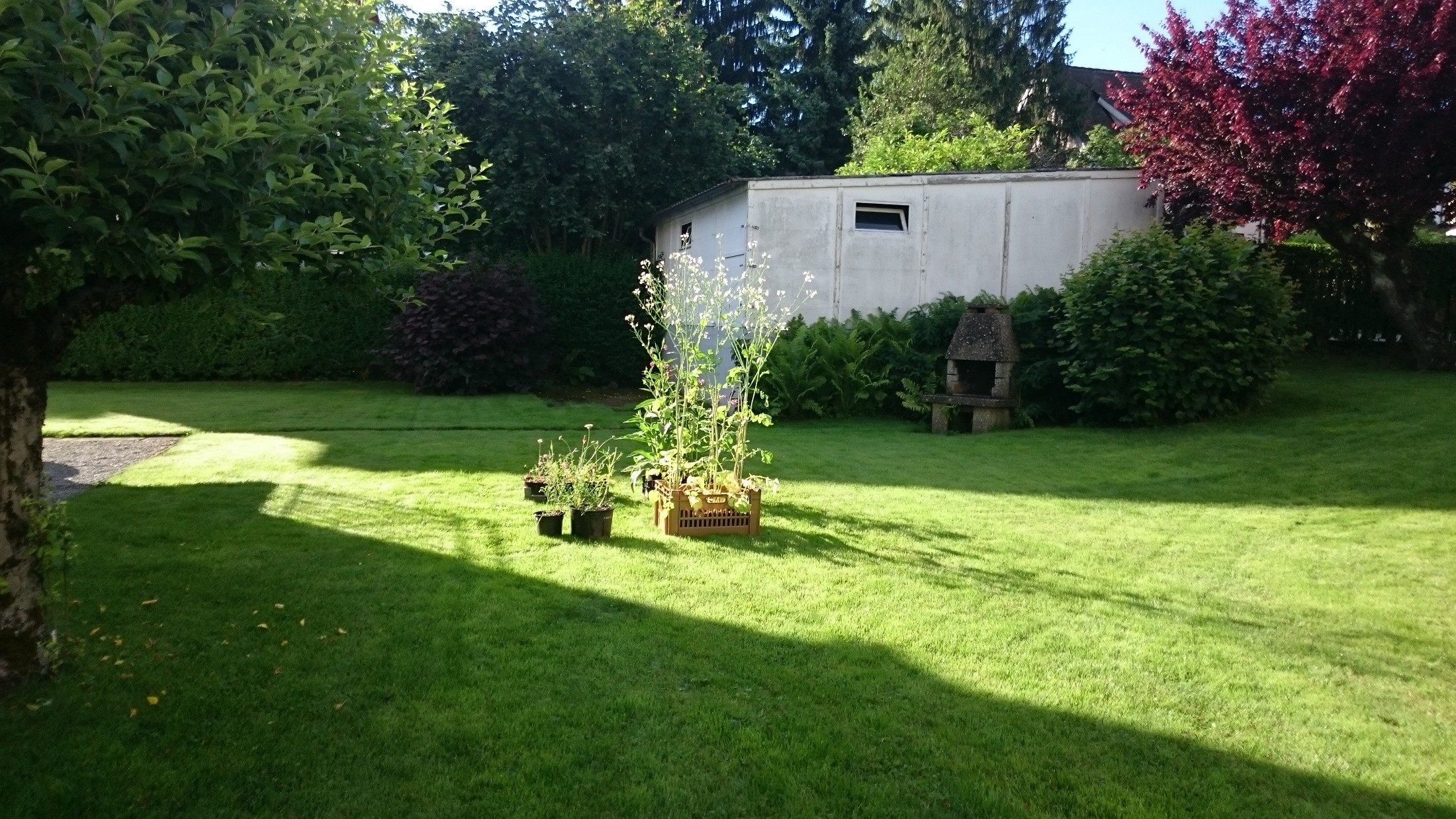
Bee season is in full swing and bees are looking for nectar-laden flowers everywhere. But where will they, and other pollinators, get lucky in cities? WSL researchers have tended to this question in a comprehensive study. Around 30 tireless volunteers each spent 9 hours at a time in front of flowerpots in one of 24 gardens in the city of Zurich, meticulously logging and catching each visiting insect.
This effort demonstrates for the first time which insect species visit which gardens and flowers over the course of a day and which flowers they pollinate. “We observed urban gardens located at varyingly densified parts of the city, offering varying ranges of flower diversity. We found significant differences in the occurrence of different species”, summarises ecologist and WSL visiting scientist Merin Reji Chacko. Analysing such differences helps the researchers to identify what a pollinator-friendly city looks like. This is vital because many of these insect species, such as bumblebees, play a vital role in the pollination of both wild and cultivated plants. Cities can accommodate a wide variety of wild bees and are therefore important for their conservation.
Measuring insect tongues 
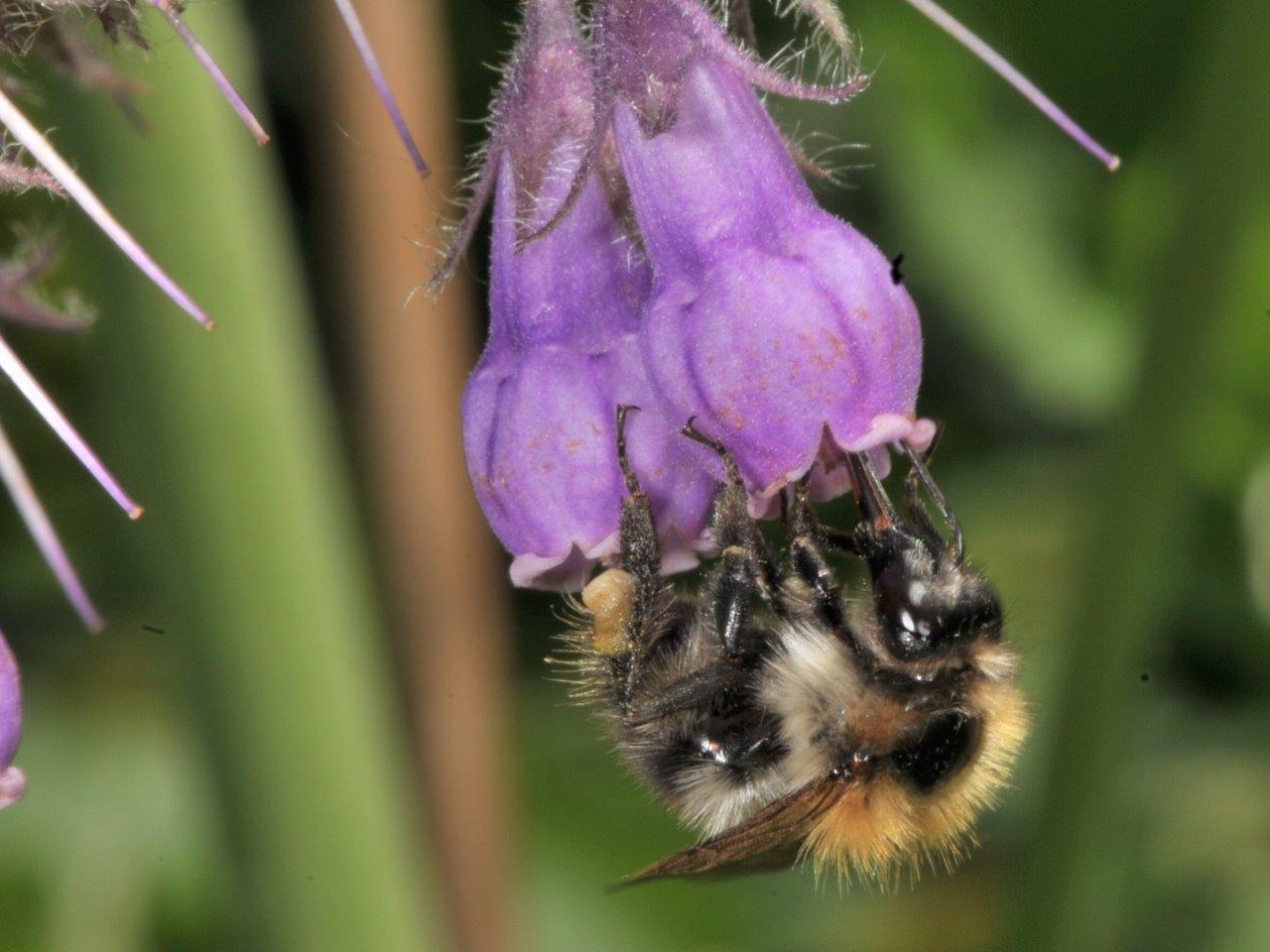
In order to figure out how insects adapt to their environment, researchers even measured the tongue lengths of individual insects. Tongue lengths reveal which flowers an insect can feed on: only pollinators with long tongues, such as bumblebees, are able to reach the nectar hidden in the depths of specialized flowers. Other pollinators with shorter tongues like hoverflies are dependent on easily accessible flowers.
The researchers found that large wild bees are active in flower-rich gardens in dense urban centers, probably because their size allows them to fly across larger patches of paved area to reach individual ‘flower islands.’ Thus, they benefit from having a diverse selection of flowers—even in the midst of high-density city centers. Smaller solitary wild bees benefit from a wide variety of flowers as well. Likely, they are able to find sufficient nutrition and nesting spaces within a single garden due to their size. Thus, plants whose nectar can only be reached by insects with long tongues can be pollinated effectively almost anywhere in the city.
Lack of pollinators 
But not all insects pollinate flowers everywhere in the city: hoverflies and beetles become rare wherever cities are built more densely. This decrease in pollinators is independent of the attractiveness of the flower selection in a single garden and also of the tongue length of the insects. This may be because these groups cannot find suitable habitats in heavily developed areas. Lightweights like hoverflies—who eat aphids as larvae—require many green spaces to thrive in the city. Additionally, many beetles who breed in dead wood cannot find suitable breeding grounds within concrete-covered areas. This results in a decrease in pollination of plants in built-up city areas. Thus, they yield less fruit and seeds.
Action from private individuals and cities needed 
The study’s results emphasise the need for action on all levels of decision-making—starting at the private level all through to the level of city planning—to promote biodiversity and ecosystem services such as pollination in cities. Private garden owners can have a great impact, says ecologist and WSL visiting researcher David Frey, who conducted the experiment: “It’s always worth it to do something for biodiversity, even in small spaces. Even if you only have a very isolated garden in the middle of the city. By the way, planting many different kinds of plants also has positive effects on soil quality and the recreational value of a garden.”
But the efforts of individual alone are not enough. Beetles and hoverflies, for example, depend on habitats in entire neighborhoods and not just single gardens. Co-lead author Reji Chacko comments: “We have an astonishingly large amount of biodiversity in cities. But it’s important to make sure to protect the green spaces we have. This is especially true when we expand cities inwardly and vertically, as, for example, the Richtplan 2040 intends to do in Zurich.”
Contact 
External Contacts 
Merin Reji Chacko: merin.rejichacko(at)gmail.com
David Frey: david.frey(at)ti.ch
(for phone numbers please contact the press office at +41 44 739 28 39)
Publications 
Copyright 
WSL and SLF provide image and sound material free of charge for use in the context of press contributions in connection with this media release. The transfer of this material to image, sound and/or video databases and the sale of the material by third parties are not permitted.