

10.09.2026 | Haoyun Liu | WSL News
As climate warming lengthens the growing season, trees have more time to produce wood, potentially storing more carbon. However, a new international study led by researchers from the Swiss Federal Research Institute WSL shows that wood formation depends more on how fast trees grow than how long wood formation lasts.
- WSL scientists and collaborators analysed wood samples from conifer forests across four continents to study how wood formation responds to climate.
- Warmer temperatures extended the period during which trees formed wood cells, but this did not always mean more cells were produced over the year.
- How fast trees produce new wood cells is an important factor to consider when predicting the impact of climate change on forest growth and carbon storage.
In non-tropical forests, cold winters hinder tree growth. There, climate warming prolongs the period during which trees absorb carbon through photosynthesis and store it in wood, known as the growing season. This could potentially mitigate further climate change as wood formation and carbon storage increases. But is this really the case?
To find out, an international team including researchers from the Swiss Federal Research Institute WSL analysed more than 50’000 wood samples from conifer forests across four continents. Their findings have now been published in the journal Science.
Week by week, cell by cell 
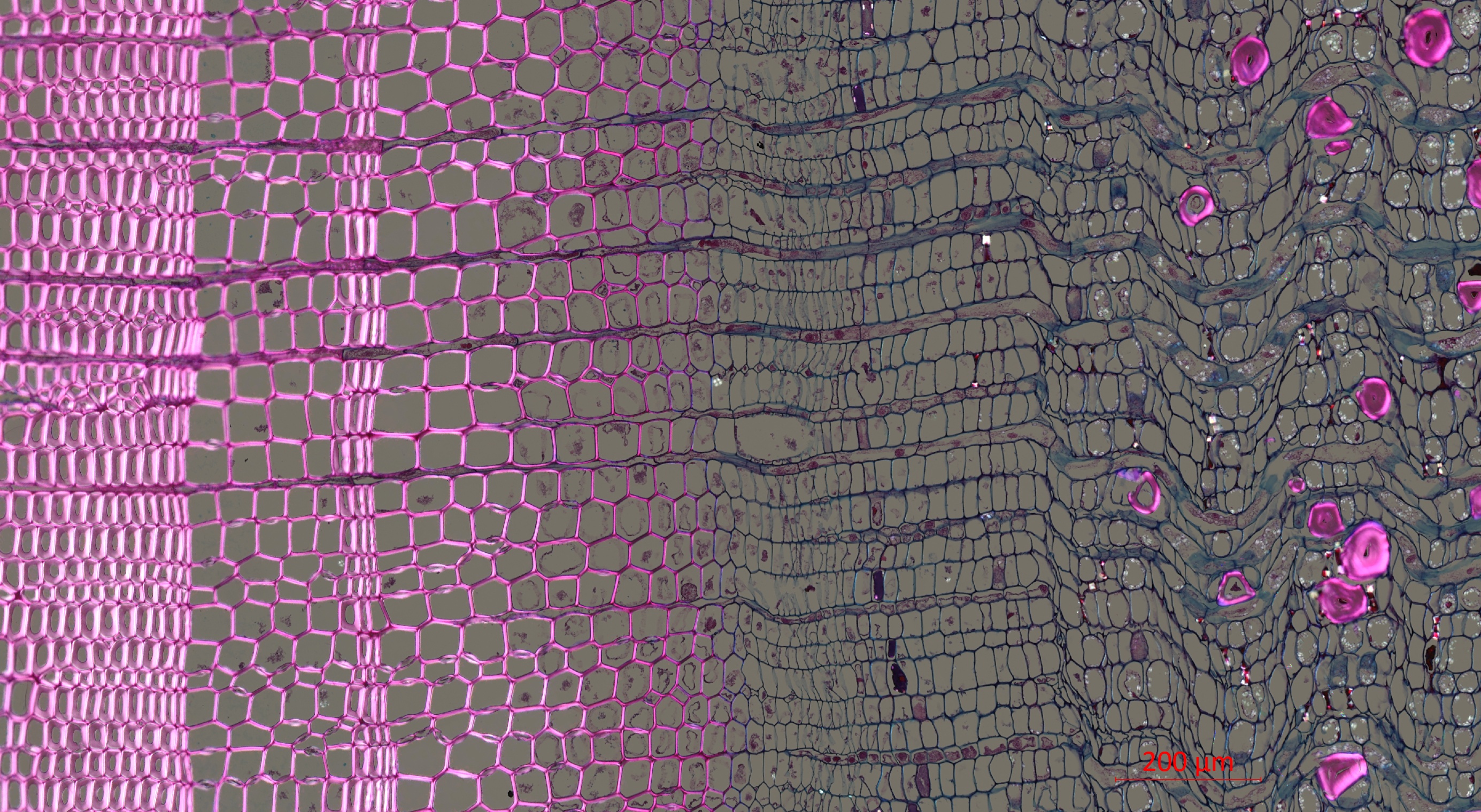
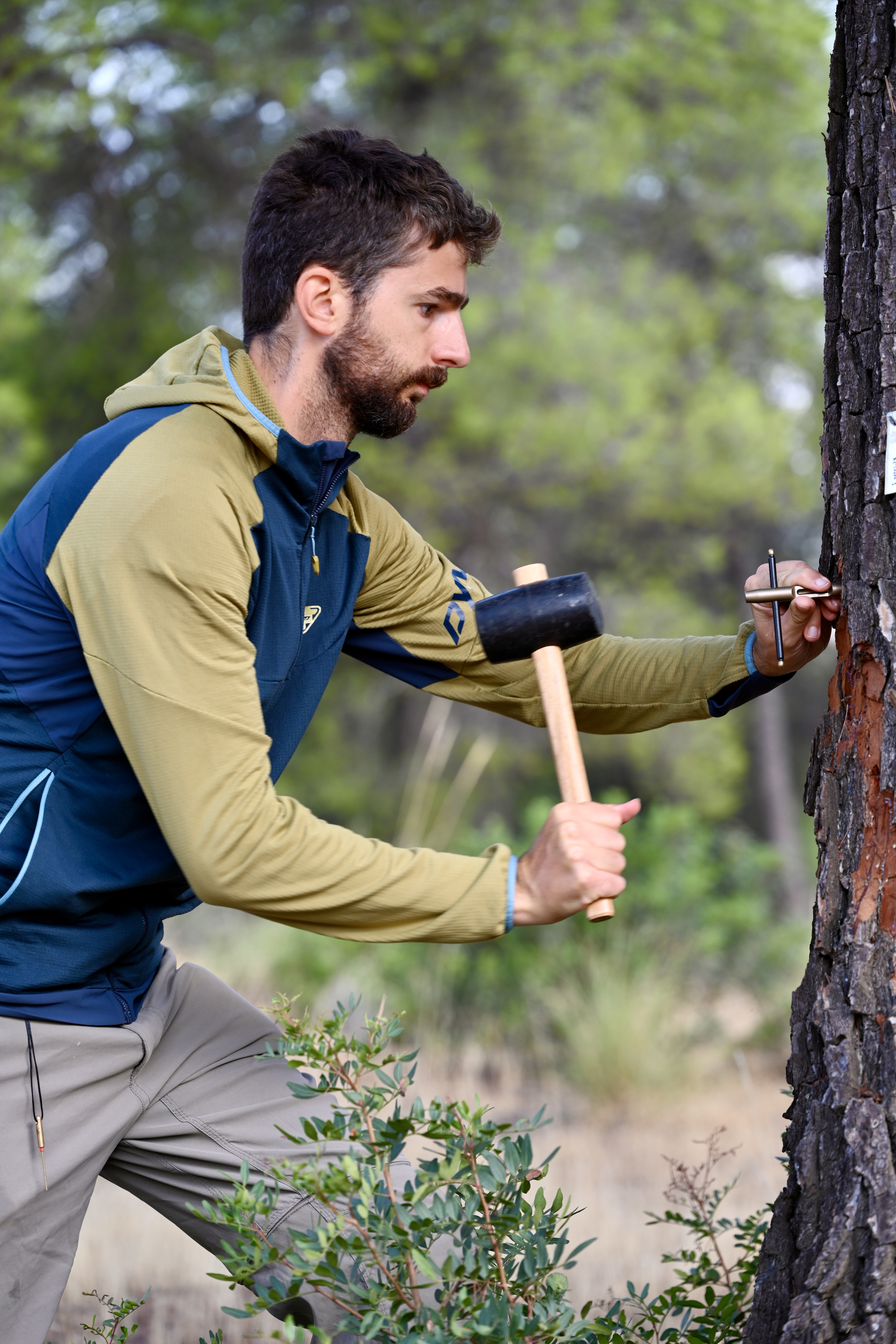
“Putting together this unique dataset was a long-standing collaborative effort,” says Antoine Cabon, forest ecologist at WSL and the Spanish National Research Council. “Researchers from each partner institute collected wood samples regularly throughout the growing season. Back in the laboratory, each sample had to be processed, photographed under the microscope and analysed cell by cell.”
The researchers monitored xylogenesis—the formation and development of new wood cells, called xylem cells, found in the outermost tree rings. “By looking at the samples under the microscope, we can see exactly when trees are actively forming wood,” says Cabon. “This allowed us to observe when this process starts and stops, and at what rate it occurs.”
20 Years of Growth in the Lötschental 
Among the sampled sites was the Lötschental. At different elevations in the valley in the Canton of Wallis, WSL researchers have been collecting wood samples every week of the growing season for the past 20 years.
“Such long-term and frequent observations are extremely rare and valuable,” says Patrick Fonti, dendrochronologist at WSL, who coordinates the monitoring. “By following the same trees over many years, we can reconstruct how wood formation responds to changing environmental conditions.”

Speed matters more than duration 
Overall, researchers found that the rate at which trees produced new xylem cells had a stronger influence on annual cell production than the duration of the growing season. The rate of wood formation also varied greatly, from one new wood cell per month to as many as two cells per day.
Temperature affected the rate and duration of wood formation in different ways. Warmer conditions generally extended the growing season, but the rate of cell production did not continue to increase indefinitely. Above an average annual temperature of around 6 °C, cell production slowed down, likely because of reduced water availability. Thus, a longer growing season did not necessarily increase annual wood production (as shown for Swiss trees in our previous research).
This finding helps explain why longer growing seasons may have different effects on forests depending on their latitude. The study shows that colder, boreal forests generally benefit from warmer temperatures as they grow longer and faster. However, in warmer Mediterranean and temperate forests, the potential benefit from a longer growing season is often offset—or even outweighed—as cell production slows down.
The outlook for future forests 
“As temperatures continue to rise, even boreal forests may eventually experience slower wood formation and lose the benefits of a longer growing season,” predicts Cabon. “Our results show the importance of considering not only the duration of wood formation, but also how rapidly it occurs when predicting how forests will respond to climate warming.”
The results challenge the expectation that longer growing seasons necessarily improve carbon storage in forests and thereby mitigate climate change. “Although carbon storage depends on more than xylem cells alone,” says Fonti, “slower wood formation ultimately reduces the capacity of forests to act as carbon sinks.”
Contact 
Cyrille Ratgeber (INRAE, Nancy)
cyrille.rathgeber@inrae.fr
Publication 
Cabon A. et. al. Growth rate overrides the benefit of extended growing season from boreal to semiarid conifers. Science 2026; 393(6816):1101-1106. DOI: 10.1126/science.aec8866
Copyright 
WSL and SLF provide image and sound material free of charge for use in the context of press contributions in connection with this media release. The transfer of this material to image, sound and/or video databases and the sale of the material by third parties are not permitted.