

26.06.2026 | Stephanie Kusma | WSL News
From 29 June onwards, Switzerland’s glaciers will have exhausted their snow reserves. Every litre of meltwater now causes them to lose mass – this is Glacier Loss Day. Between the extreme years of 2003 and 2022 alone, 200 square kilometres of ice – an area almost as large as the canton of Zug – have disappeared. This is reflected in the volume of meltwater, as analyses by the Swiss Federal Institute for Forest, Snow and Landscape Research (WSL) show: although ice loss was more severe in the summer of 2022 than in 2003, less water flowed off the glaciers.
- 29 June marks Glacier Loss Day, the day from which onwards the glaciers lose ice volume with every litre of meltwater.
- The pattern of glacier melt so far this year is similar to that in 2022 – the worst ever recorded in Switzerland.
- The loss of glacier area is already impacting the volume of water flowing from the glaciers during extreme years.
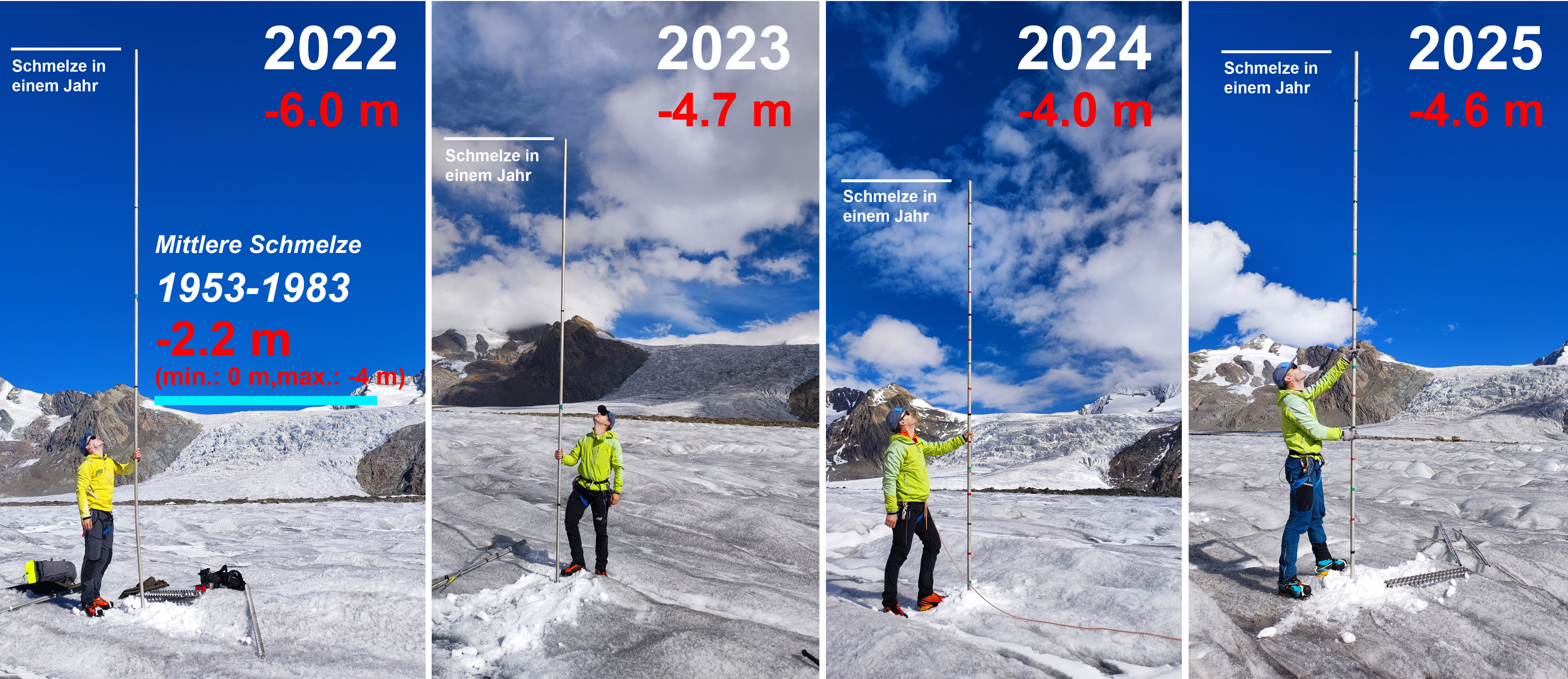
It has not been a good start of the year for Switzerland’s glaciers, and things are getting even worse. In April, their snow cover was at record lows in some places or, at best, average for a few individual glaciers. In March, Saharan dust blew into Switzerland, and the country is currently sweltering under a heatwave. The result: the ice is melting at an extreme rate, and 29 June is already ‘Glacier Loss Day’ – the day from which all further melting begins to erode the glacier’s mass. Any remaining snow on the glacier that could ‘feed’ it has already been offset by melting in the lower-lying areas, and every hot day directly reduces the ice volume.
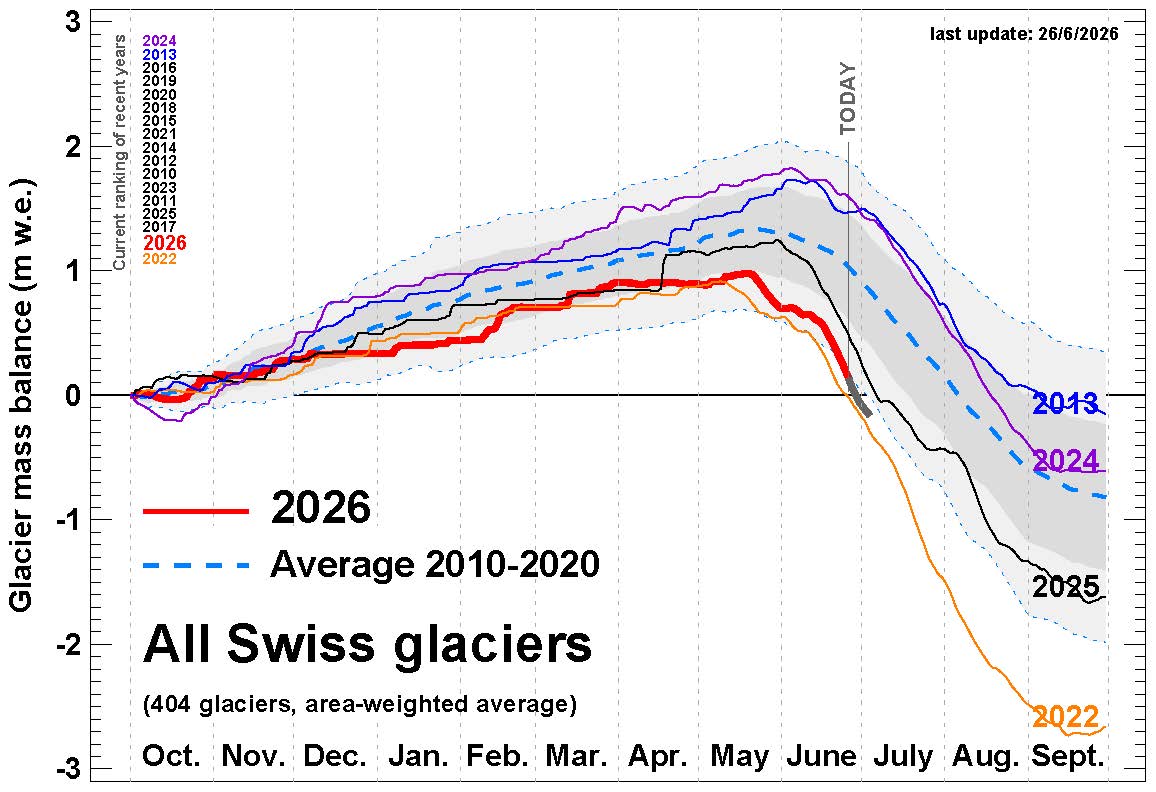
In 2022, this day arrived a few days earlier, on 26 June. There had also been little snowfall in winter back then, and with three heatwaves, that year was the warmest in Switzerland (so far) since records began in 1864. Only during the heatwave of 2003 were summer temperatures higher. The glaciers melted more rapidly in 2022 than ever before, losing around six per cent of their mass over the course of the year. During the current heatwave, it seems as though 2026 is hot on its heels (see graph).

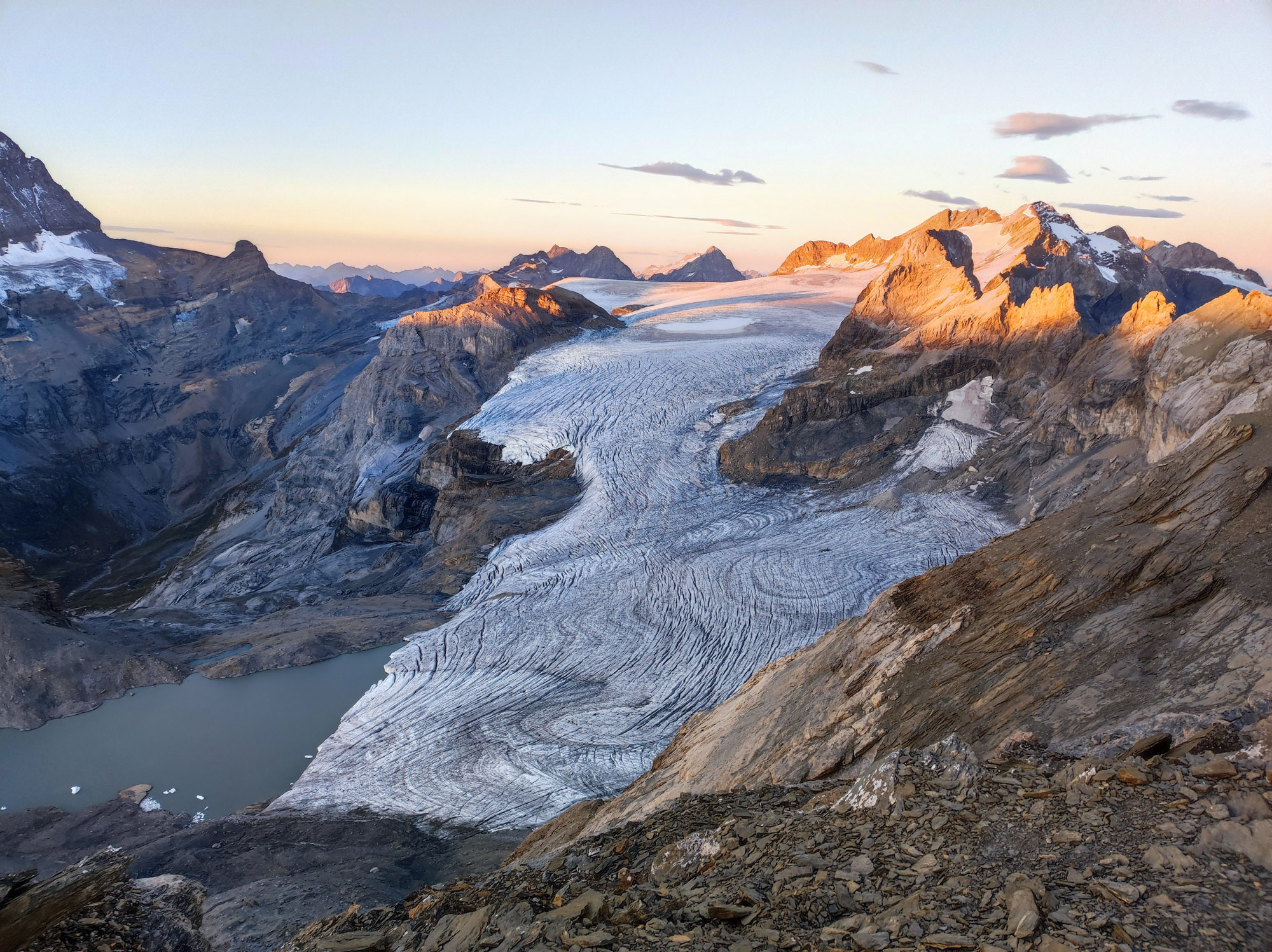
Image 1 of 23
The Claridenfirn (GL) was completely free of snow in September 2025. (Photo: M. Huss)

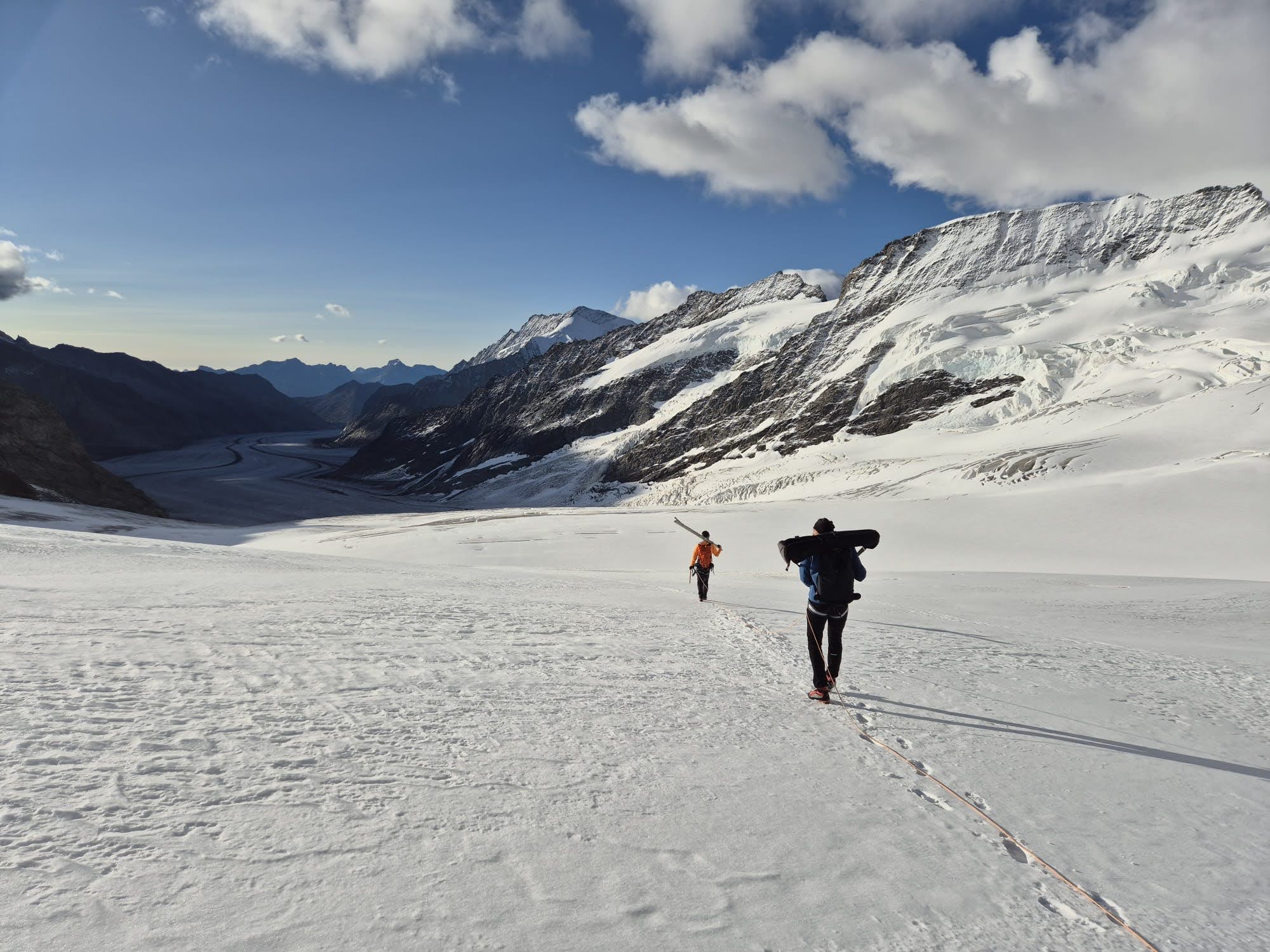
Image 2 of 23
Glaciologists on the Great Aletsch Glacier (VS). This year, snow from the winter remained in the upper part of the glacier. However, the shaded tongue has once again melted significantly. (Photo: R. Moser)

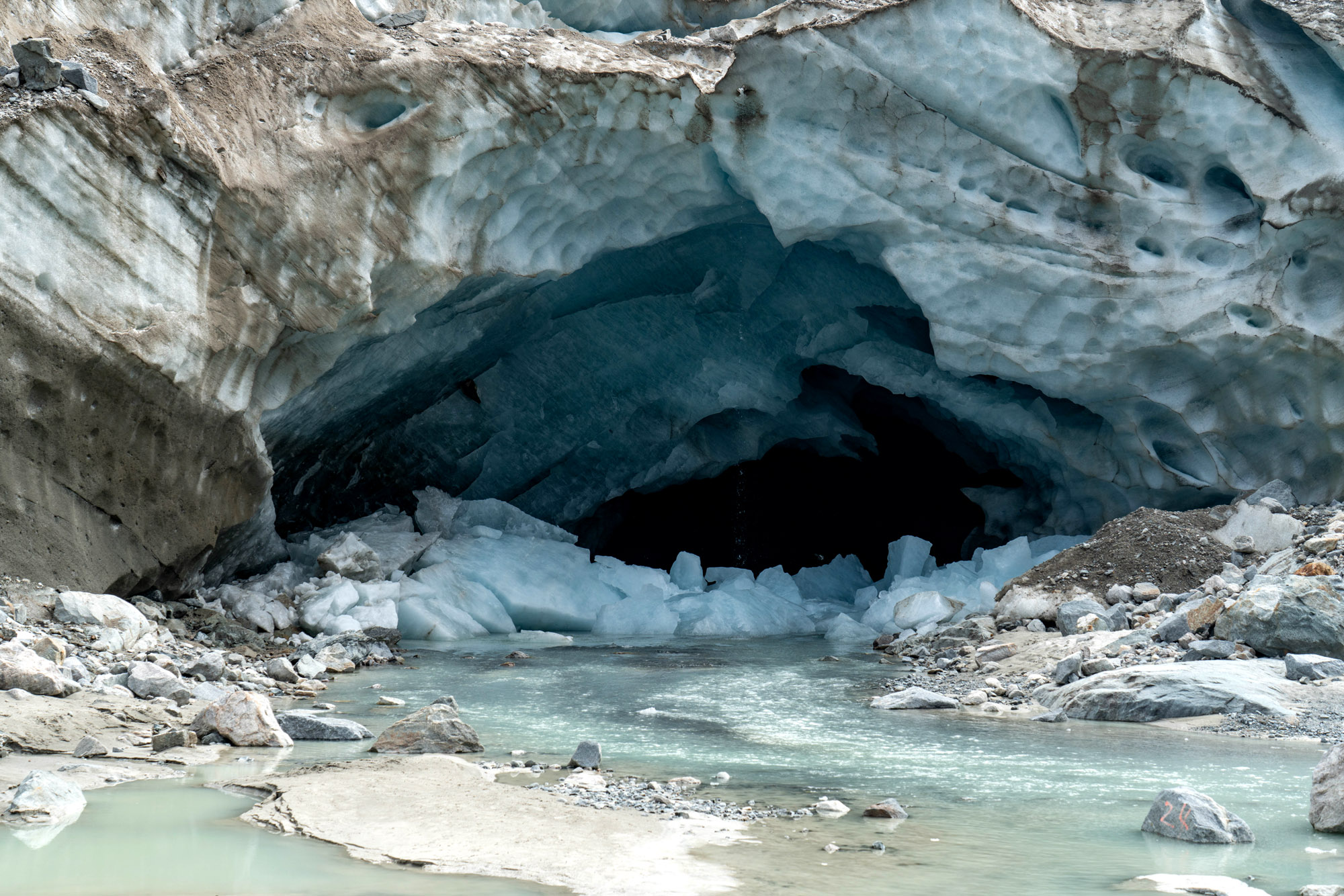
Image 3 of 23
The ice cave at the Vadret da Morteratsch (GR) is enormous, but unstable due to collapsing ice blocks. (Photo: L. Hösli)

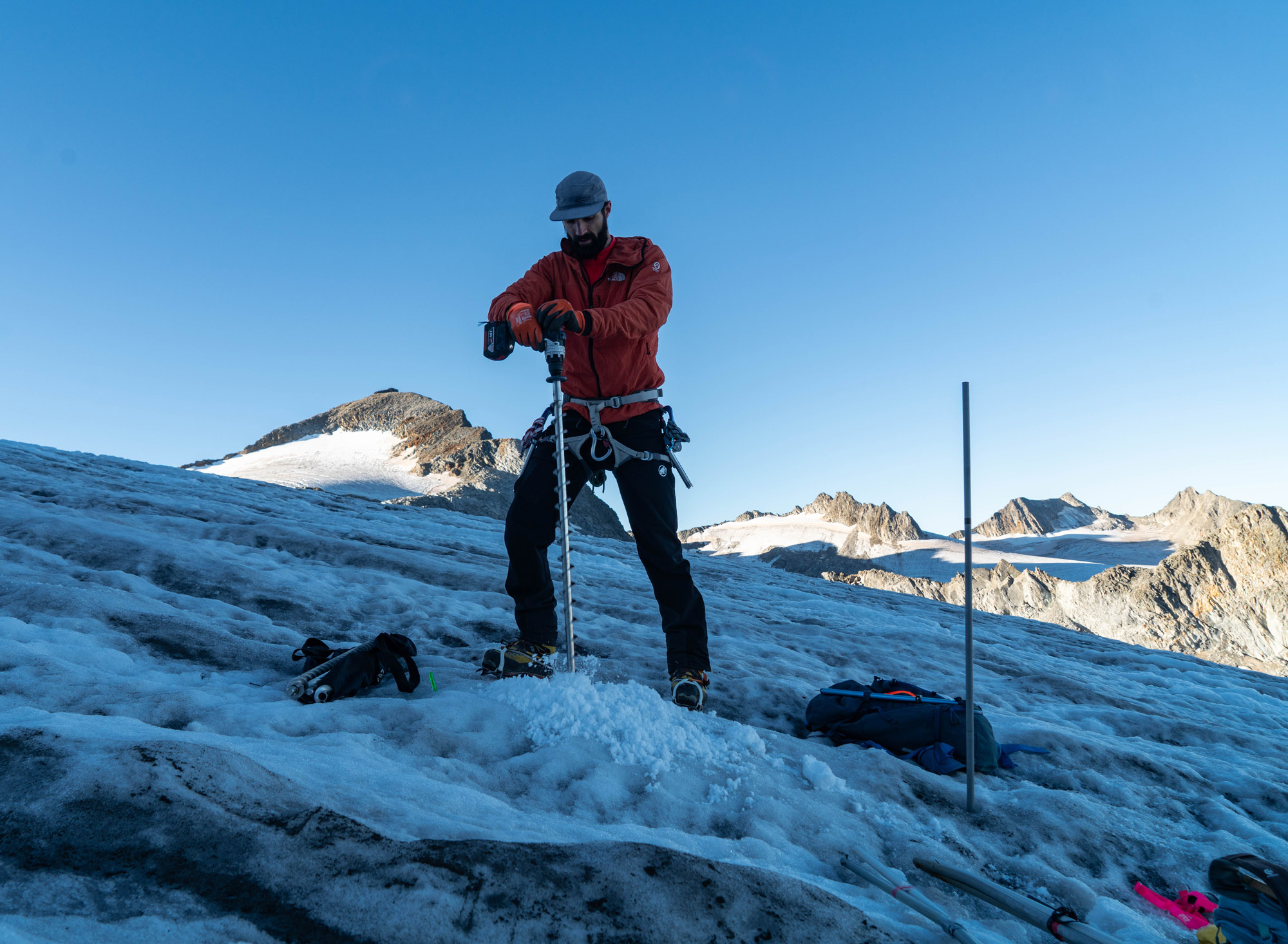
Image 4 of 23
Drilling of a stake to determine the mass balance on the Glatscher da Medel (GR). (Photo: L. Hösli)

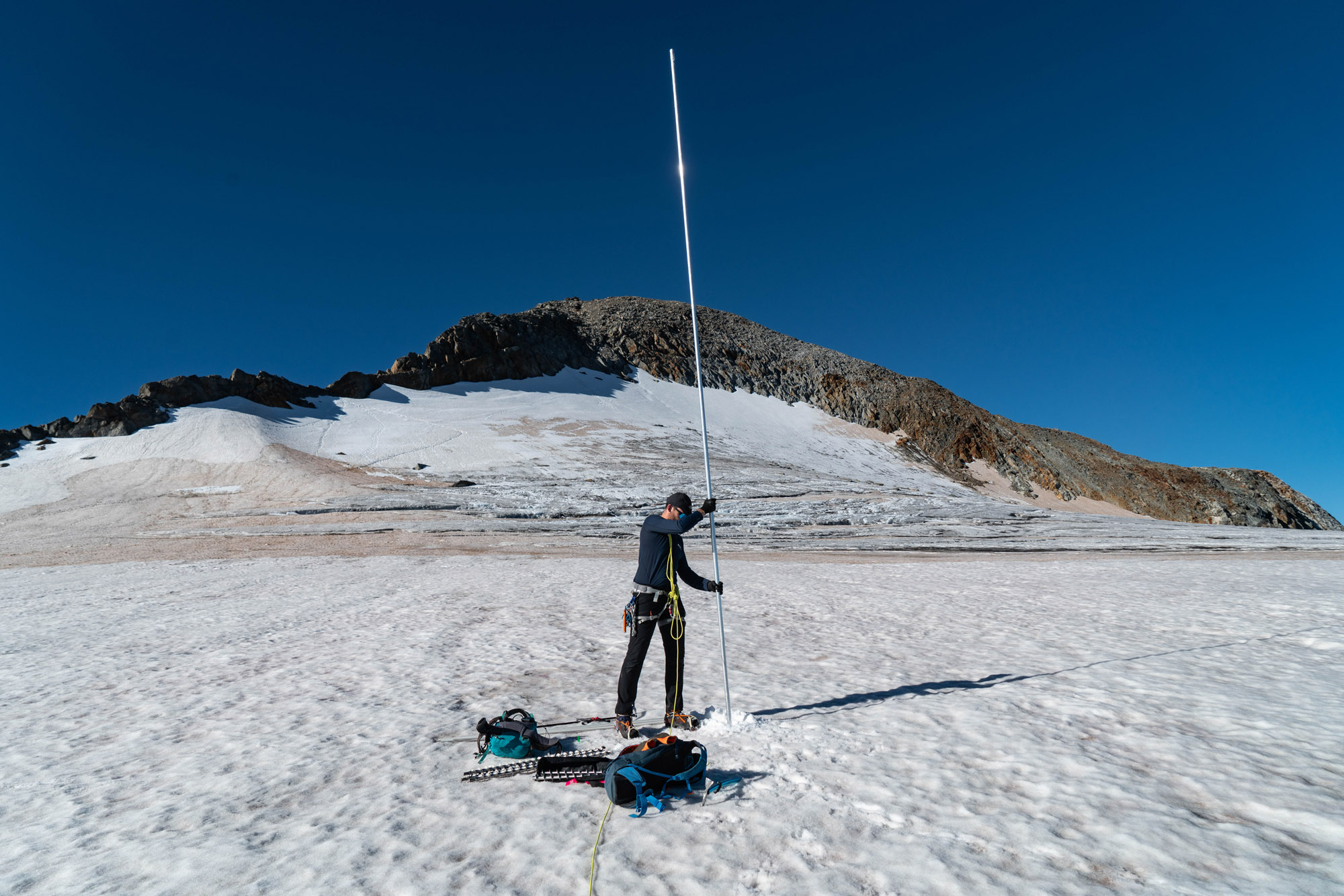
Image 5 of 23
Installation of a stake to determine the mass balance in the upper part of the Glatscher da Medel (GR). (Photo: L. Hösli)

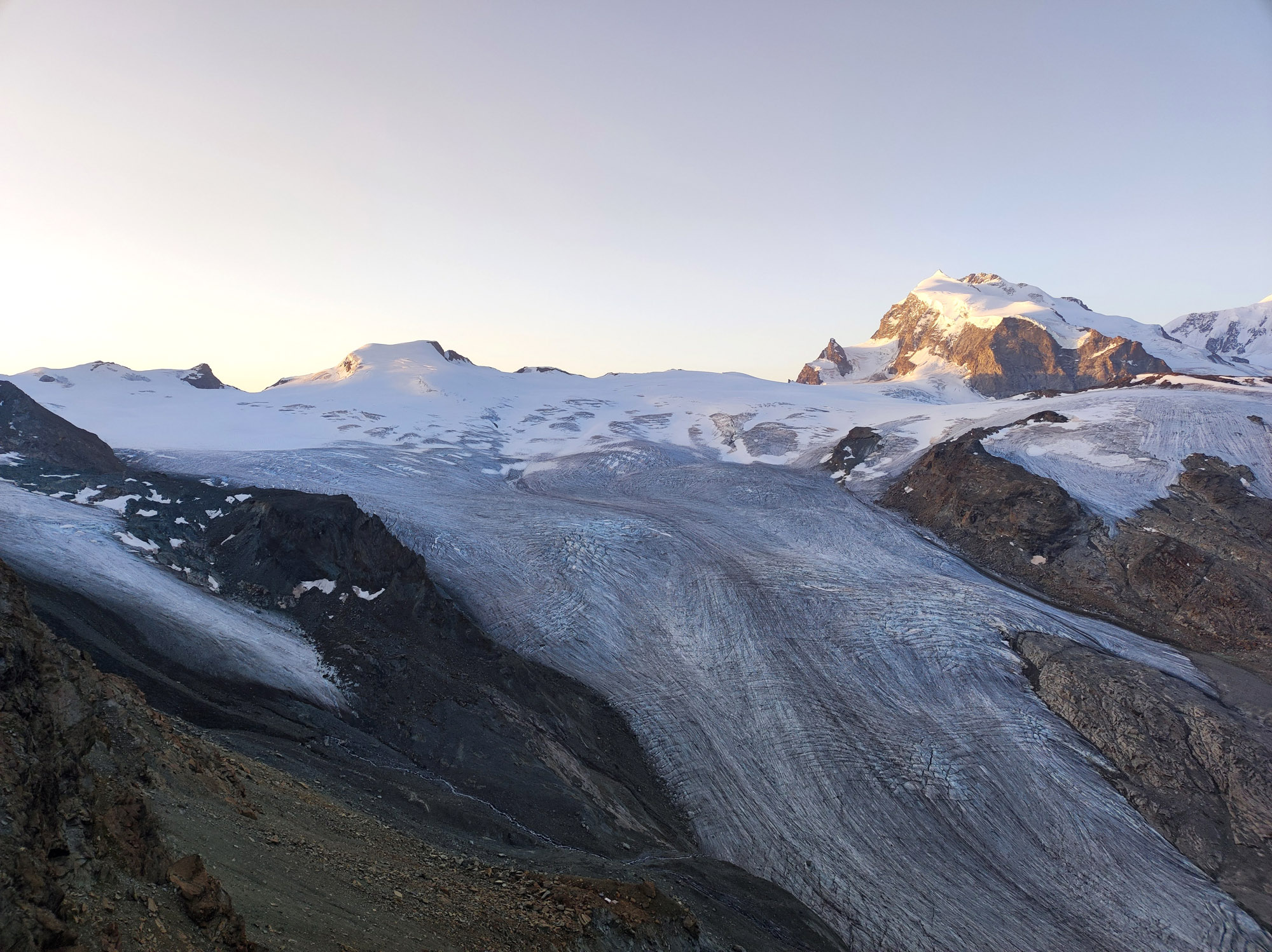
Image 6 of 23
In southern Valais, as here at the Findel Glacier near Zermatt, winter snow remained above about 3300 metres, allowing the high-altitude glaciers to form some new ice. (Photo: M. Huss)

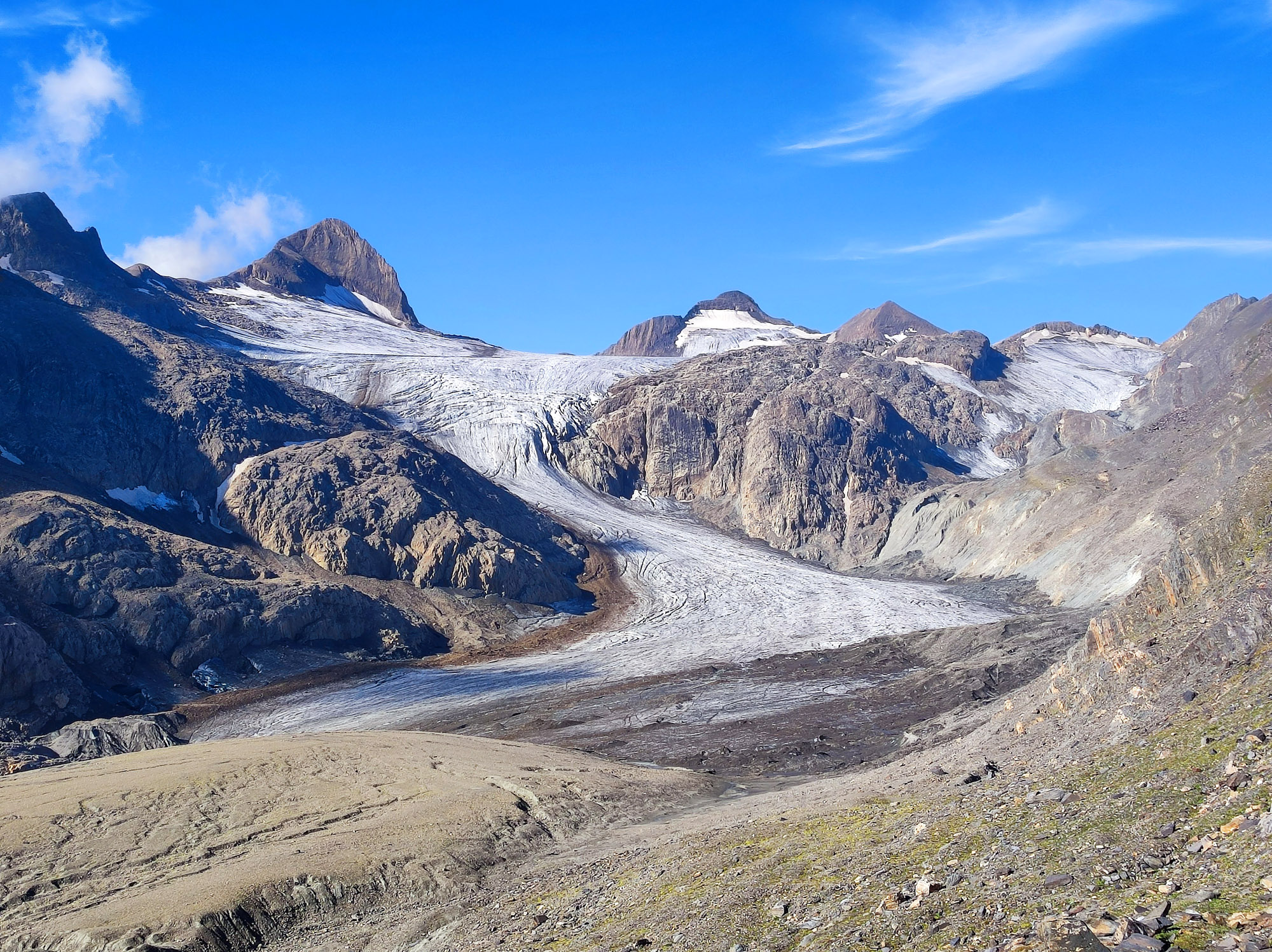
Image 7 of 23
The Gries Glacier (VS) once again suffered greatly in 2025. The glacier tongue is collapsing in on itself. (Photo: M. Huss)

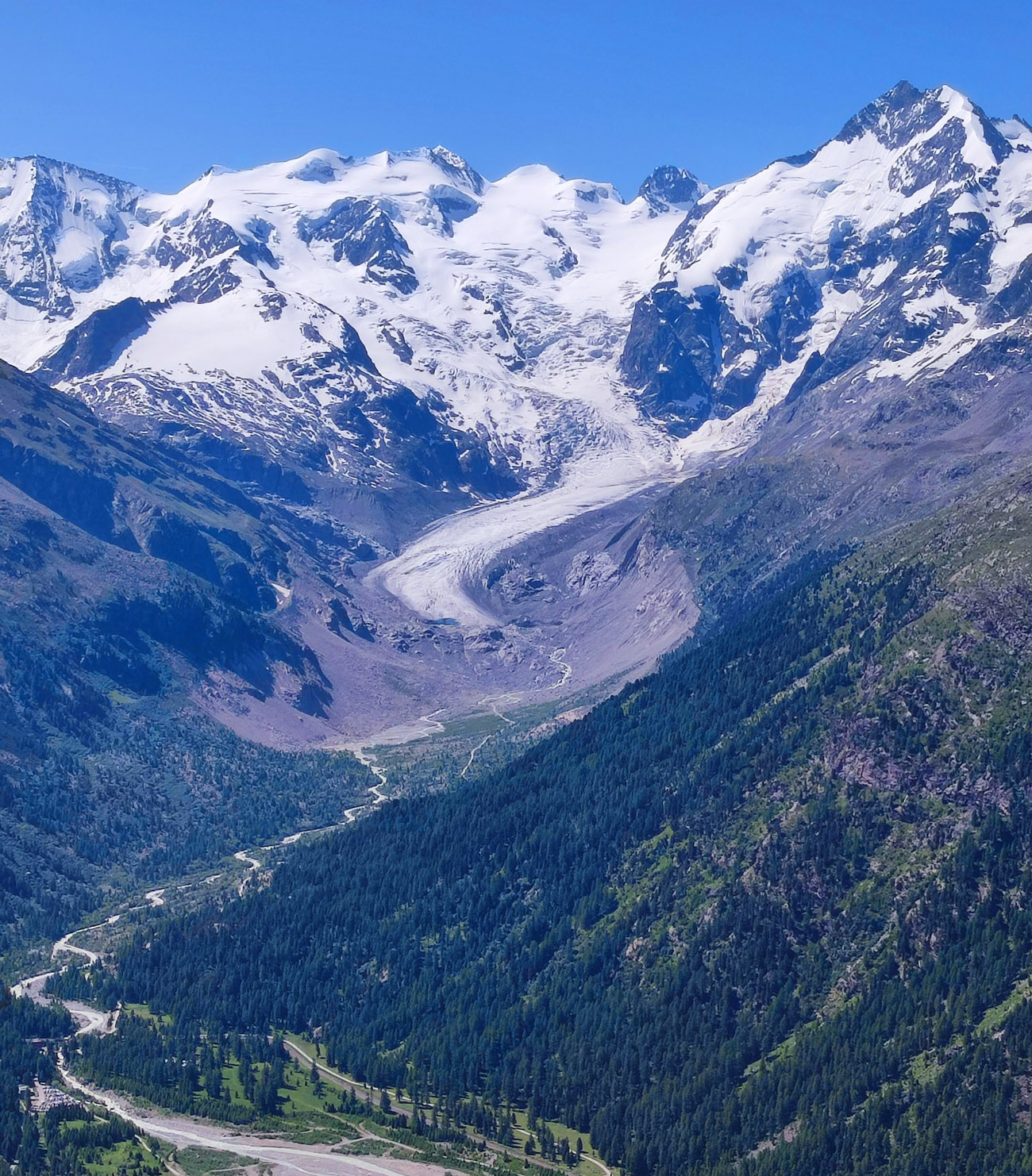
Image 8 of 23
By the end of June 2025, many glacier tongues were already snow-free, as here at the Vadret da Morteratsch (GR), and ice melt began exceptionally early. (Photo: M. Huss)

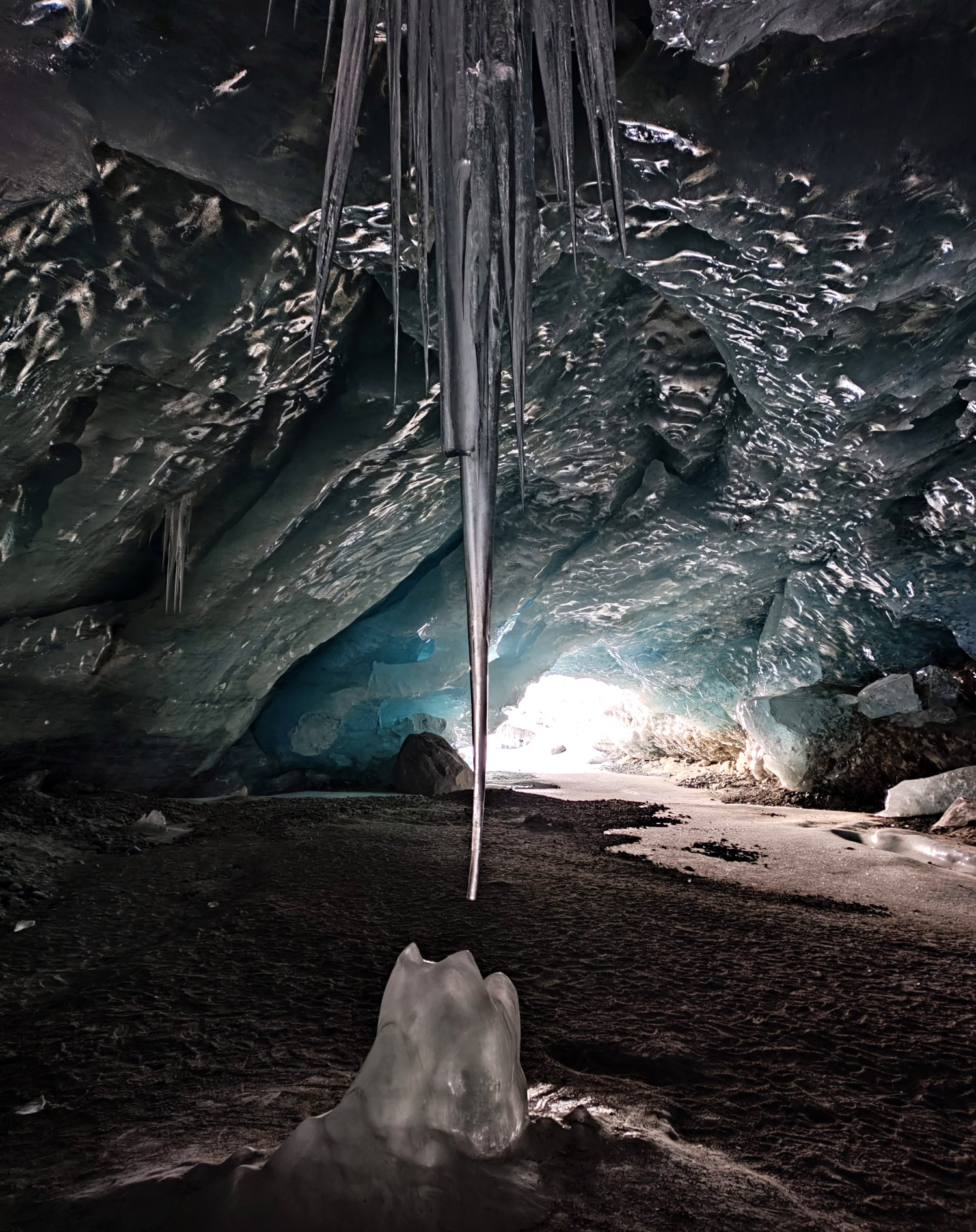
Image 9 of 23
In various places in the Alps, impressive ice caves have formed within the glaciers. (Photo: M. Huss)

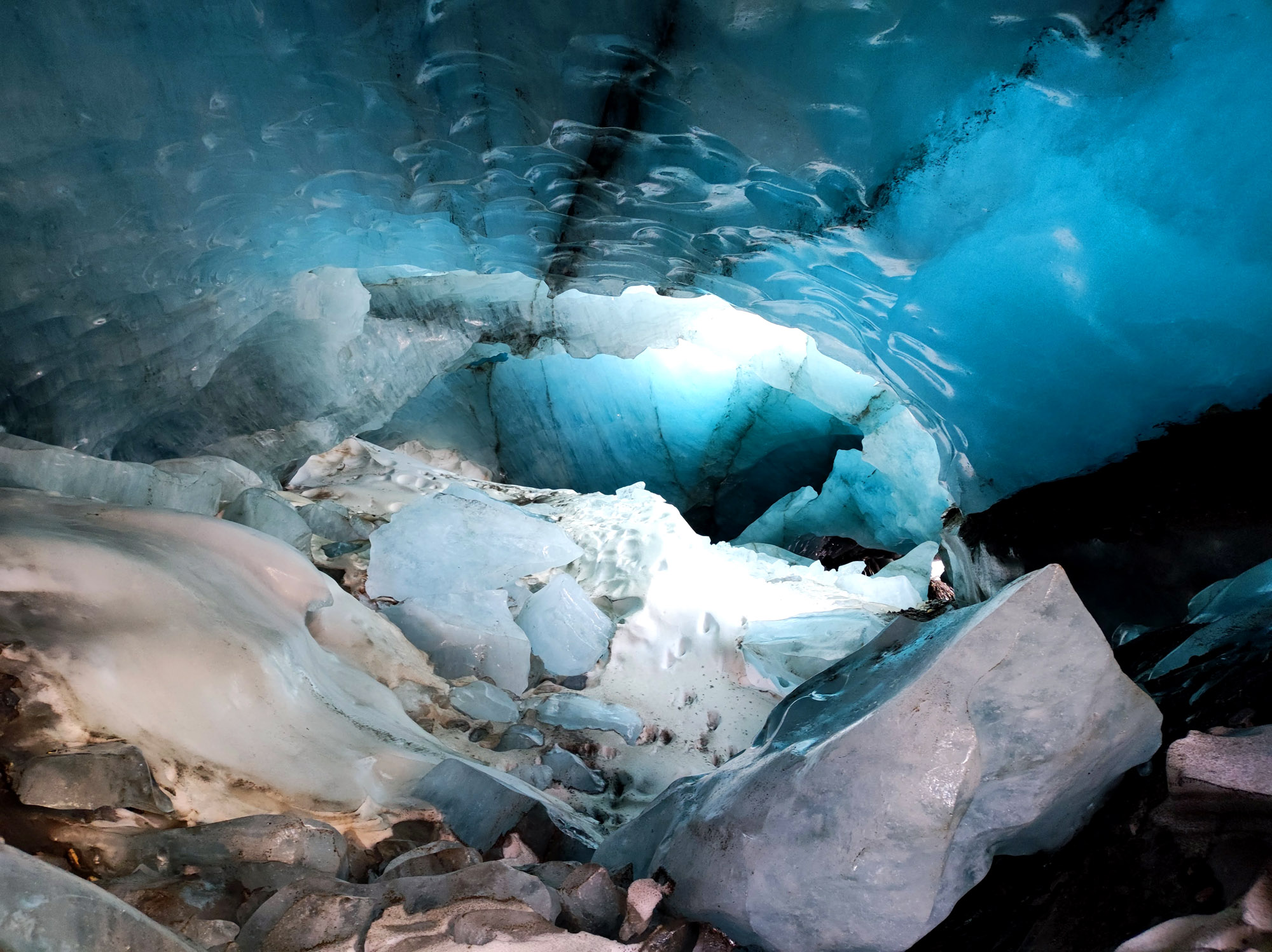
Image 10 of 23
Ice caves display fascinating colours, but they are a sign of internal decay processes in the glaciers and are often at high risk of collapse. (Photo: M. Huss)

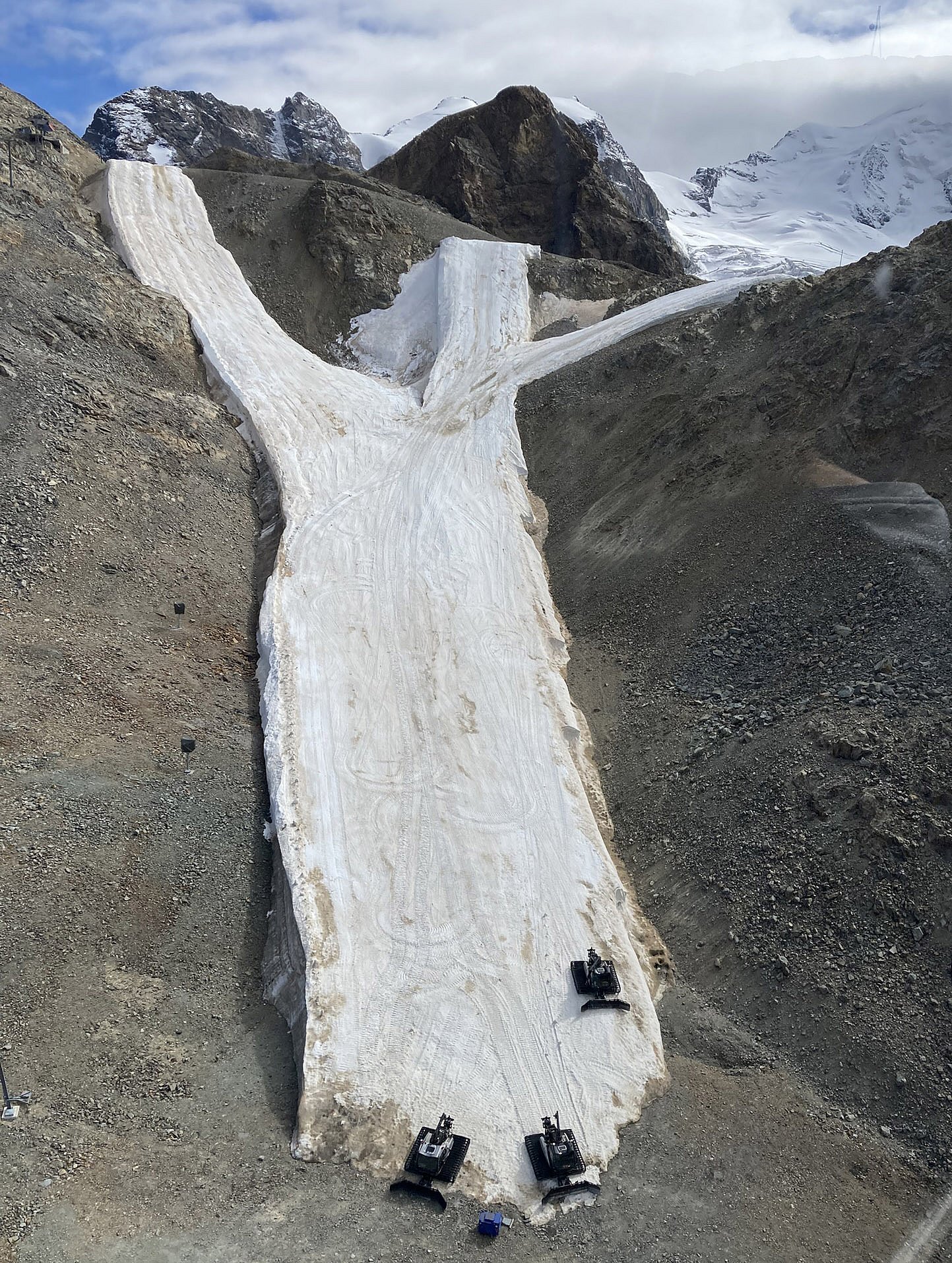
Image 11 of 23
The former glacier at the Diavolezza (GR) disappeared completely about 15 years ago. It is now the only Swiss “glacier” preserved for skiing solely thanks to snow farming and covering, in an artificial form. (Photo: A. Linsbauer)

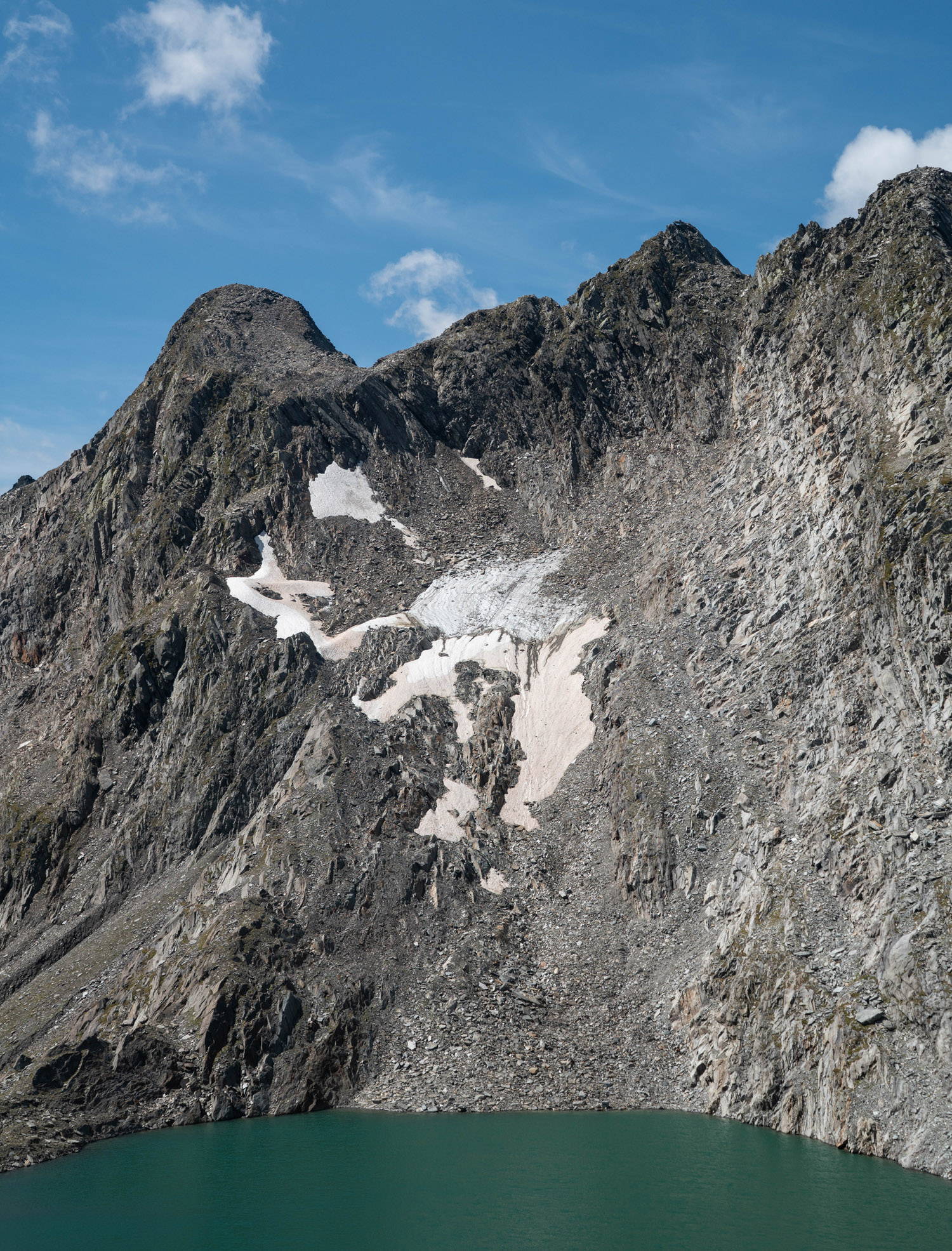
Image 12 of 23
Countless small glaciers are vanishing. At Lai Verd, near the Lukmanier Pass (GR), only a tiny remnant of what was once a sizeable glacier remains, which still reached the lake in the 1990s. (Photo: L. Hösli)

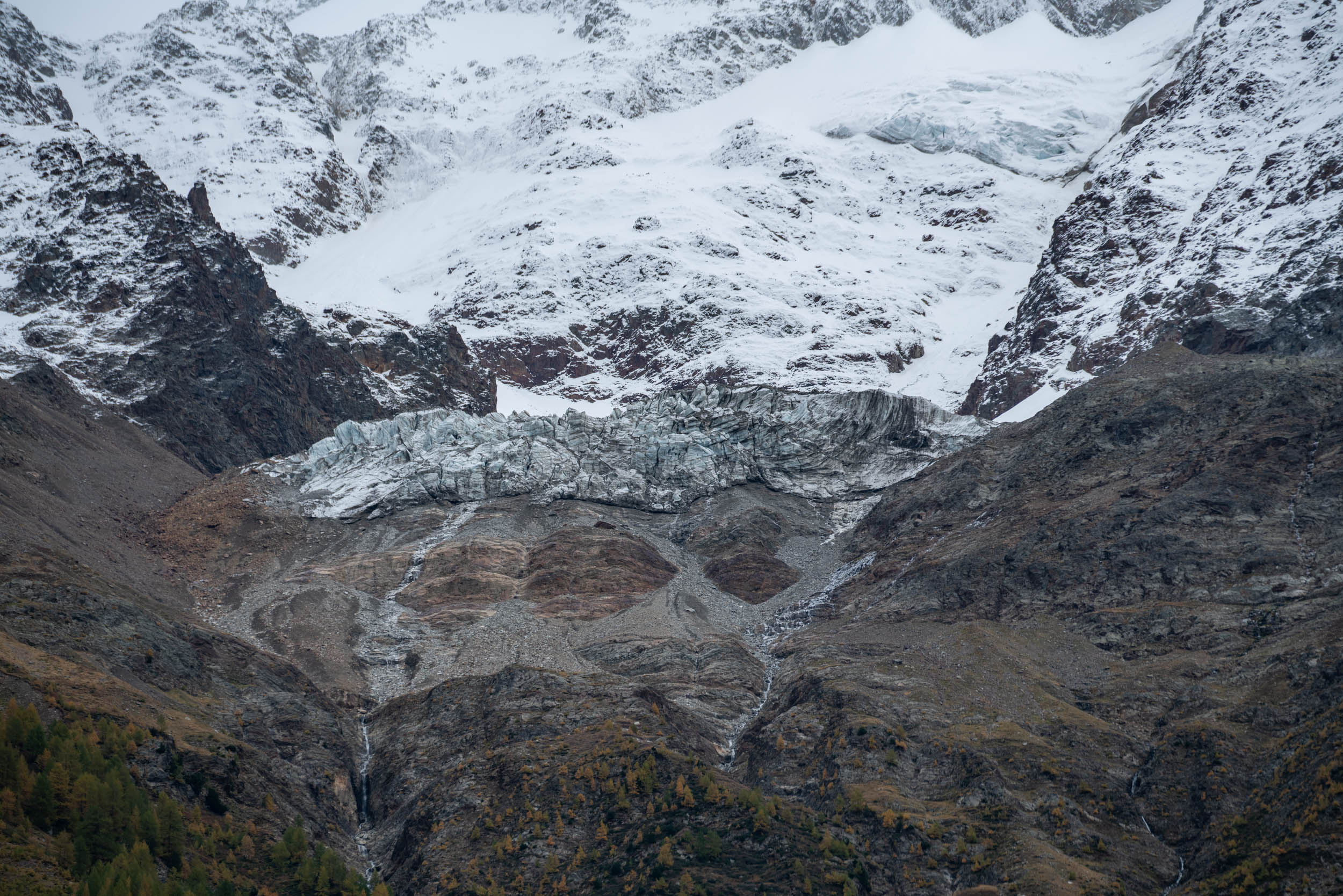
Image 13 of 23
The torn and bulging tongue of the Birch Glacier (VS), a few months before the rock–ice avalanche that buried Blatten. (Photo: L. Hösli)

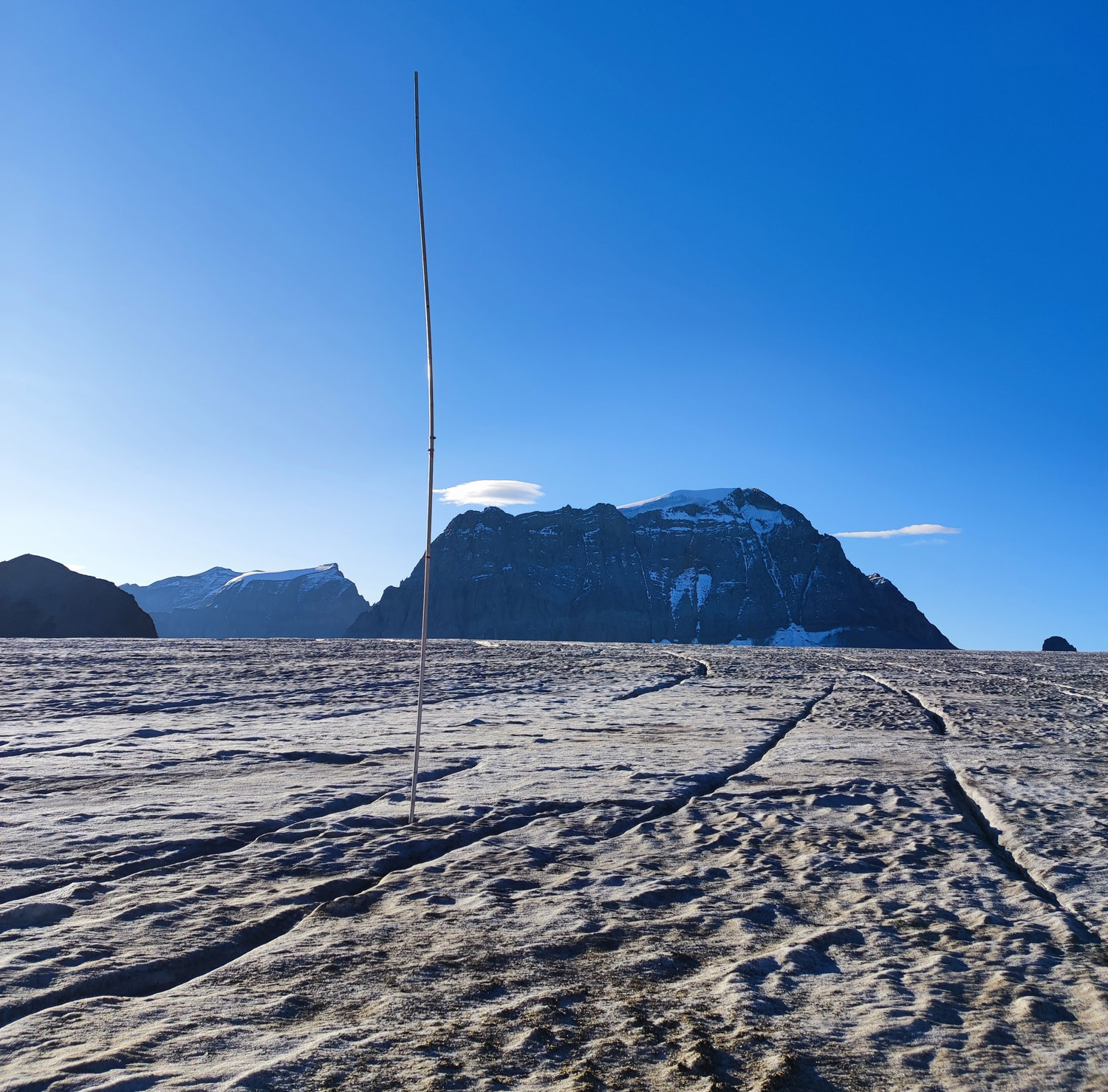
Image 14 of 23
The measurement stake on the Claridenfirn (GL) has been maintained in the same place for 111 years – a record length of observations unrivalled anywhere in the world. Because of abundant snowfall, the site was almost always within the glacier’s accumulation zone. Significant losses occurred only in 2022, 2023 and 2025. (Photo: M. Huss)

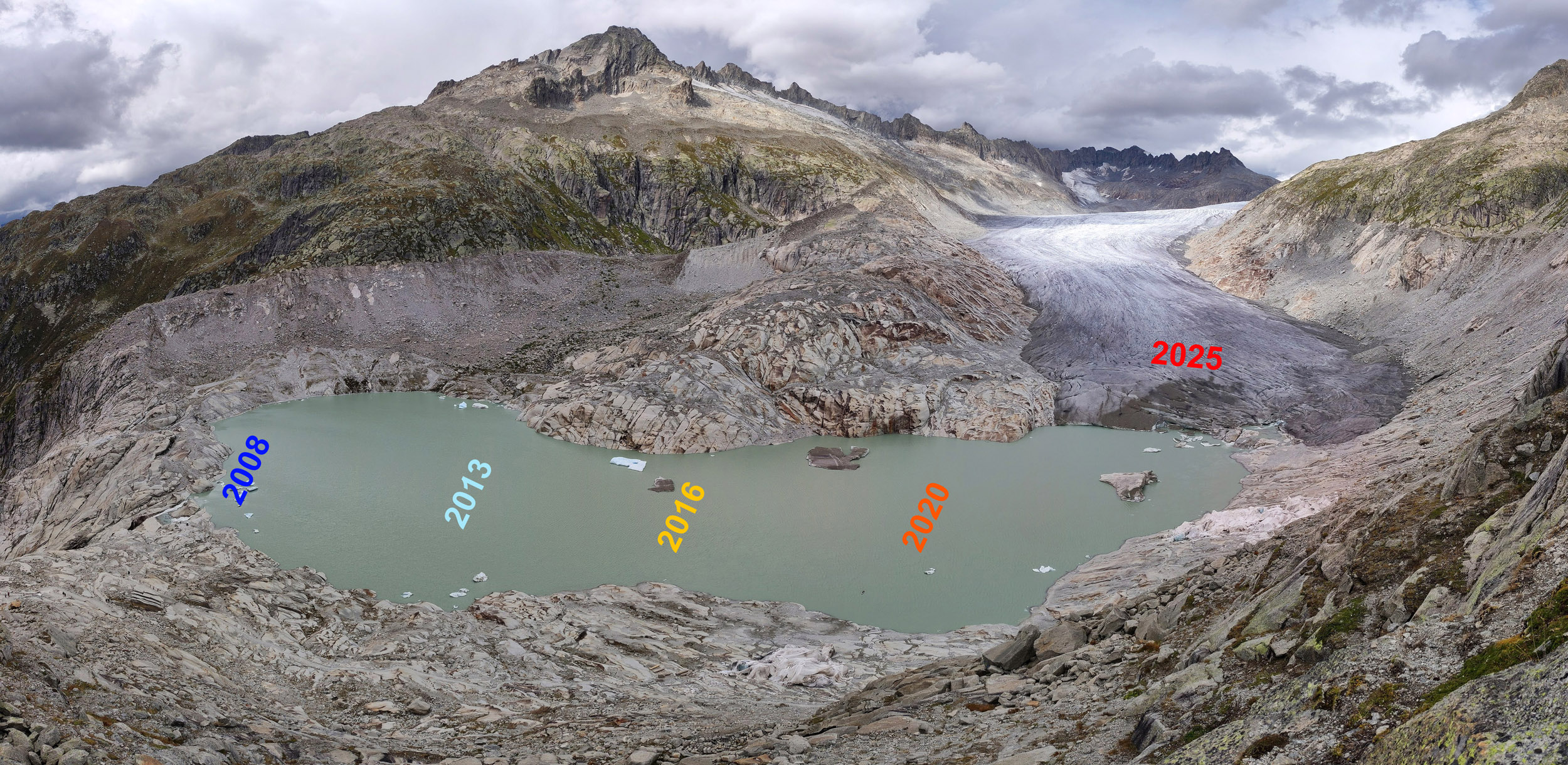
Image 15 of 23
The lake in front of the Rhone Glacier (VS) is expanding rapidly due to retreat. (Photo: M. Huss)

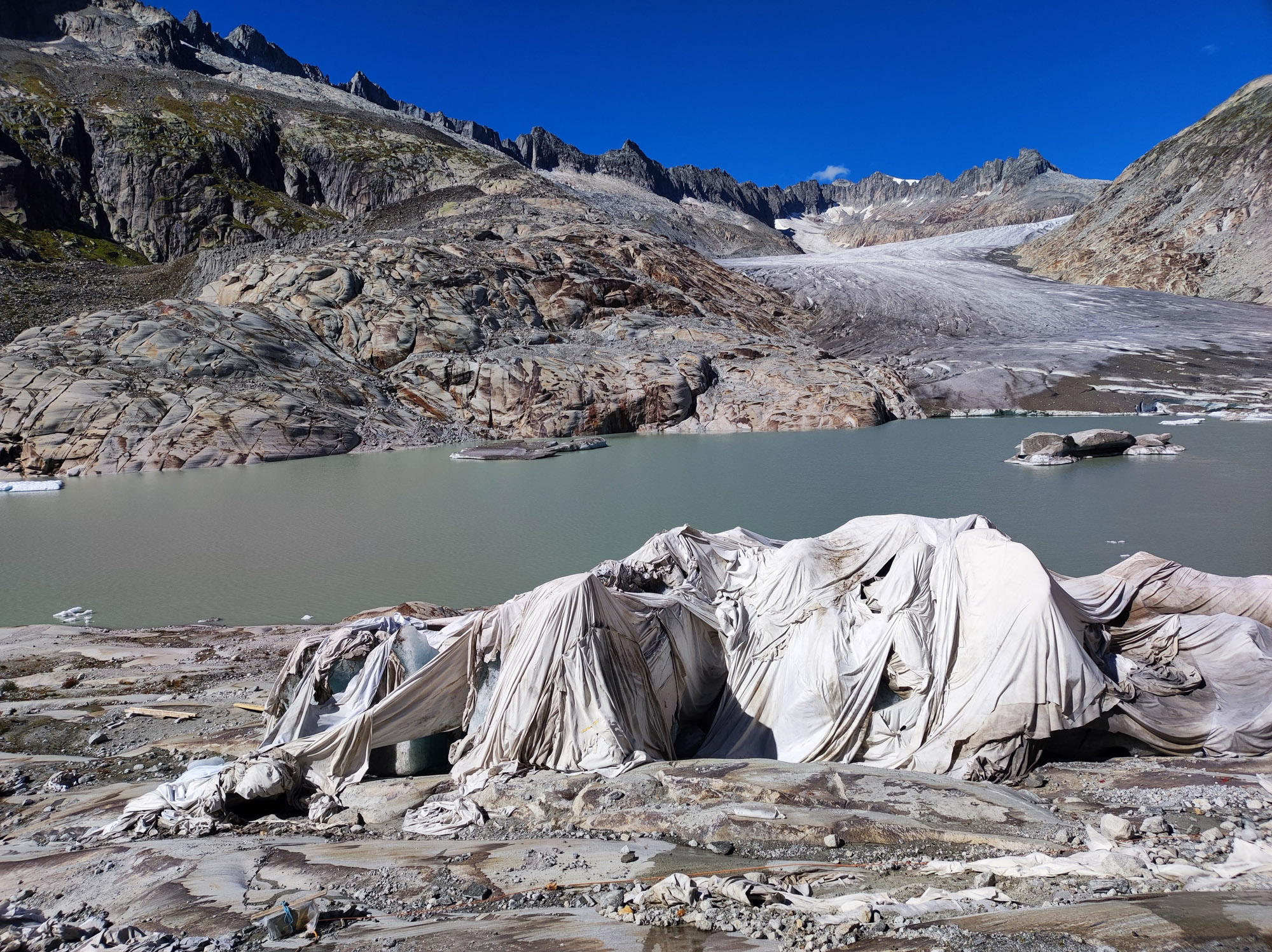
Image 16 of 23
Operation of the artificial ice grotto at the Rhone Glacier (VS) had to be abandoned this summer: the ice block, protected with covers and long since detached from the glacier, became too small. (Photo: M. Huss)

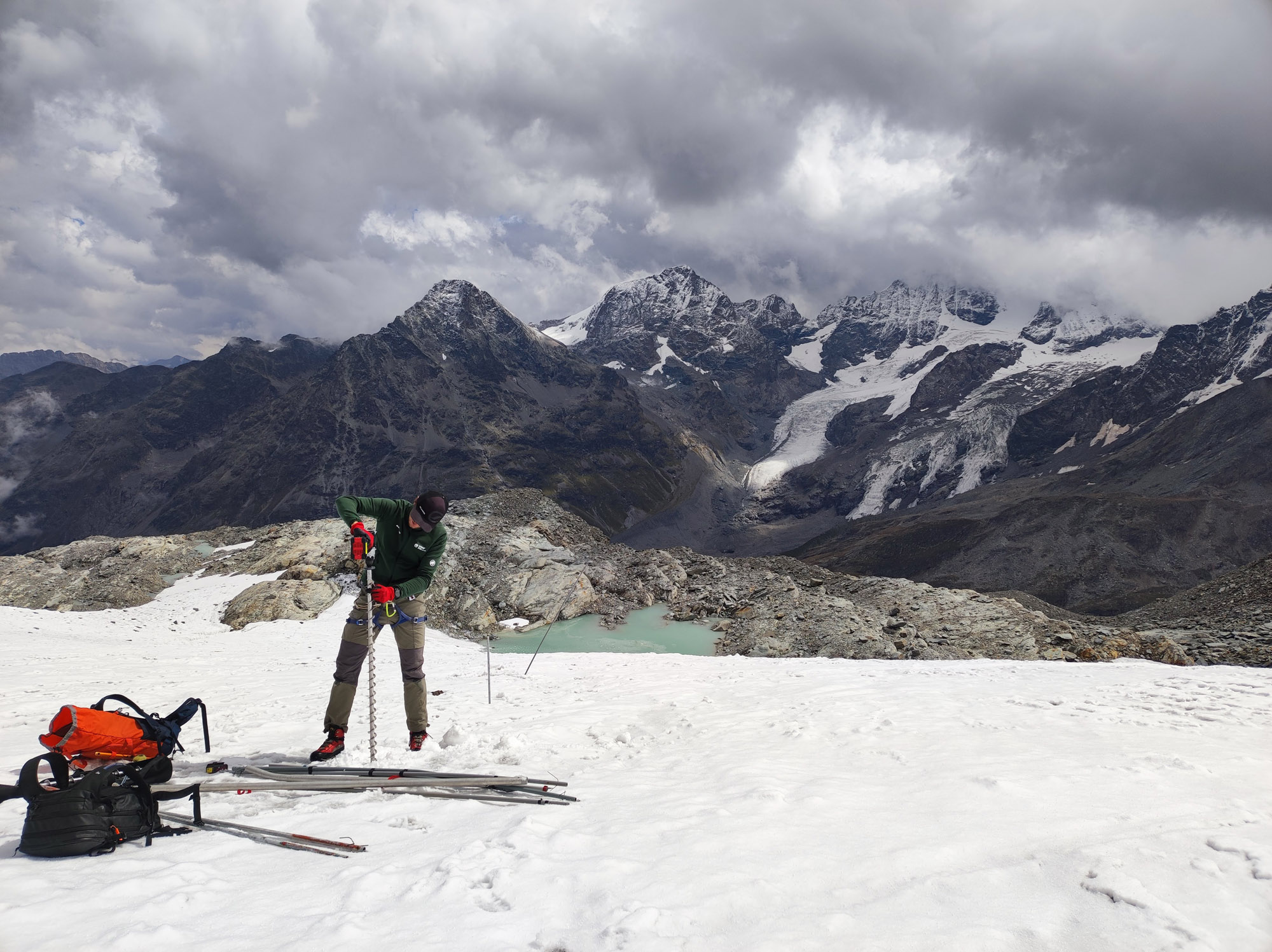
Image 17 of 23
Drilling of a stake to determine the mass balance on the Vadret dal Murtèl. (Photo: M. Huss)


Image 18 of 23
Measuring installation to determine snow depth and melt in real time beneath Piz Palü on the Vadret Pers (GR). (Photo: A. Linsbauer)

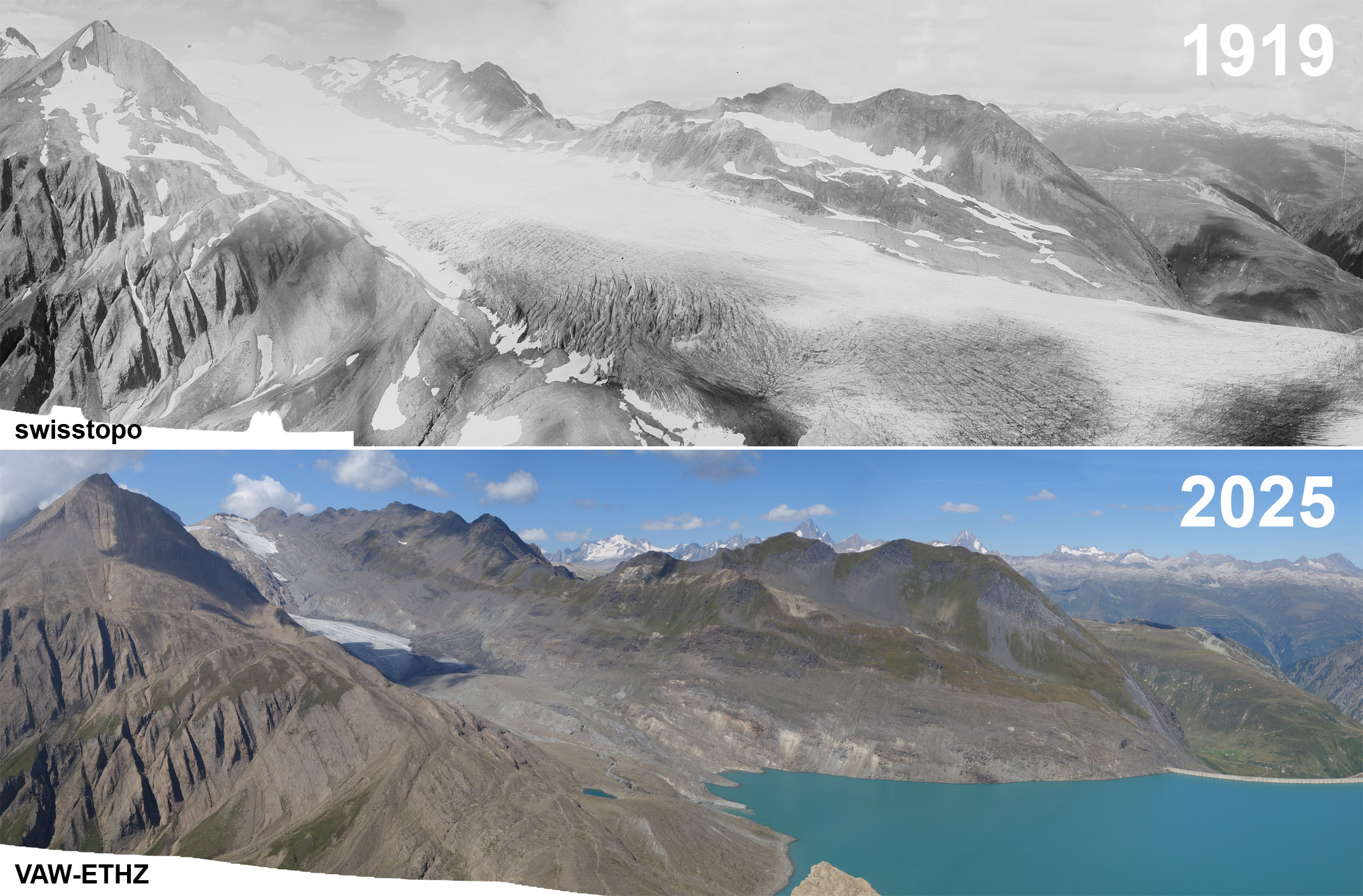
Image 19 of 23
Retreat of the Gries Glacier (VS) between 1919 and 2025. (Photo: swisstopo / VAW-ETH Zurich)

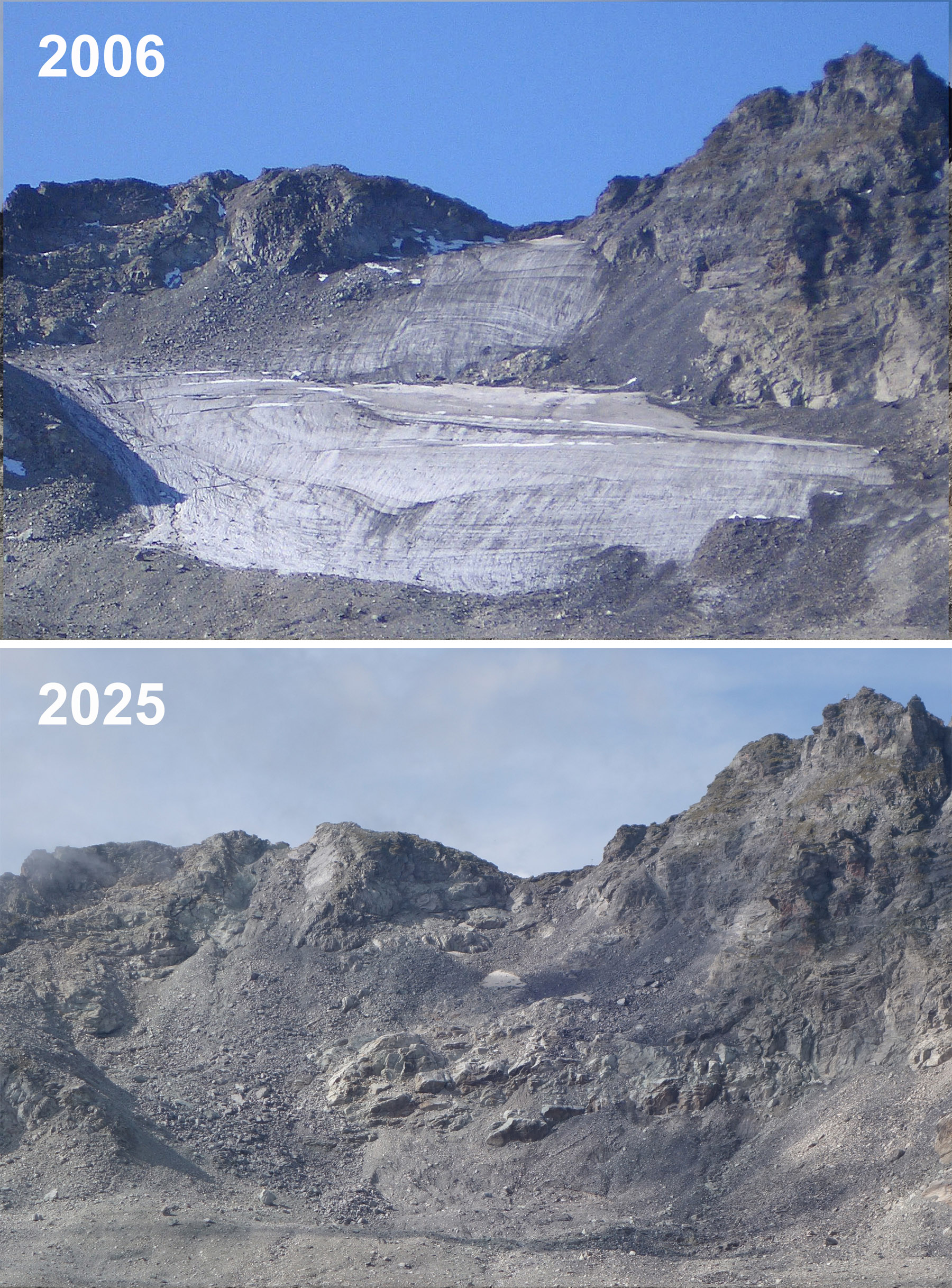
Image 20 of 23
Disappearance of the Pizol Glacier (SG) between 2006 and 2025. (Photo: M. Huss)

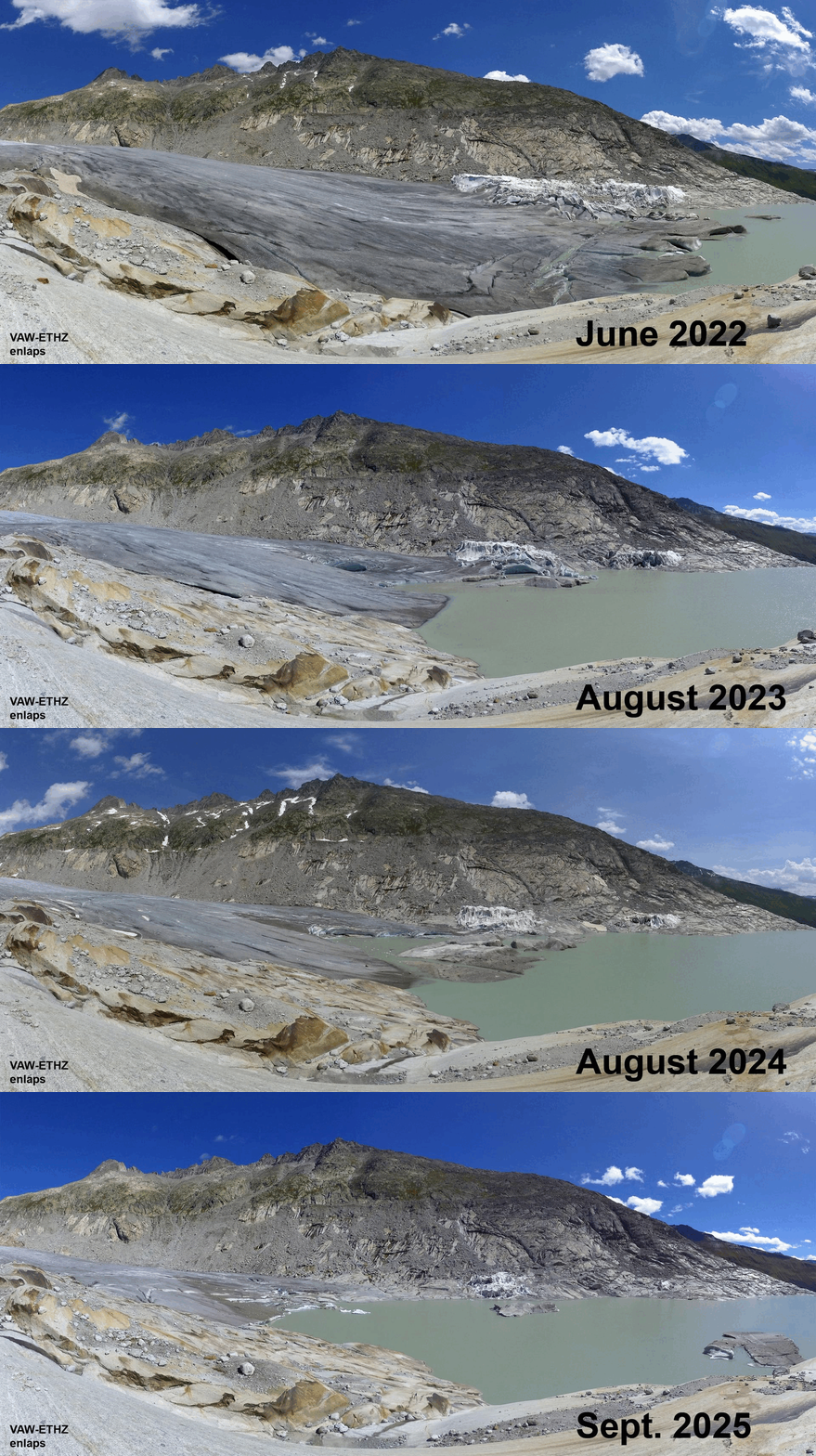
Image 21 of 23
Retreat of the tongue of the Rhone Glacier (VS) between 2022 and 2025. (Photo: enlaps / VAW-ETH Zurich)

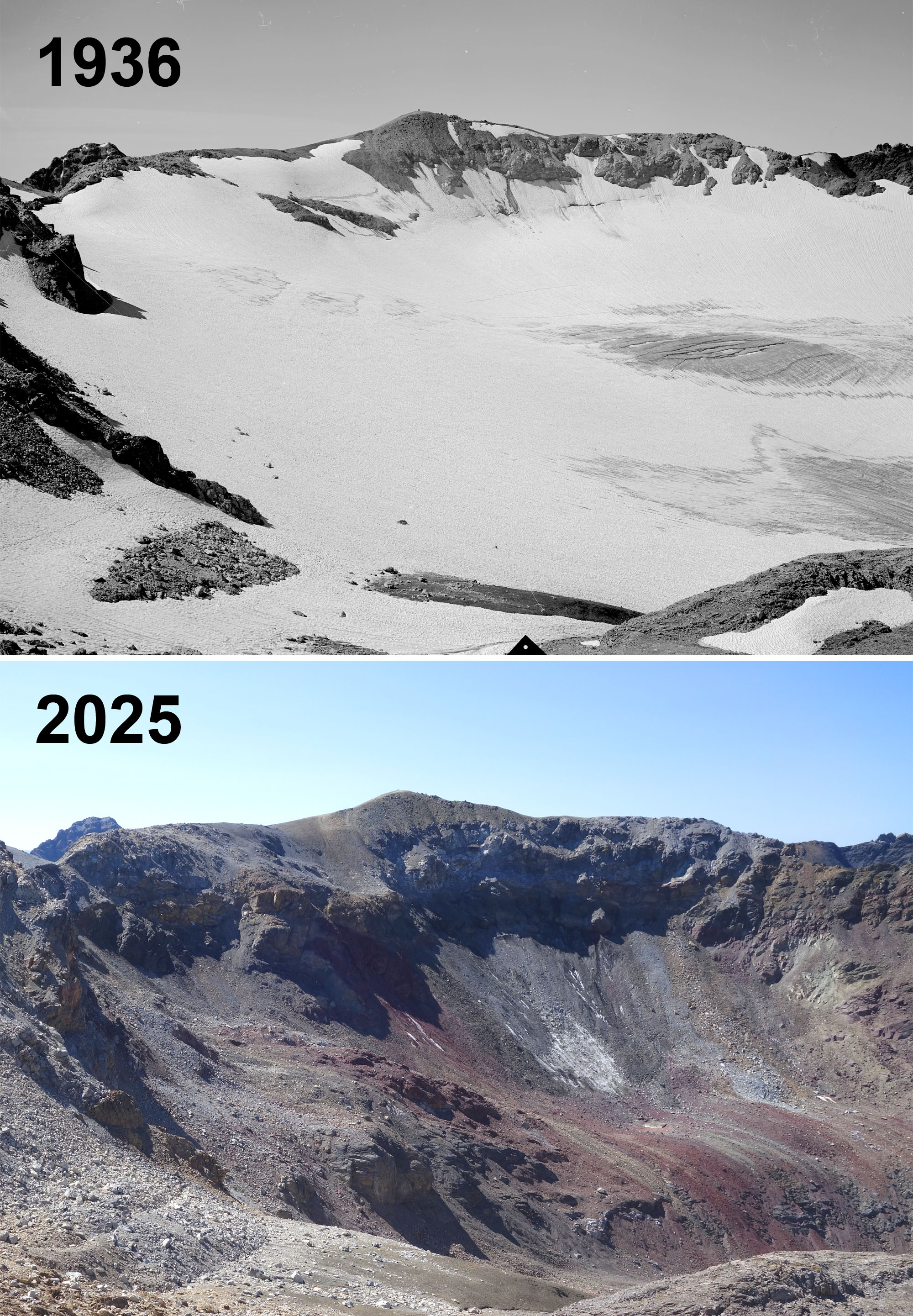
Image 22 of 23
Disappearance of the Vadret da Triazza (GR) between 1936 and 2025. (Photo: swisstopo / VAW-ETH Zurich)

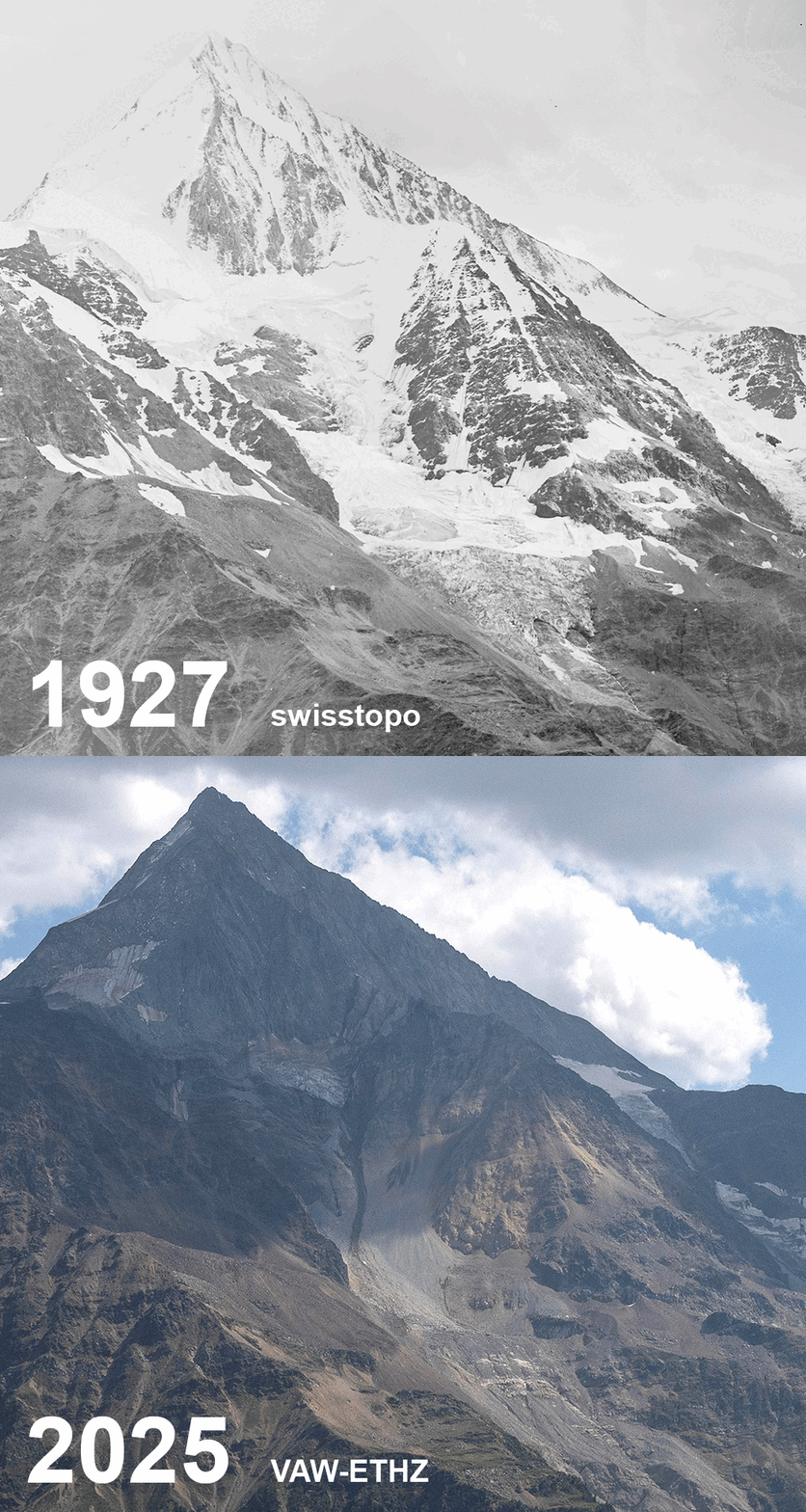
Image 23 of 23
Landscape changes between 1927 and 2025 in the Lötschental following the collapse of the Birch Glacier (VS). (Photo: swisstopo / VAW-ETH Zurich)
Extensive melting does have its benefits: water from the glaciers helps cushion falling water levels and rising water temperatures, as long as there is still sufficient glacier area remaining. In extreme years – that is, when meltwater is most needed – glacier retreat could, however, already be making itself felt. As researchers from the Swiss Federal Institute for Forest, Snow and Landscape Research (WSL) have shown, between June and August 2022, meltwater from glaciers contributed less to runoff in most of the catchment areas studied than it did during the same period in 2003 – even though the glaciers melted much more extensively in 2022.
“The decline in ice cover is already clearly noticeable,” says Matthias Huss, glaciologist at the WSL and ETH Zurich. However, the reduction in meltwater between 2003 and 2022 remains an isolated case: “The melt rates, which have been extremely high every year since 2022 and have also been rising significantly in the multi-year average since 2003, are currently still masking this effect.” This is why researchers are not yet observing a decline in meltwater. However, Huss warns that this will only be the case for a limited time – until the ice masses have shrunk so much that even extreme melt rates can no longer compensate for the loss of mass.
Contact 
Publications 
Links 
Copyright 
WSL and SLF provide image and sound material free of charge for use in the context of press contributions in connection with this media release. The transfer of this material to image, sound and/or video databases and the sale of the material by third parties are not permitted.