

02.07.2026 | Beate Kittl | WSL News
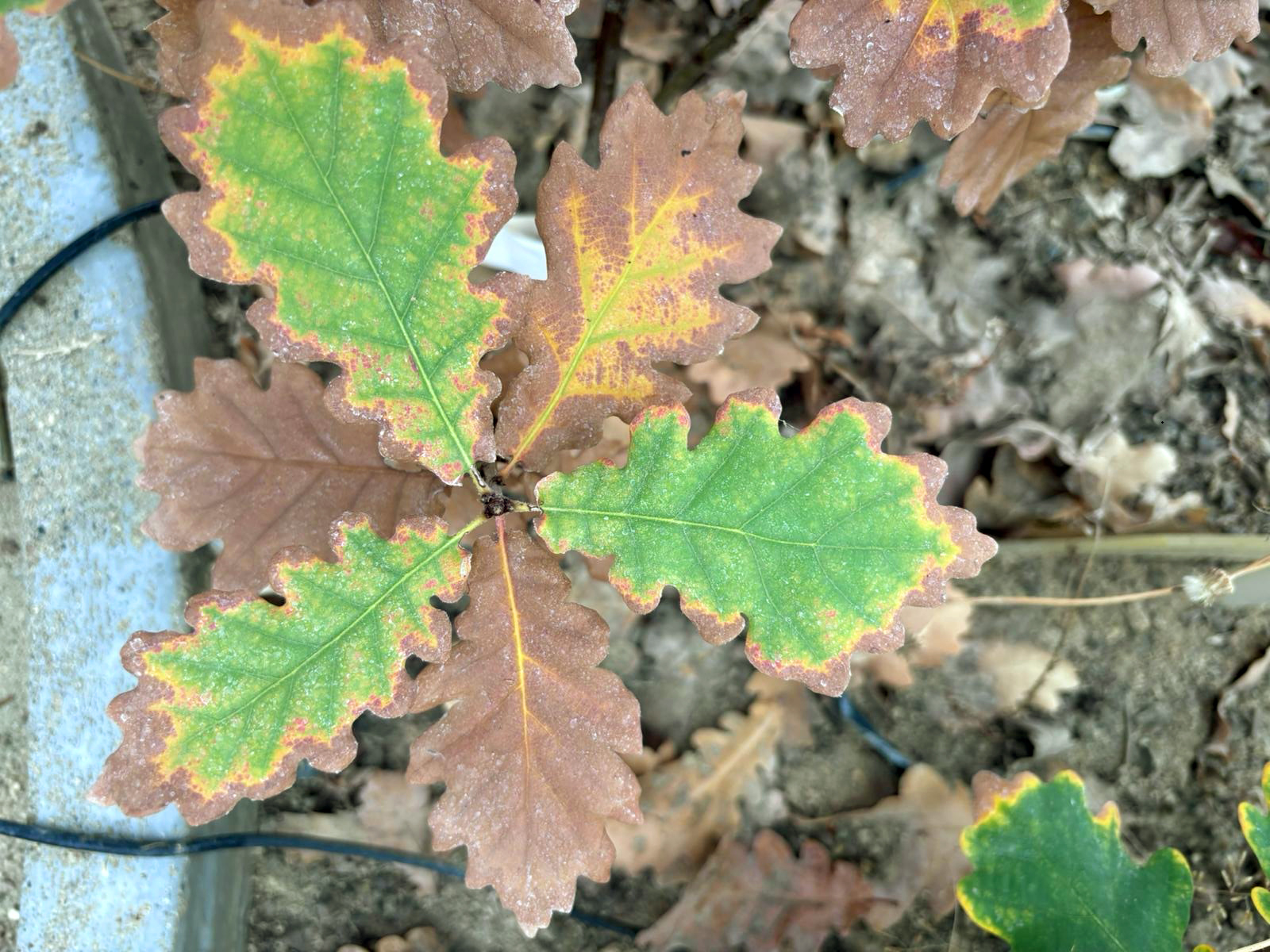
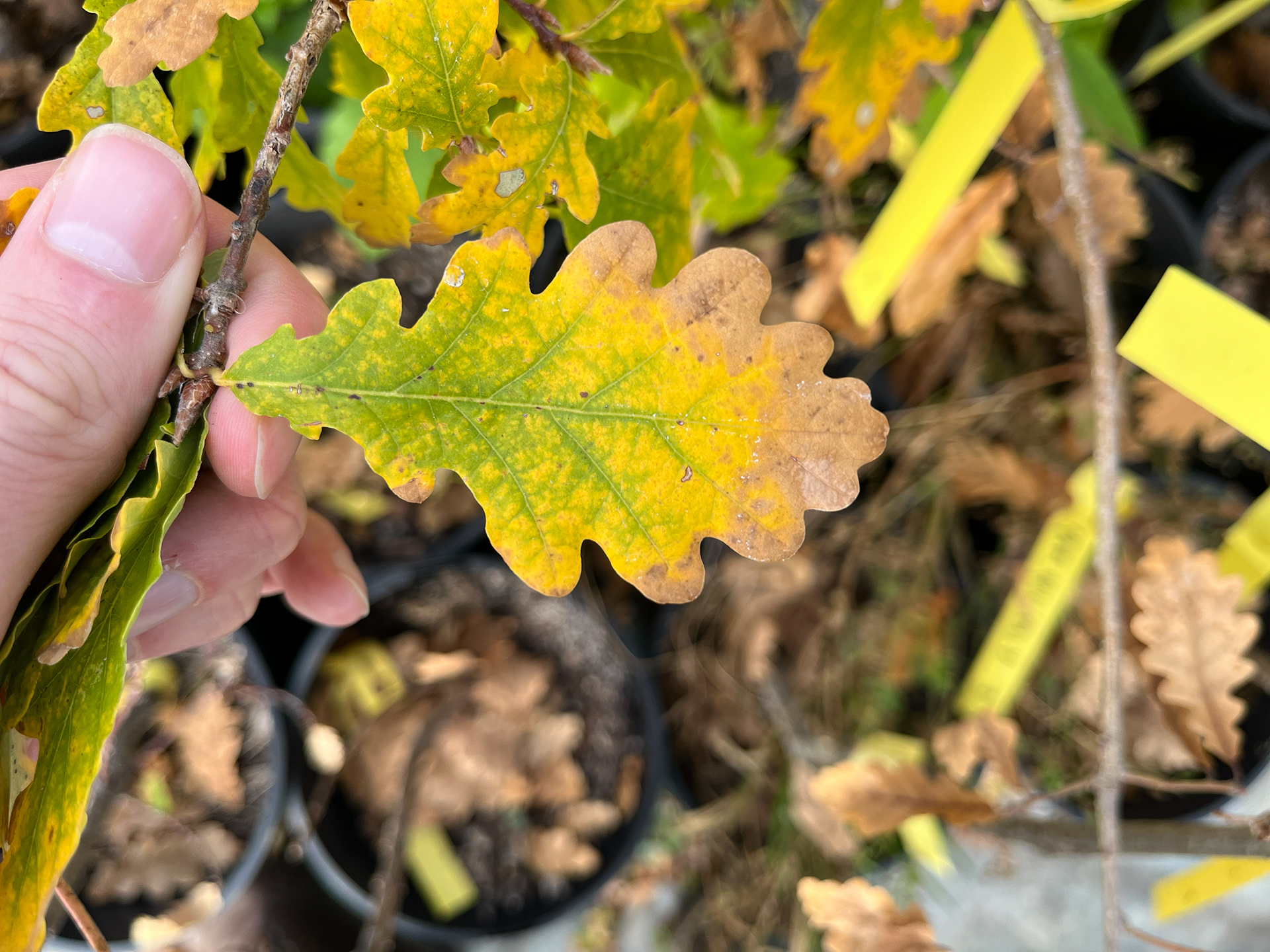
Due to increasing heat and drought, forests are turning brown more and more often before autumn when leaf senescence normally occurs. It is often unclear whether the trees are actively shedding foliage to avoid water transport breaking down, or whether browning leaves are a consequence of irreversible damage due to both heat and drought. As a result, the resilience of forests to climate extremes could be overestimated, WSL researchers warn in a recent commentary.
- Heat and drought are increasingly leading to premature leaf discolouration in forests.
- It is unclear whether this is a controlled process or whether it is damage that is weakening the trees.
- Studies should distinguish between these two processes; otherwise, inaccurate estimates of seasonal processes may lead to errors in climate models and an overestimation of forest resilience to climate extremes.
Due to rising temperatures, droughts and heatwaves are increasing worldwide. As a result, deciduous trees are changing colour prematurely more and more often – in 2018, for example, beech trees in the Schaffhausen area already had brown crowns as early as mid-August. There are two possible causes for this: either it is an early autumn phenomenon, whereby the tree sheds its leaves in a controlled manner, or it is heat damage that destroys the leaf.
No nutrient recovery 
Heat damage to the forest was so far unusual in our latitudes: in the case of the Schaffhausen beech trees during the summer 2018, even some forest ecologists believed that the trees were actively and deliberately changing the colour of their leaves. In that case, they would have ‘saved’ the nutrients in the leaves by mobilising them and drawing them back into the tissues – as they do every autumn during the leaf senescence process. However, many of the beech trees failed to sprout well the following year, meaning that they were clearly damaged.
Assessing the length of the growing season and how it will change in the future is essential for predicting how forests will store carbon, regulate water, and provide other important ecosystem services. For this purpose, researchers are increasingly using remote sensing data, such as satellites products which measures the ‘greenness’ of the forests. However, current remote-sensing studies often do not distinguish between two very different processes: stress-induced leaf damage ("leaf scorching"), caused, for example, by drought or heatwaves, and the natural colour change that occurs during autumn leaf senescence before leaves are shed. Although both processes make forests appear browner from space, they have very different biological consequences.
Irreversible damage 
This is a problem, argues a research team from the WSL in a commentary published in Nature Climate Change. Unlike natural autumn senescence, stress-induced leaf scorching can reflect irreversible damage to the trees and cause trees to lose valuable nutrients before they can be retrieved from the leaves. If this happens repeatedly, trees may become less able to recover from extreme weather events, weakening forest health and reducing their ability to grow and absorb CO₂. “If these two processes are confused, models of leaf senescence may become less reliable and the resilience of forests to climate extremes could be overestimated”, warn Maxwell Bergström and Zhaofei Wu, the co-lead authors of the commentary.
“Leaf damage caused by heat and drought is expected to become increasingly common as the climate warms,” emphasizes project manager Yann Vitasse of the WSL, who studies seasonal processes in trees. “Heatwaves and drought form an explosive combination for forests; it is a truly alarming trend.”
What should be done? The authors suggest controlled experiments which allow to determine the physiological thresholds separating adaptive leaf senescence from irreversible leaf damage. “Such knowledge could improve remote sensing of forest health and predictions of future ecosystem responses to climate change”, say the authors.
Contact 
Publication 
Bergström, M., Wu, Z., Grossiord, C. et al. Distinguishing leaf scorching from senescence under climate extremes. Nat. Clim. Chang. (2026). https://doi.org/10.1038/s41558-026-02682-1
Copyright 
WSL and SLF provide image and sound material free of charge for use in the context of press contributions in connection with this media release. The transfer of this material to image, sound and/or video databases and the sale of the material by third parties are not permitted.