
Continuous cover forests have an uneven-aged structure and focus on the promotion and harvesting of individual trees. All silvicultural measures – initiating regeneration, releasing promising trees from competitors, and timber harvesting – take place simultaneously within a stand Plenter forests – a type of continuous cover forest composed mainly of silver fir, Norway spruce, and beech – have a long history in Switzerland and other European countries. In forestry practice, plenter and continuous cover forests are considered a close-to-nature and sustainable form of management, as they rely on continuous regeneration, structural diversity, and the long-term promotion and use of individual trees.
In Switzerland, regional concentrations of planter forests are in the Emmental region and the Jura. In the early 20th century, scientific interest in this form of management grew significantly, and numerous permanent research plots were established to learn more about growth dynamics and the economic viability of plenter forests. Today, the plenter network within the EFM project comprises 26 experimental sites covering a total area of 36 hectares.
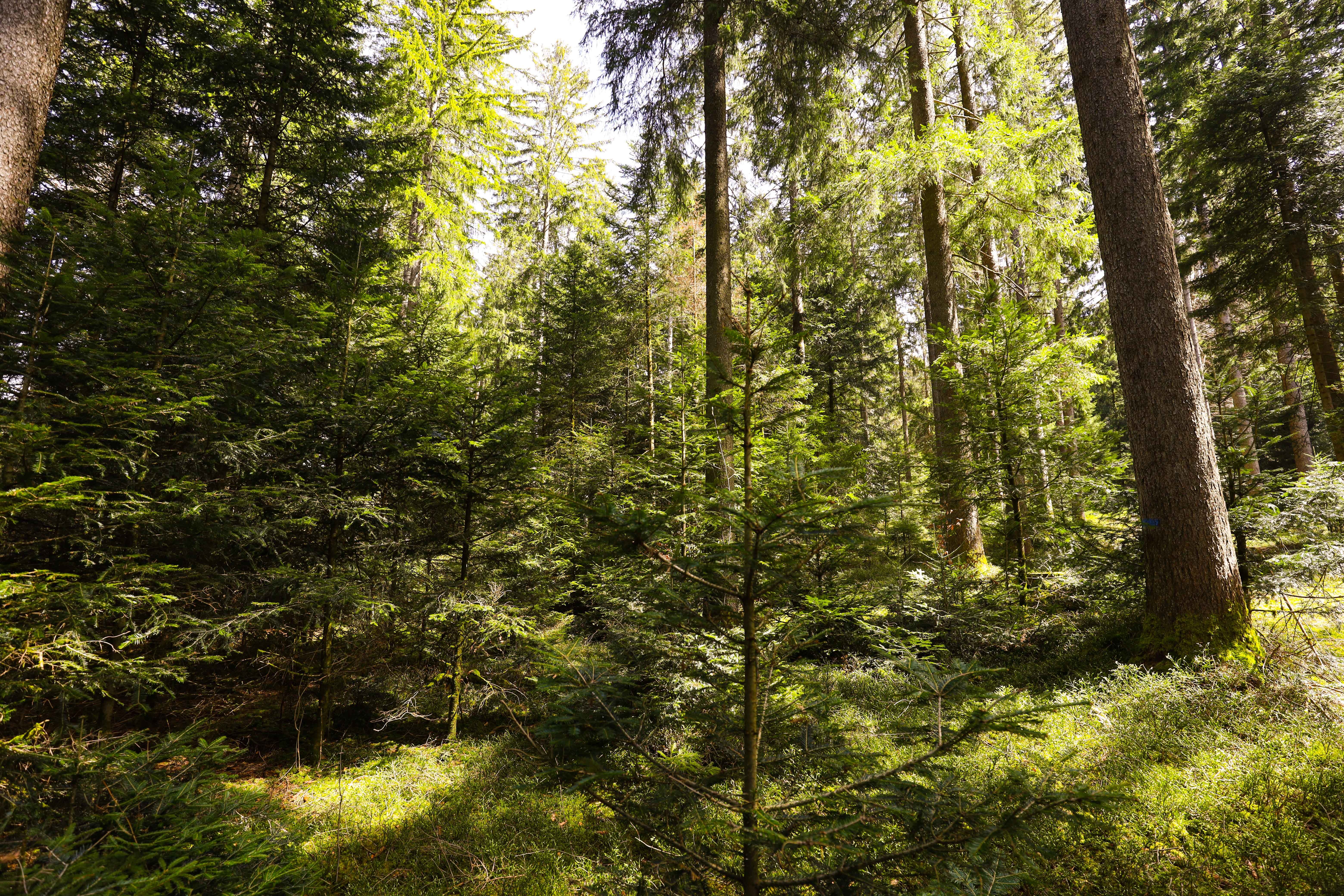
From a scientific perspective, plenter forests are of great interest for studying the effects of climate change on forest ecosystems. Since stand density, tree species composition, and age structure remain relatively constant over time, changes in, for example, stand growth can be analyzed independently of structural effects. Long-term data from the plenter forest network show that stand growth increased substantially during the second half of the 20th century (Forrester et al. 2022). This growth increase has since stagnated, and more recent analyses (unpublished) suggest a possible decline in growth over the last ten years.