

The first silvicultural and forest growth research plots in Switzerland were established in the late 19th century. Over time, the plot network evolved to reflect changing societal and silvicultural demands on forests and their services. Today, they collectively form the EFM plot network. In the early 20th century, the network focused on yield science research and even-aged stands, with experiments on various thinning types and intensities in even-aged high forests. A key output of this era were yield tables for beech, spruce, silver fir, and larch (Badoux, 1983).
To this day, data from all EFM experimental plots (active and inactive) continue to be used to derive forest growth metrics. Yield tables have been succeeded by stand- and growth simulators calibrated or validated using these data – for example ForClim, Hiltner et al, 2025; SwissStandSim, Zell et al, 2020 oder 3-PG, Forrester et al. 2021). These growth models allow estimating current or mean annual increment of specific stands to assess how much timber can be sustainably harvested.
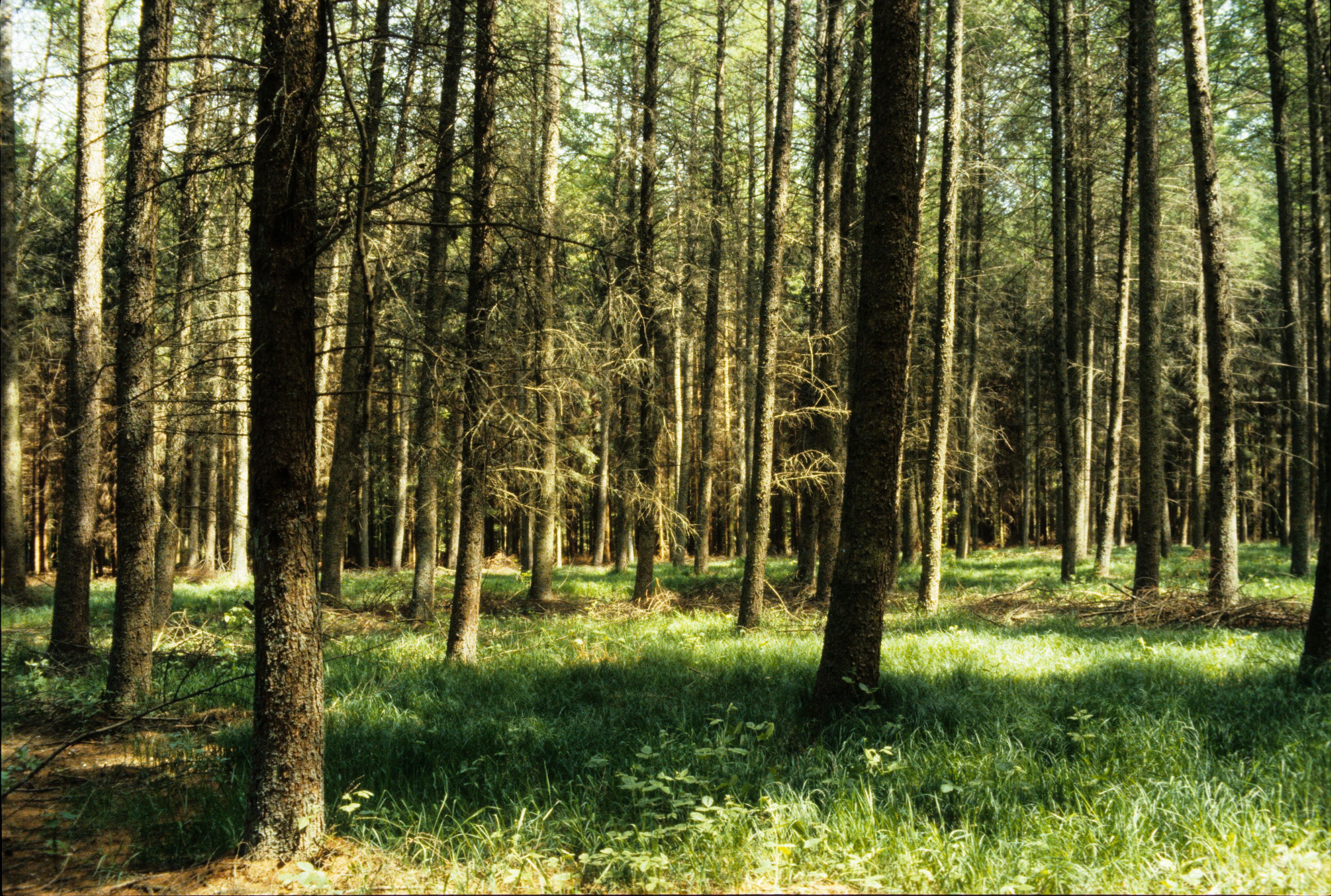
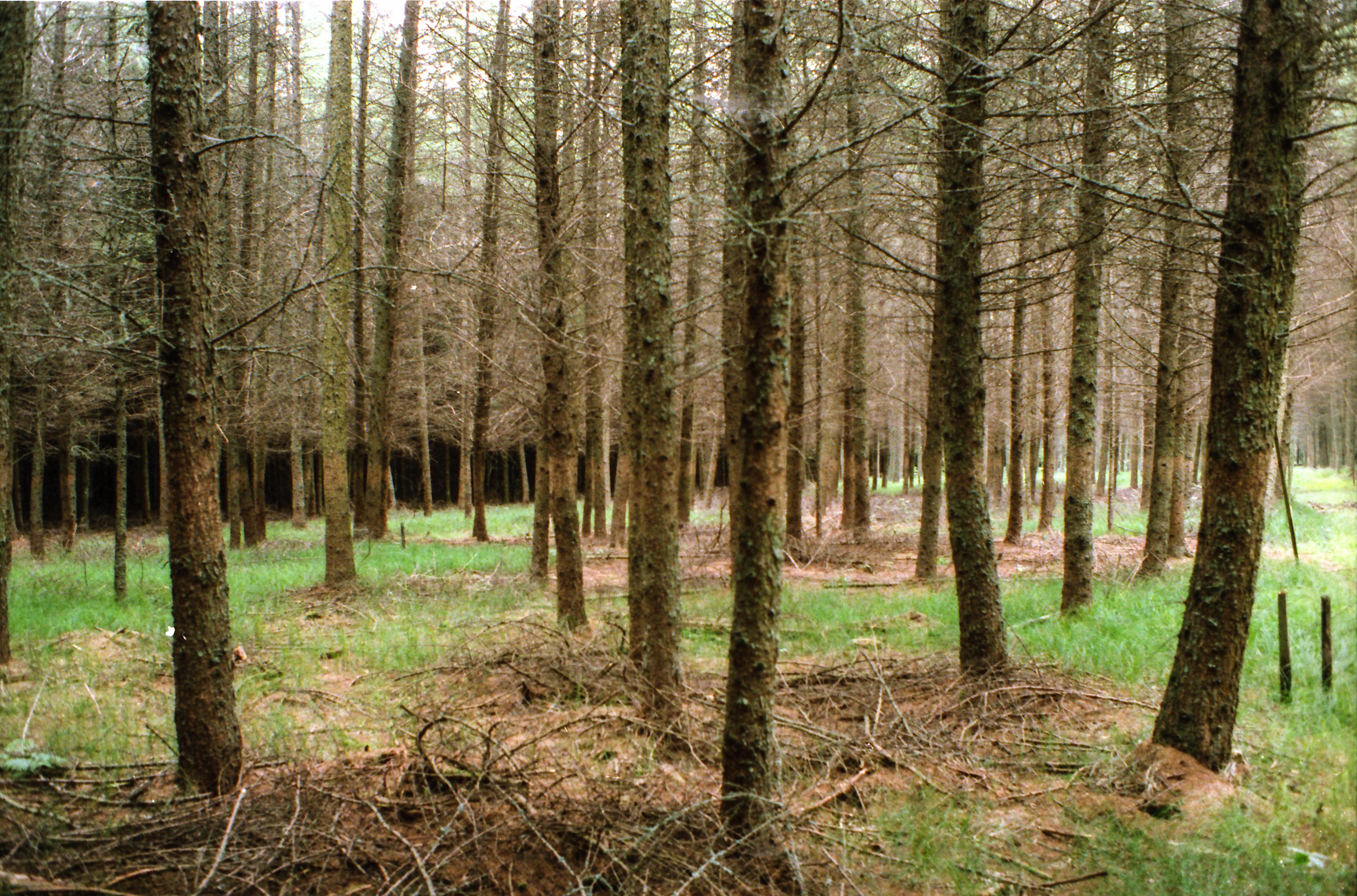
Even-aged larch experimental plots established for the development of yield tables. Photo: WSL Archive
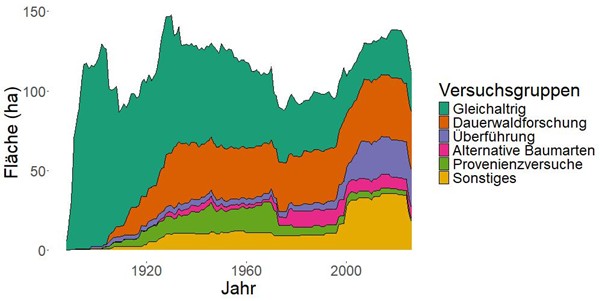
Development of the EFM network's experimental plots over time.