The «Experimental Forest Management Project» EFM 
Silvicultural decisions influence the development of managed forests over long time periods. Since around three-quarters of Switzerland's forests are managed, there is a strong need for reliable, long-term insights into how different management approaches affect forest development, ecosystem services, and biodiversity under climate change.
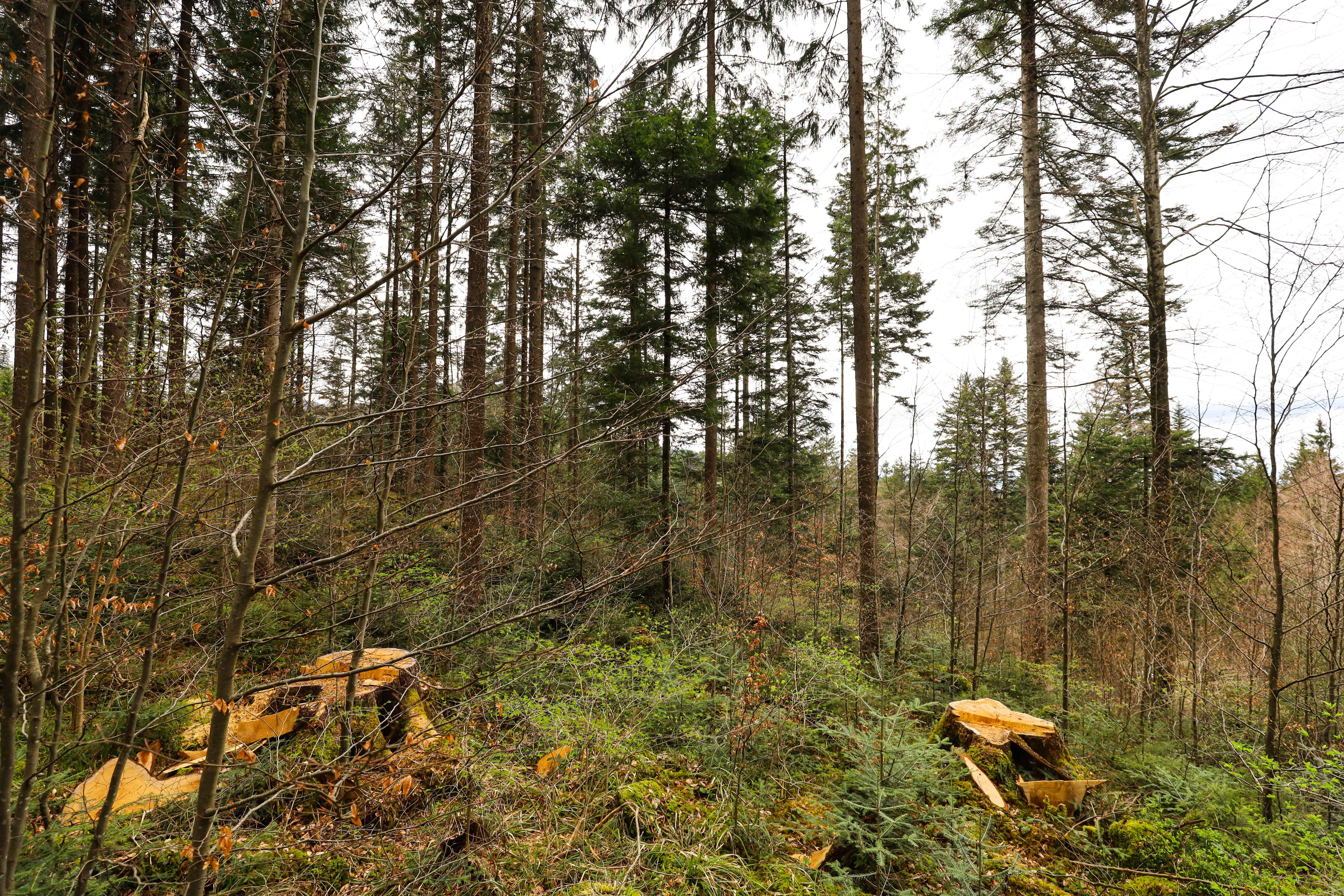
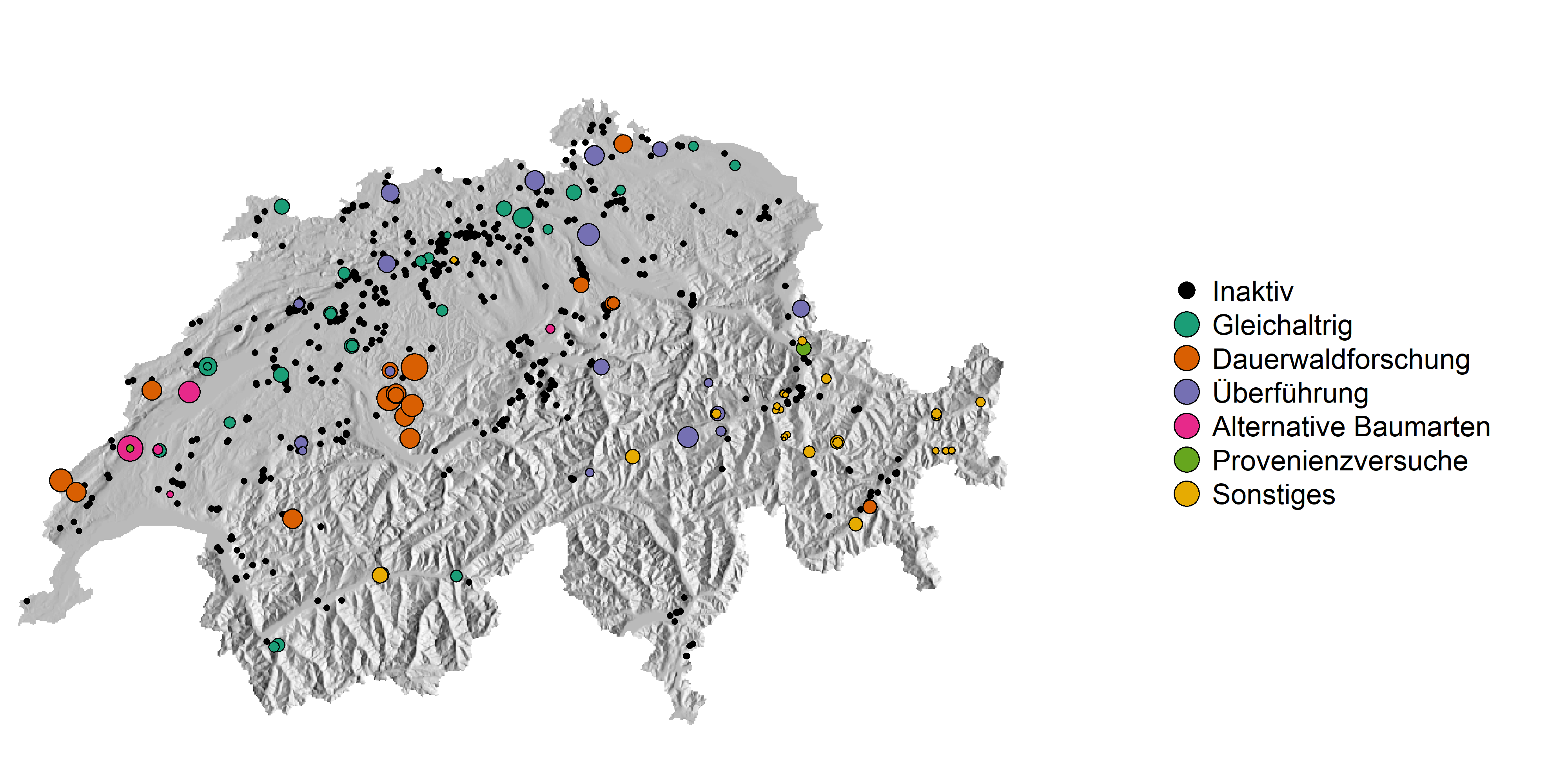
As part of the Experimental Forest Management Project (EFM), WSL maintains a long-term network of experimental plots at 115 sites covering a total area of 112 hectares. Among other things, the project investigates how different management practices influence stand-level processes such as forest growth, tree mortality, and regeneration dynamics.
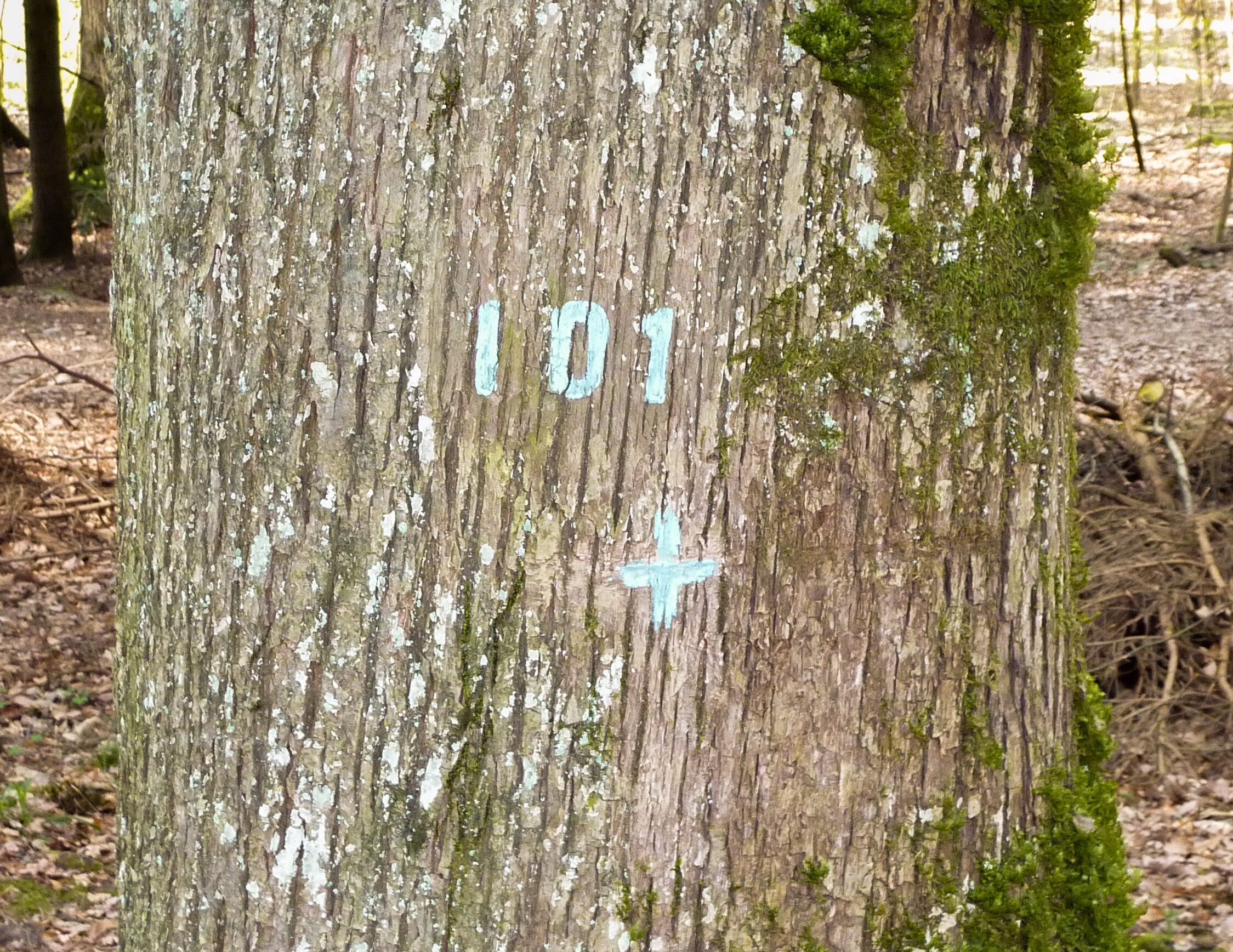
To this end, the experimental plots are managed according to their respective research objectives, and silvicultural interventions as well as stand development are documented through regular inventories every 5 to 12 years. The first research plots were established as early as 1888; the oldest still-active plot has been surveyed 20 times since 1890. (see: research methods)
The different experimental plots cover a range of thematic focus areas:
- General forest growth research
- Continuous cover forests
- Conversion stands
- Climate-adaptive forest management
Alternative tree species under climate change and further experiments
The long-term goal of the project is to inform foresters and the general public about how forest management decisions affect ecosystems over time – providing a sound basis for sustainable forest management. (see: collaboration and data use)