

26.05.2026 | Beate Kittl | WSL News
Anyone who works with nature experiences climate change first hand: forests, bodies of water and agricultural land are becoming increasingly unreliable resources. As part of the NCCS-Impacts research programme, a research team led by the Swiss Federal Institute for Forest, Snow and Landscape Research (WSL) is developing new tools to better assess risks and adapt planning.
- The research programme describes the impacts of climate change on ecosystem services on agriculture, forestry and water management.
- Several web apps illustrate site-specific future developments.
- The webtools are designed to support planning in nature-dependent sectors.
Note on the climate scenarios used: Although the extreme scenarios RCP8.5 and SSP5-8.5 are now considered unlikely (see the MeteoSwiss blog (German)), they are nevertheless a useful tool as they allow a wide range of possible developments to be considered.
Climate change is affecting all sectors that depend directly on natural resources. Forests are under pressure, water bodies are changing, and agricultural yields are increasingly uncertain. As part of the National Centre for Climate Services (NCCS) research programme, a knowledge platform has now been developed to help the forestry, water management and agriculture sectors plan for climate change.
A series of web apps visualises the impacts of climate change on key ecosystem services and provides a basis for decision-making:
Strengthening forests 
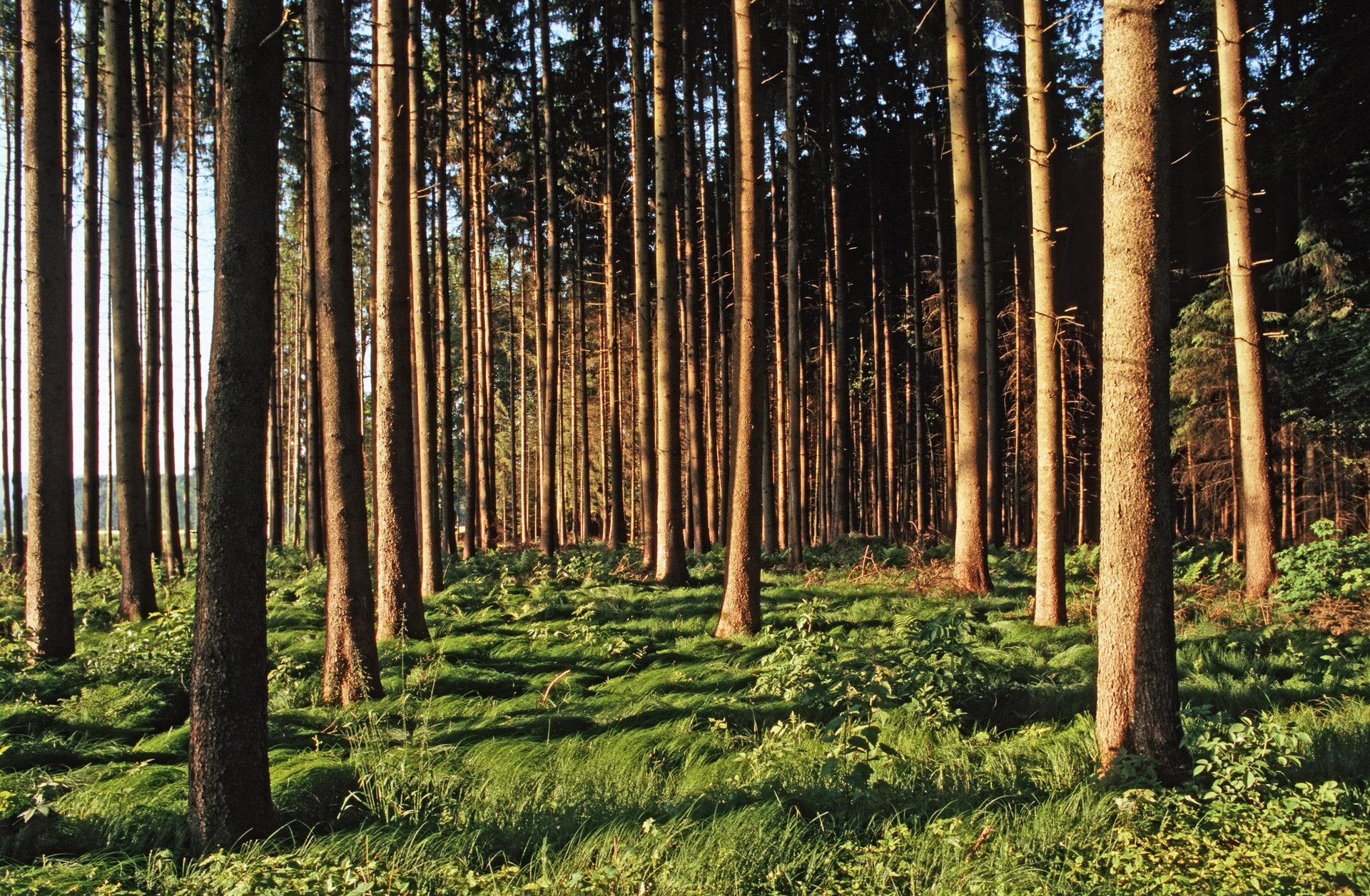
Droughts, storms and pest infestations have become more frequent in Swiss forests. Economically important spruce trees are dying in many parts of the Swiss Plateau or have to be harvested earlier than planned. Many protection forests are too monotonous and overmature, making them vulnerable to storms and pest infestations. Foresters and authorities wanted to better understand how forests are changing under climate change – both in detail on the ground and in the broader context. The ForClim app, developed by ETH Zurich, helps with this.
It is based on a dynamic model, so it shows not just the current state, but also illustrates how a forest develops over time. Users enter some details about their forest stand into the app. The model then calculates how it would develop under various climate scenarios. “With our app, forestry operations or forest planners can see the future of their stands. There are stands where the current timber stock could collapse in as little as 20 or 30 years,” says Harald Bugmann of ETH Zurich. The aim is to improve forest-specific planning of decisions, such as which tree species to promote or when intervention is advisable.
The FORTE app, on the other hand, provides a broad overview. It uses maps to show how forests and their ecosystem services might change as a result of climate change. It looks not only at individual tree species, but also at the many different functions of the forest. The app was developed to fulfill specific practical needs. For example, the Conference of Cantonal Foresters wanted to know how the multifunctionality of forests is changing as a result of climate change. This refers to the fact that forests fulfil several functions simultaneously – such as providing timber, offering habitats and protecting against natural hazards. The app is aimed particularly at policymakers and planners who need to assess developments at a regional level.
Understand agriculture in climate change 
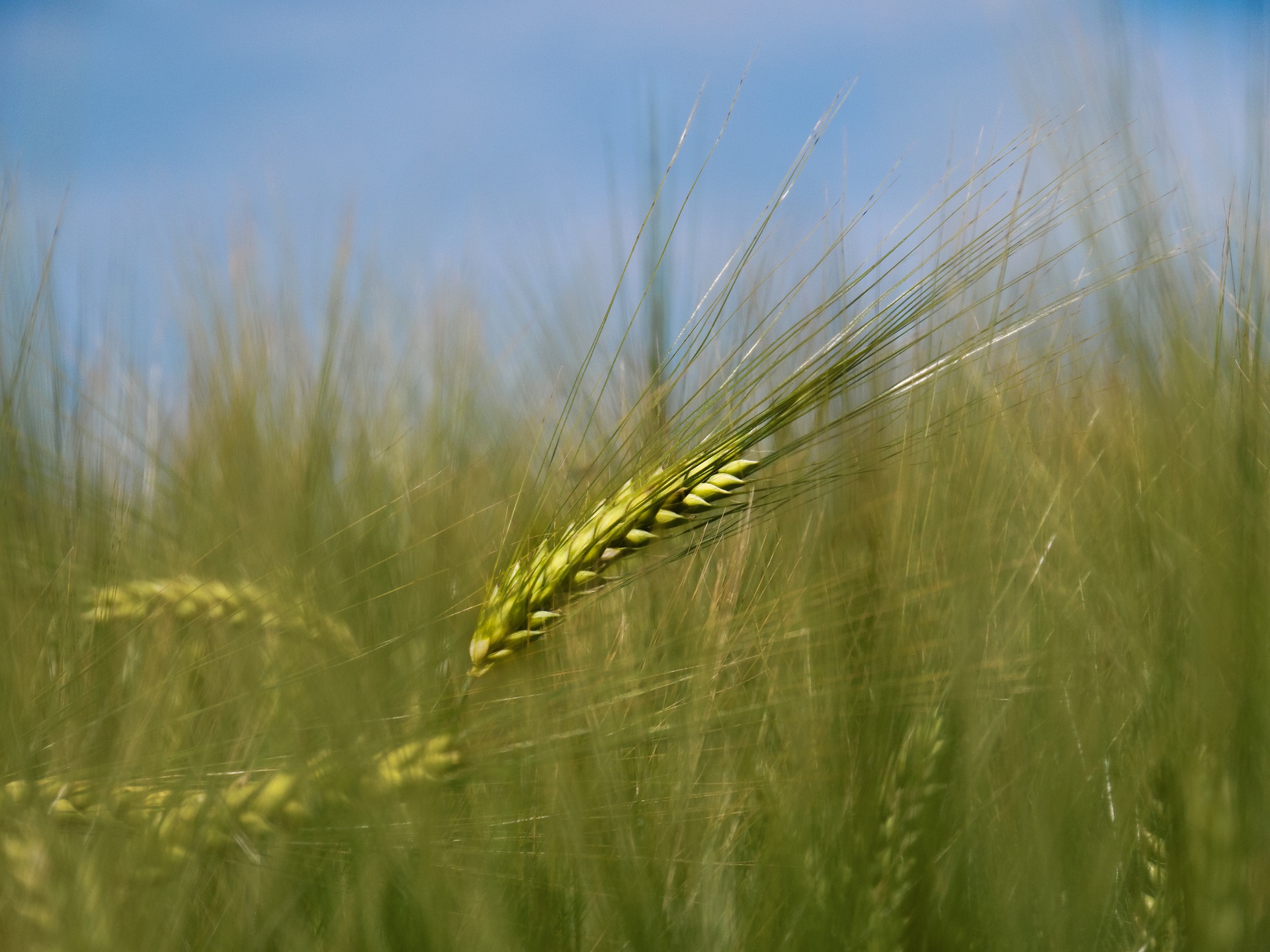
Climate change is already altering the very foundations of agriculture. Longer growing seasons, higher temperatures and more frequent water shortages are affecting plants, animals and farm work. Crop yields and incomes are becoming less reliable. Particularly dry summers lead to crop failures, whilst certain crops – such as winter barley – benefit from warmer winters. At the same time, ecological interactions are changing, for example between plants and pollinators such as wild bees.
The CLIMAGS app, developed by researchers at Agroscope, the Swiss centre of excellence for agricultural research, brings these changes to light. It shows how key ecosystem services provided by agriculture could change in different regions of Switzerland in the future. These include yields from arable and grassland and their fluctuations, pollination potential and soil carbon. App users can see how their region is developing in comparison to others and how conditions might change in the future.
The app does not provide specific recommendations for individual farms. Instead, it was developed at the request of government agencies as a basis for better understanding and assessing the impacts of climate change on the environment, the economy and society. “Climate change is adding to general structural change,” says Pierluigi Calanca of Agroscope. “Our app can provide a basis for exploring new avenues and sparking discussions in the field as well as in politics and society.”
Plan water use 

Climate change is altering precipitation patterns in Switzerland: less in summer and more in winter, and more often in form of rain rather than snow. Droughts are affecting drinking water supplies, crop yields and energy production. Floods, on the other hand, wash away sediment and nutrients, which can lead, for example, to eutrophication of lakes and the clogging of power stations.
Researchers at the University of Geneva have developed the AquaREL app, which can identify and predict these changes. It shows how three key aspects of water bodies are changing:
- the available water volume (discharge),
- the nutrient load (input of nitrogen and phosphorus),
- the sediment load (input of soil material).
AquaREL presents this information on maps – for the whole of Switzerland and for various regions. Users can see where the situation will improve or deteriorate in the future. The results are based on scientific models and provide an initial assessment of possible developments.
The app is aimed at professionals in administration, planning and research, as well as the general public. It is designed to help identify risks at an early stage and adapt water management to climate change, thereby supporting informed decision-making regarding the management of our water bodies.

NCCS: the network for climate services
As a national coordination and innovation body and a centre for knowledge, the NCCS provides a basis for climate compatible (klimakompatibel?) decision-making with the aim of minimising risk, maximising opportunities and optimising costs. In the NCCS programme ‘Decision Support for Dealing with Climate Change in Switzerland: a cross-sectoral approach’ (NCCS-Impacts), actionable climate services for the environment, economy and society were developed from 2022 to 2026 in multiple cross-sectoral projects. These are intended to serve as a basis for decision-making for stakeholders from politics, public administration, private sectors and research regarding measures to prevent greenhouse gas emissions and adapt to climate change. The NCCS-Impacts programme is jointly supported by all members of the NCCS. From autumn 2026, all results will be available in a consolidated overview. www.nccs.ch
WSL contacts 
External contacts: 
- Forest: Harald Bugmann, Chair of Forest Ecology, ETH Zurich, harald.bugmann(at)env.ethz.ch
- Agriculture: Climate and agriculture: Pierluigi Calanca, Agroscope, pierluigi.calanca(at)agroscope.admin.ch; Pollinators: Sibylle Stöckli, Agroscope, sibylle.stoeckli(at)agroscope.admin.ch
- Water: Anthony Lehmann, Institute for Environmental Sciences, University of Geneva, anthony.lehmann(at)unige.ch (French, English)
Links and documents 
Website: NCCS Impacts - ecosystems (links to apps and factsheets)
Copyright 
WSL and SLF provide image and sound material free of charge for use in the context of press contributions in connection with this media release. The transfer of this material to image, sound and/or video databases and the sale of the material by third parties are not permitted.